



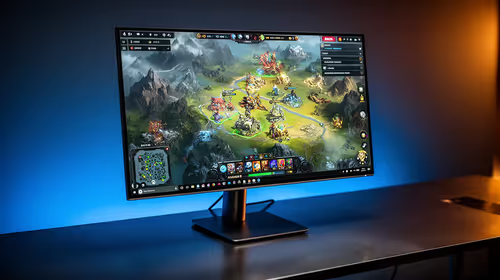
IPS vs VA for Strategy and Sim Games in SA
IPS vs VA for strategy and sim games should be judged by fit, not a single winner. Compare compatibility, latency, capacity, upgrade path, cost planning, and South African setup needs.
Read more🚀 Revive your UPS effortlessly with our cold start guide. Learn key tips, avoid common pitfalls, and ensure reliability with trusted solutions. 💡
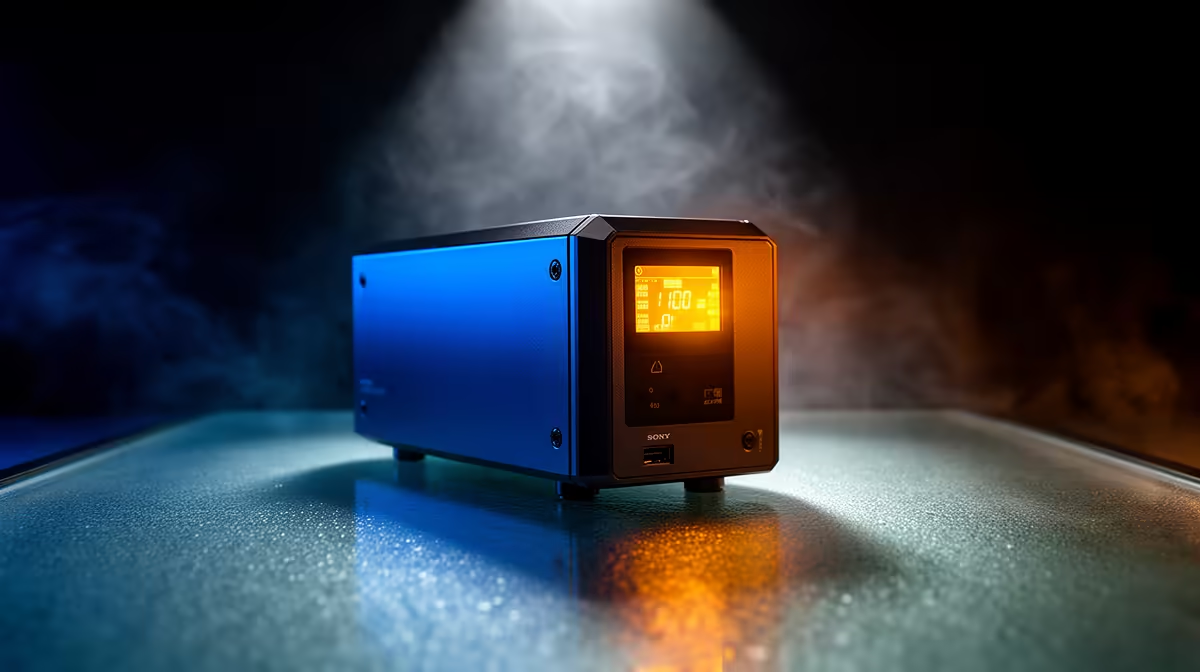
The lights go out, the Wi-Fi dies, and your PC shuts down mid-match. Sound familiar? While you can't stop the outage, you can fight back. Many don't realise their Uninterruptible Power Supply (UPS) has a secret weapon: the cold start feature. This simple UPS cold start guide will show you how to safely power up your essential devices using only your UPS battery, keeping you connected when Eskom can't. ⚡
Think of a "cold start" as starting your car with a jump pack when the main battery is dead. A UPS cold start is the ability to turn on the UPS and power your devices using its internal battery, without any active power coming from the wall socket.
Normally, a UPS just passes mains power through to your gear, only switching to its battery when the power cuts. But what if you need to power something up during an outage? That's where this feature becomes essential. It transforms your battery backup from a passive shield into an active, on-demand power source. Having a reliable UPS with this feature is a must for any modern South African home or office.
Ready to get some power back? Following this UPS cold start guide is simple, but doing it correctly is crucial to protect your hardware.
Before you begin, unplug the UPS itself from the wall socket. This is non-negotiable. Next, unplug all connected devices (your PC, monitor, etc.) from the UPS output sockets. You want to start with a completely isolated unit.
A UPS isn't a generator. It's designed for low-power, essential devices during an outage. Trying to run your 1000W gaming rig will drain the battery in seconds, or it might not even start. For a cold start, think small: a Wi-Fi router, a smartphone charger, or maybe a single LED lamp.
UPS is slightly different. The cold start procedure for one model might not work for another. Always check the user manual or the manufacturer's website for specific instructions. This is especially true for premium brands like [Titan](https: www.evetech.co.za PC-Components ups-for-sale-291?brands=Titan), which often have advanced features.
With everything disconnected, press and hold the power button on your UPS for a few seconds (usually 3-5 seconds). You should hear a beep, and the 'on battery' indicator light will likely turn on. The UPS is now running on its own battery power.
Once the UPS is running, plug in your chosen low-power device. We recommend starting with just one device, like your router, to get your internet back online. If you need to power more, add them one by one, keeping a close eye on the UPS load indicator if it has one.
The cold start function is a powerful tool, but it has its place. ✅
Ideal uses for a UPS cold start:
Avoid trying to cold start a UPS to power high-draw appliances like PCs, heaters, kettles, or printers. This can overload the unit and potentially damage it. The good news is that even affordable UPS units under R1300 typically include this life-saving feature for your essential gadgets.
Ready to Build a More Reliable Protected Setup? Don't let power cuts dictate your productivity or playtime. Equip yourself with a UPS that keeps you in control, even when the lights are out. Explore our full range of UPS solutions and find the perfect backup power for your needs.
Press and hold the power button for 10-15 seconds until lights flash. Release and wait for the system to reboot.
Stale batteries, power surges, or failed firmware can trigger the need for a cold reboot.
Yes—check your model's manual for the correct button sequence or contact Evetech for help.
Faulty circuits, drained battery, or internal damage may prevent startup. Consider professional diagnostics.
Try it if the UPS fails to reboot after a blackout or overloads unexpectedly.
Rarely if done properly. Avoid excessive attempts to prevent electrical stress.
Reset outlets, check battery connections, or replace aged cells. Contact support if issues persist.
IPS vs VA for strategy and sim games should be judged by fit, not a single winner. Compare compatibility, latency, capacity, upgrade path, cost planning, and South African setup needs.
Read more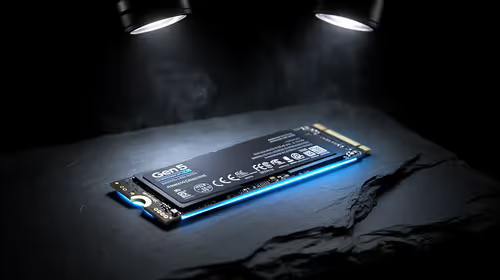
Gen 5 NVMe SSD guide for Bloemfontein gamers should be shortlisted around the job it must do. South African buyers should compare capacity, speed, thermals, and motherboard support, warranty path, and upgrade room before treating any pick as best.
Read more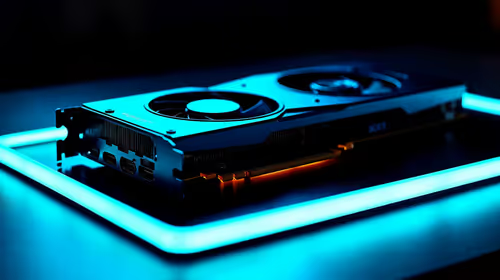
Skip the RTX 5070 if your first-time builder budget needs better balance. Better SA picks can free room for the right CPU, PSU, case, monitor, storage, and cooling while still giving a strong first gaming PC experience this year in South Africa.
Read more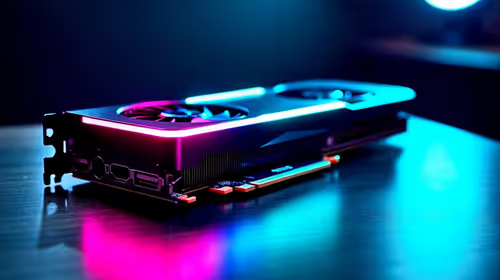
RTX 5080: weighing the pros and cons for SA should be shortlisted around the job it must do. South African buyers should compare GPU tier, VRAM, cooling, and PSU headroom, warranty path, and upgrade room before treating any pick as best.
Read more
Core i5-13400F gives South African PC builders a capable mid-range CPU choice with clear limits. Check its gaming fit, discrete GPU requirement, LGA1700 platform costs, and upgrade path before locking in your parts list.
Read more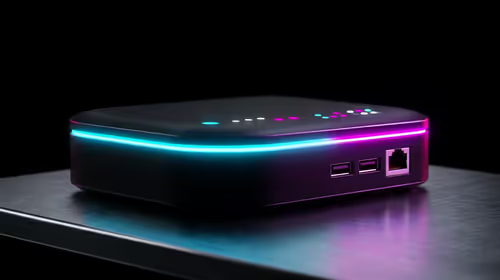
Pros and cons of the Wi-Fi 7 routers for SA should be shortlisted around the job it must do. South African buyers should compare WiFi standard, coverage, latency, and device support, warranty path, and upgrade room before treating any pick as best.
Read more
Steam content servers unreachable needs a download-path check, not an immediate reinstall of every game. Restart the client, inspect download settings and compare another connection when practical. Clearing the download cache is separate from deleting installed games.
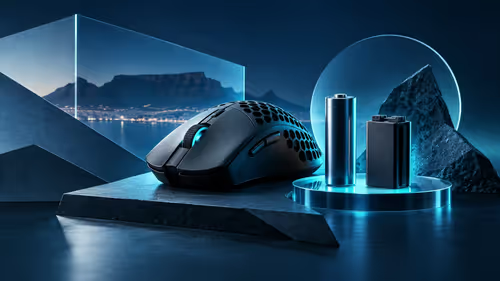
Keychron G6 HE has built-in and swappable battery versions with different weights. The product brief lists 42g and 46g respectively, each with a 3g tolerance. Choose by grip and battery preference before treating one headline weight as universal.
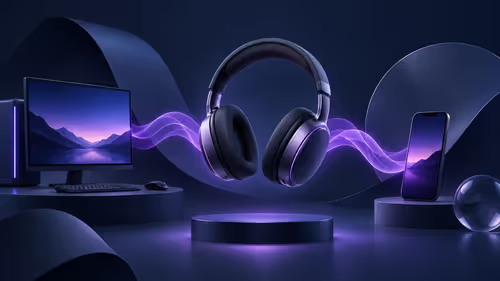
Corsair HS80 v2 MAX supports 2.4GHz wireless and Bluetooth. Its maximum battery figures use RGB-off conditions and differ by connection. Check microphone routing, comfort and the exact device support before assuming every wireless mode behaves alike.

Windows taskbar notification badges can be shown or hidden in Taskbar behaviours. This changes the small app indicators, not the underlying messages. Choose a calmer desktop while keeping a deliberate routine for checking important conversations and app updates.
Windows title bar window shake can minimise other open windows when you shake the active window by its title bar. Inspect the Multitasking setting and switch it off if that gesture interrupts your work. The preference costs R0 and does not require new hardware.
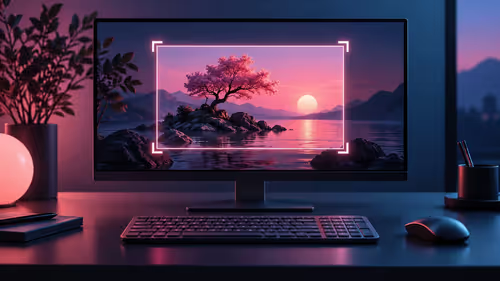
Windows Print Screen opens Snipping Tool when its keyboard preference is enabled. Change the option under Accessibility, Keyboard to choose another workflow. Test whether you need a clipboard image or a saved file.

Windows desktop icons missing may be a visibility setting. Right-click the desktop, choose View and inspect Show desktop icons. If only system icons are absent, use Desktop icon settings. Check the Desktop folder before assuming files were deleted.

Windows set time zone automatically greyed out calls for a location and device-policy check. Automatic time-zone selection relies on location services. A manual time-zone choice is separate from synchronising the clock; check both before replacing hardware.
Windows title bar window shake can minimise other open windows when you shake the active window by its title bar. Inspect the Multitasking setting and switch it off if that gesture interrupts your work. The preference costs R0 and does not require new hardware.
Windows Print Screen opens Snipping Tool when its keyboard preference is enabled. Change the option under Accessibility, Keyboard to choose another workflow. Test whether you need a clipboard image or a saved file.
Windows desktop icons missing may be a visibility setting. Right-click the desktop, choose View and inspect Show desktop icons. If only system icons are absent, use Desktop icon settings. Check the Desktop folder before assuming files were deleted.
Windows set time zone automatically greyed out calls for a location and device-policy check. Automatic time-zone selection relies on location services. A manual time-zone choice is separate from synchronising the clock; check both before replacing hardware.