USB-C Power Delivery Explained: What Charger Numbers Mean for South African Tech
Ever stared at a pile of USB-C chargers, each with different numbers, wondering which one will actually power your gaming laptop or fast-charge your phone before load shedding kicks in? You're not alone. In a world of evolving tech, understanding USB-C Power Delivery explained is crucial for every South African tech enthusiast and gamer. Let's demystify those charger numbers and ensure your gadgets get the juice they need.
The USB-C Revolution: More Than Just a Port ⚡
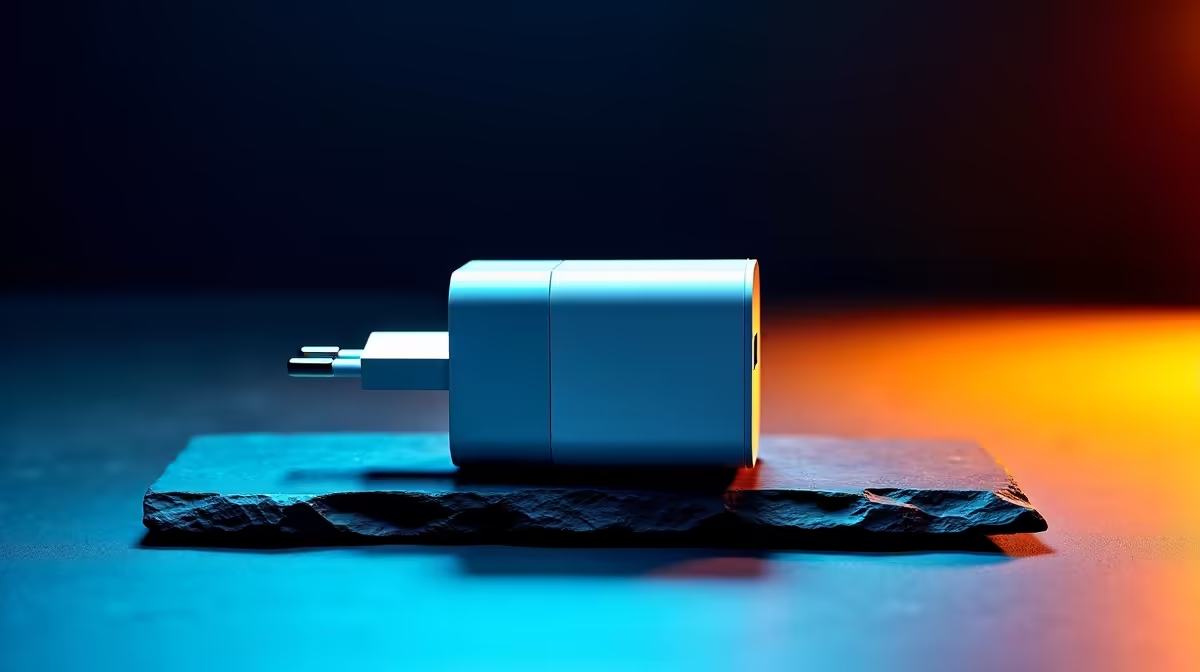
USB-C has become the universal connector for good reason. It’s reversible, versatile, and capable of much more than just data transfer. It can carry video, audio, and, most importantly for our discussion, significant amounts of power. But this versatility also brings a bit of confusion. Not all USB-C chargers are created equal, and knowing what charger numbers mean is key to avoiding slow charging or, worse, damaging your devices.
Decoding the Numbers: Volts, Amps, and Watts
When you look at a charger, you'll often see numbers like 5V, 2A, 65W. These aren't just random figures; they tell a vital story about the charger's capabilities.
Volts (V): The Electrical Pressure
Think of volts as the "pressure" of the electricity. Different devices require different voltage levels. Older USB standards typically used 5V, but modern devices and Power Delivery can negotiate much higher voltages, like 9V, 12V, 15V, and even 20V, to deliver power more efficiently.
Amps (A): The Flow Rate
Amps represent the "volume" or "flow rate" of the electricity. A higher amperage means more current can be delivered at a given voltage.
Watts (W): The Total Power Output
This is the most critical number for most users. Watts are calculated by multiplying Volts by Amps (W = V × A). It tells you the total power a charger can deliver. A 65W charger can deliver up to 65 watts of power. Your device will only draw what it needs, but the charger must be capable of supplying at least that much. For a gaming laptop, you might need 65W, 100W, or even more, while a smartphone might only need 18W or 25W for fast charging.
Understanding USB-C Power Delivery (PD)
USB-C Power Delivery (PD) is a specification that allows devices to dynamically negotiate power levels. It's why a single USB-C port can charge everything from a tiny earbud case to a powerful laptop.
- Smart Negotiation: Instead of a fixed output, PD-enabled devices and chargers "talk" to each other to determine the optimal voltage and current for charging. This ensures safe and efficient power delivery.
- Higher Power: PD can deliver up to 240W with the latest USB-C 2.1 standard, though most common chargers today range from 18W to 100W. This means you can power even demanding gaming laptops with a compatible USB-C charger.
- Versatility: With PD, you can often use one charger for multiple devices, simplifying your tech setup, especially when travelling or dealing with limited power outlets during load shedding.
Optimising Your Charge Times 🚀
the fastest charging, always use a charger and a cable that both support USB-C Power Delivery and match or exceed your device's maximum charging wattage. A high-wattage charger with a low-wattage cable will limit your charging speed! Check out Evetech's range of [USB-C chargers under R1000](https: www.evetech.co.za PC-Components charger-397.aspx?max-price=1000) for options that balance power and affordability.
Why Does This Matter to YOU? Practical Applications
For South African tech users, understanding USB-C Power Delivery explained isn't just theory; it has real-world implications:
- Gaming Laptops: Many modern gaming laptops, especially thinner models, can now charge via USB-C PD. This means you can often leave the bulky proprietary brick at home and use a more compact USB-C PD charger for on-the-go power. Just ensure the wattage matches or exceeds your laptop's needs.
- Smartphones & Tablets: Fast charging is a non-negotiable for many. A USB-C PD charger can significantly reduce the time it takes to top up your phone, getting you back into the game or work quicker.
- Portable Monitors & Docks: USB-C PD often powers these accessories, allowing a single cable to handle power, video, and data.
- Consoles (e.g., Nintendo Switch): The Switch uses USB-C PD for charging, making it easy to power up with compatible chargers.
When browsing for your next power solution, remember that a generic "USB-C charger" might not cut it. You need to verify its Power Delivery capabilities and wattage. Evetech offers a comprehensive selection of chargers for all your PC components, making it easy to find what you need.
Choosing the Right Charger: Safety and Efficiency ✨
Navigating the charger market can still feel like a quest. Here are some pointers:
- Match Wattage: Always choose a charger that meets or exceeds your device's required wattage. If your laptop needs 65W, a 45W charger will be slow, if it works at all.
- Check PD Support: Ensure both the charger and your device (and cable!) explicitly state "Power Delivery" or "PD" support.
- Reputable Brands: Stick to trusted brands like Promate chargers or other well-known names. Cheap, uncertified chargers can be inefficient, unreliable, or even dangerous.
- Future-Proofing: Consider a slightly higher wattage charger than you currently need. For example, if your phone needs 25W, a 45W or 65W PD charger might be a better investment, as it can also charge a future tablet or even a small laptop. You can find excellent USB-C charger options under R500 that offer great value.
Understanding what charger numbers mean and the magic behind USB-C Power Delivery explained empowers you to make smarter choices for your tech. No more guessing games or slow charges. Just efficient, reliable power, exactly when you need it.
Ready to Power Up Your Tech? Don't let confusing charger numbers leave your devices drained. With a clear understanding of USB-C Power Delivery, you're equipped to make the best choices. Explore Evetech's full range of PC component chargers and find the perfect power solution for your setup today!