We’ve all been there. It’s 2 AM, the loadshedding schedule just kicked in, and you’re fumbling in the dark trying to plug in your phone or controller. You try the cable one way… nope. Flip it over… still no. The battle against the tiny, non-reversible Micro-USB plug is a uniquely South African struggle. But what if there was a better way? The debate of USB-C vs Micro-USB isn't just tech talk; it's about making your life easier.
The Old Guard: A Quick Look at Micro-USB
For over a decade, the Micro-USB connector was the king. It powered our phones, charged our PS4 controllers, and connected countless gadgets. It did the job, but its time in the spotlight is fading.
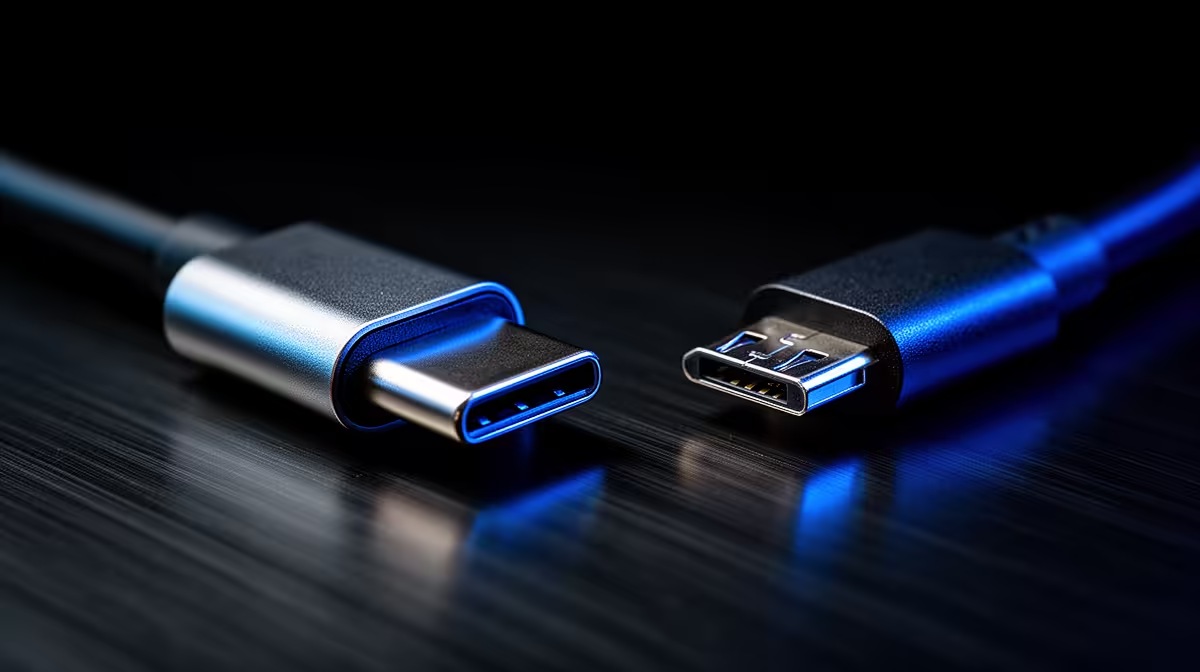
Its biggest drawback? The trapezoidal, one-way-only design. It’s fragile, and forcing it in the wrong way can damage both the cable and your device's port. While still found on some budget devices and older peripherals, its data transfer and charging speeds are simply outmatched by modern standards. If you're still managing a collection of these, finding a durable replacement among comprehensive cable solutions is key to avoiding frustration.
The New Champ: Why USB-C Is the Future ⚡
Enter USB-C. This small, oval-shaped connector is the hero we've been waiting for. Its single greatest feature is that it's reversible—there is no "wrong way" to plug it in. Sanity restored!
But the convenience is just the start. The real difference in the USB-C vs Micro-USB showdown lies in performance. USB-C supports much faster data transfer speeds and, crucially, a technology called Power Delivery (PD). This allows it to push significantly more power, enough to charge not just your phone at lightning speed, but also your Nintendo Switch, high-end headphones, and even powerful laptops. It's why major brands like HP use USB-C across their modern peripherals.
Not All USB-C Cables Are Created Equal
Check the specs before you buy! A cheap USB-C cable might only support slow USB 2.0 speeds. For fast charging or connecting a 4K monitor, look for cables that explicitly mention 'Power Delivery' (PD) and high data speeds (10Gbps or more). It makes a massive difference to performance.
USB-C vs Micro-USB: The Technical Knockout
So, how do they stack up head-to-head? The winner is clear.
- Design & Durability: USB-C’s reversible plug is not only more convenient but also more robust, rated for more plug/unplug cycles than Micro-USB.
- Charging Speed: Micro-USB typically maxes out around 10-15W. A proper USB-C cable with Power Delivery can handle over 100W, charging your compatible devices many times faster.
- Data Speed: Micro-USB is generally stuck at USB 2.0 speeds (480Mbps). USB-C can support speeds from 5Gbps all the way up to 40Gbps and beyond with Thunderbolt compatibility.
- Versatility: This is where USB-C truly shines. It can carry video signals (like DisplayPort), audio, and power over a single cable. This versatility is why you see brands like Promate developing innovative USB-C hubs and docks.
What This Means for Your Gaming Setup 🚀
For South African gamers, upgrading to USB-C is a no-brainer. It means less cable clutter on your desk, as one high-quality cable can potentially charge your phone, controller, and headset. It means getting your wireless headset back to a full charge in a fraction of the time. In the Micro-USB vs USB-C debate for gaming, the latter offers the speed and convenience modern setups demand. Investing in a few quality cables from trusted brands like GIZZU ensures your gear is always ready for action.
Ready to Make the Switch? Ditch the frustration and give your tech the powerful, fast connection it deserves. Explore a massive range of high-performance GIZZU USB-C cables at Evetech and make fumbling in the dark a thing of the past.