

GPU Setup Guide for SA Gamers
GPU Setup Guide Gamers. Clear setup instructions with SA-specific considerations, troubleshooting tips & recommended components.
Read moreDiscover the science behind a video editing PC cooling system and why it's crucial for performance. 🖥️ Learn how proper cooling prevents thermal throttling, boosts rendering speeds, and protects your components. Unlock peak creative power with our expert guide! ❄️
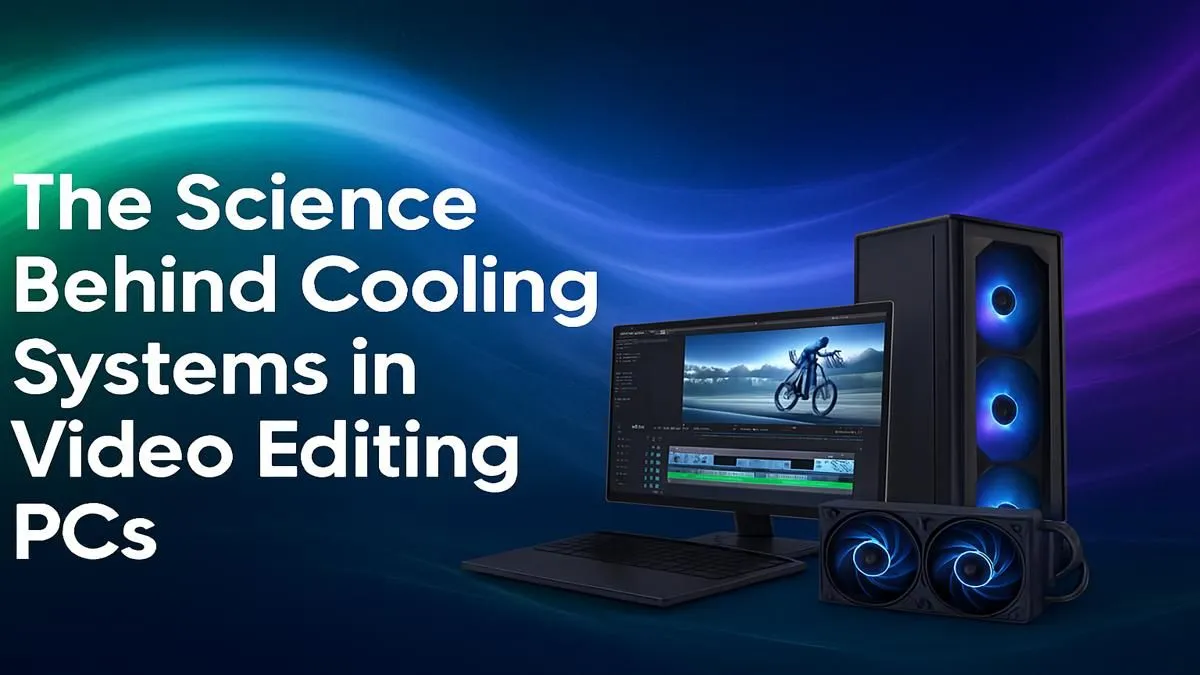
Your 4K timeline is finally locked, the client is waiting, and you hit 'Render'. Then it happens. The fan noise screams, your PC slows to a crawl, and the estimated time remaining just keeps climbing. In South Africa, where every minute counts, thermal throttling isn't just an annoyance; it's a deadline-killer. A proper video editing PC cooling system isn't a luxury—it's the bedrock of a stable, high-performance workflow. Let's break down the science.
Video editing is a marathon for your computer's components. Unlike gaming, which has moments of lower intensity, exporting a high-resolution video pushes your CPU and GPU to their absolute limits for extended periods... sometimes for hours. This sustained workload generates a massive amount of heat.
When components get too hot, they automatically slow down to protect themselves. This is called thermal throttling, and it's the number one enemy of a smooth editing process. A robust cooling system for video editing ensures your hardware can maintain its peak performance, slashing render times and preventing frustrating crashes. This is especially true whether you're running the latest Intel Core CPUs or a powerhouse AMD Ryzen PC, both of which need effective cooling to truly shine.
When it comes to PC cooling for video editors, the debate usually boils down to two main technologies: traditional air coolers and All-In-One (AIO) liquid coolers.
An air cooler uses a metal heatsink with fins to draw heat away from the CPU, and a fan to blow that heat away.
For most 1080p and light 4K editing rigs, a premium air cooler is a perfectly sensible and powerful choice.
An AIO liquid cooler circulates a liquid coolant through a block on the CPU to a radiator, where fans dissipate the heat. Think of it like a car's radiator, but for your PC.
For serious 4K/8K workflows, heavy colour grading, or VFX work, the superior thermal capacity of a 240mm or 360mm AIO is a wise investment in performance and stability.
A great CPU cooler is just one piece of the puzzle. The best cooling for video editing involves thinking about the entire system's airflow. Your graphics card, motherboard components (VRMs), and even your NVMe SSDs generate significant heat.
Good case airflow is non-negotiable. This means choosing a case with good ventilation and setting up your fans to create a clear path for air to travel—cool air in from the front or bottom, and hot air out through the back or top. This is critical, especially when that rig houses a powerful NVIDIA GeForce gaming PC or one of the latest AMD Radeon GPUs, as these cards exhaust a lot of heat into the case. This is why professionally configured workstation PCs are built with optimised airflow from the ground up.
For a typical editing rig, aim for 'positive pressure'. This means having slightly more intake fans (pulling cool air in) than exhaust fans (pushing hot air out). This helps minimise dust buildup inside your case by forcing air out of unfiltered gaps and cracks, keeping your components cleaner and cooler for longer.
So, which video editing PC cooling system is right for you?
Ultimately, a balanced cooling solution is key. An expensive cooler won't help much in a case with no airflow. If you'd rather skip the science project and get a perfectly balanced machine, exploring our pre-built PC deals is a great place to start.
Ready to Render Without the Racket? A powerful video editing PC is an investment in your creativity and career. The right cooling system ensures that investment performs at its peak, every single time. Explore our range of purpose-built Workstation PCs and build a machine that stays cool under pressure.
While not strictly necessary, liquid cooling offers superior thermal performance for high-end CPUs used in intensive 4K+ video editing, preventing thermal throttling.
It's critical. Proper cooling prevents your CPU and GPU from overheating during long renders, ensuring stable performance, faster processing, and longer component lifespan.
For most video editing workflows, standard RAM modules do not require dedicated cooling. However, extreme overclocking or systems with poor case airflow might benefit from it.
While rendering, a good CPU temperature is typically below 85°C. Consistently running hotter can lead to performance degradation and reduce the CPU's lifespan.
High-end air coolers are often sufficient for video editing, especially for mid-range CPUs. They offer great reliability and performance for most rendering tasks.
Excellent PC case airflow is vital. It ensures cool air reaches your CPU and GPU coolers and expels hot air, directly impacting their efficiency and preventing heat buildup.
GPU Setup Guide Gamers. Clear setup instructions with SA-specific considerations, troubleshooting tips & recommended components.
Read more
When Will the RTX 6090 Launch in South Africa Detailed answer with SA data, expert analysis & practical recommendations for local buyers.
Top Valorant Settings for RTX 5070: FPS Optimisation picks evaluated on performance, value & SA availability with current Rand pricing from Evetech.
RDNA 3.5 Graphics in Ryzen AI 400? Can You Game. Plain-English explanation of what it means, why it matters & how it affects your buying decisions in SA.

GPU Price Index : December Report. Current stock data & price tracking for SA buyers. See what is available and where prices are heading.

Core i5-14600K + B760 + RTX 5060 Build Under. Full parts list, Rand pricing & expected performance. Build confidently with SA-available components.
RX 7600 Apex Legends at 4K: FPS Benchmark. Real-world benchmark data, FPS numbers & performance analysis. What SA gamers can actually expect.
RX 7900 XTX GTA 6 at 4K: FPS Benchmark & Optimal. Real-world benchmark data, FPS numbers & performance analysis. What SA gamers can actually expect.

Head-to-head comparison of RTX 5070 vs RX 9070 XT: Gaming Performance for SA gamers. Performance benchmarks, Rand pricing & which delivers better value.

Top Laptop with Ryzen 5 + RTX 4090 Laptop: Picks picks evaluated on performance, value & SA availability with current Rand pricing from Evetech.
Top Budget GPU for Marvel Rivals picks evaluated on performance, value & SA availability with current Rand pricing from Evetech.
Valorant Settings on RTX 5070: Performance. Real-world benchmark data, FPS numbers & performance analysis. What SA gamers can actually expect.
Top Budget GPU for Assassins Creed Shadows picks evaluated on performance, value & SA availability with current Rand pricing from Evetech.