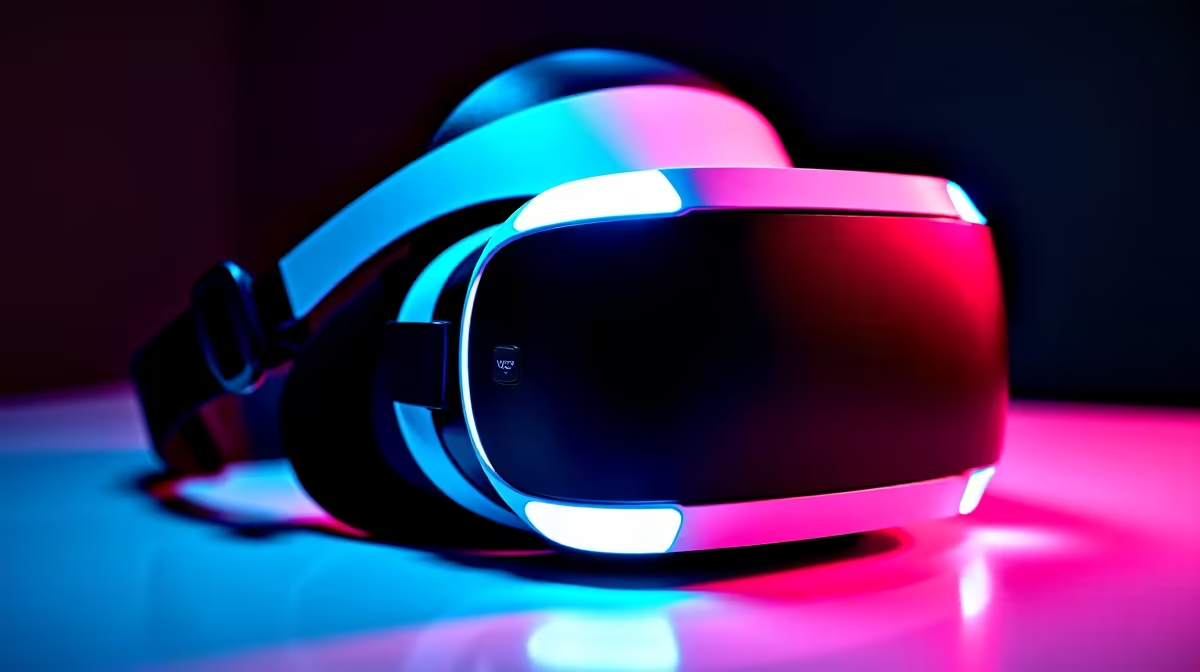
Ever wondered why the dark corridors in Half-Life: Alyx look truly black on one VR headset but a bit grey on another? Or why some virtual worlds pop with vibrant colour while others feel washed out? The secret isn't just your graphics card, boet. It's all about the VR headset panel types powering the display in front of your eyes. Understanding this tech is key to choosing the right headset for your budget and gaming style. 🕶️
The Core VR Headset Panel Types Explained
At the heart of every virtual reality experience is a tiny screen, and the technology behind it defines everything you see. Just like with the PC monitors we stare at daily, the two dominant players in the VR space are LCD and OLED. Each has distinct pros and cons that directly impact immersion.
LCD (Liquid Crystal Display)
Think of LCD as the reliable workhorse of display technology. Most modern VR headsets, including the popular Meta Quest 3 and Valve Index, use advanced forms of LCD panels.
The push for higher resolutions, similar to the jump we've seen in desktop 5K and 4K monitors, has made LCD a very strong contender in the modern VR market.
OLED (Organic Light Emitting Diode)
OLED is the enthusiast's choice, prized for its incredible contrast. Headsets like the PlayStation VR2 showcase what this panel technology can do.
Pro Tip: Check for 'Mura' 💡
When you first get a VR headset, especially an OLED one, load up a completely dark or grey screen. Look for any faint blotchiness or inconsistency in brightness across the panel. This is called 'mura', and while a tiny amount is normal, significant blotches can be distracting. It's a good first check to ensure you got a quality panel!
Which VR Display Technology is Right for You?
So, which of these VR headset panel types should you choose? It really comes down to personal preference and the games you play.
If you play fast-paced, competitive shooters or bright, colourful adventure games and want the sharpest possible image, a modern high-resolution LCD headset is a fantastic choice. The value proposition is often better, and finding great value is just as important here as it is when browsing for the best PC monitor deals online.
On the other hand, if you live for immersion and play games with a lot of dark environments—think horror, stealth, or space sims—the perfect blacks and punchy colours of an OLED headset are hard to beat. The level of immersion it provides is similar to the effect gamers seek when choosing curved monitors for their desktop setups.
The Future: Micro-OLED and Beyond 🚀
The battle between VR headset panel types is far from over. The next frontier is Micro-OLED, which promises the best of both worlds: the pixel-perfect contrast of OLED combined with incredibly high pixel densities and brightness, all in a smaller, more efficient package. While still a premium option found in headsets like the Apple Vision Pro, this technology will eventually trickle down.
Ultimately, whether you're using VR for intense gaming or as a virtual workspace to replace your portable monitors, the panel is your window to another world. The technology is evolving rapidly, and understanding the fundamentals of display tech, which applies to everything from VR to the all gaming monitors in our catalogue, ensures you make a smart purchase. Don't forget that a comfortable and well-customised setup, using the right monitor accessories and headset settings, is just as crucial for long sessions.
Ready to Step Into a New Reality?
Understanding VR headset panel types is the first step to finding your perfect immersive experience. Now that you know the difference, why not explore the hardware? Check out our range of VR headsets and accessories and build the ultimate setup in South Africa today.