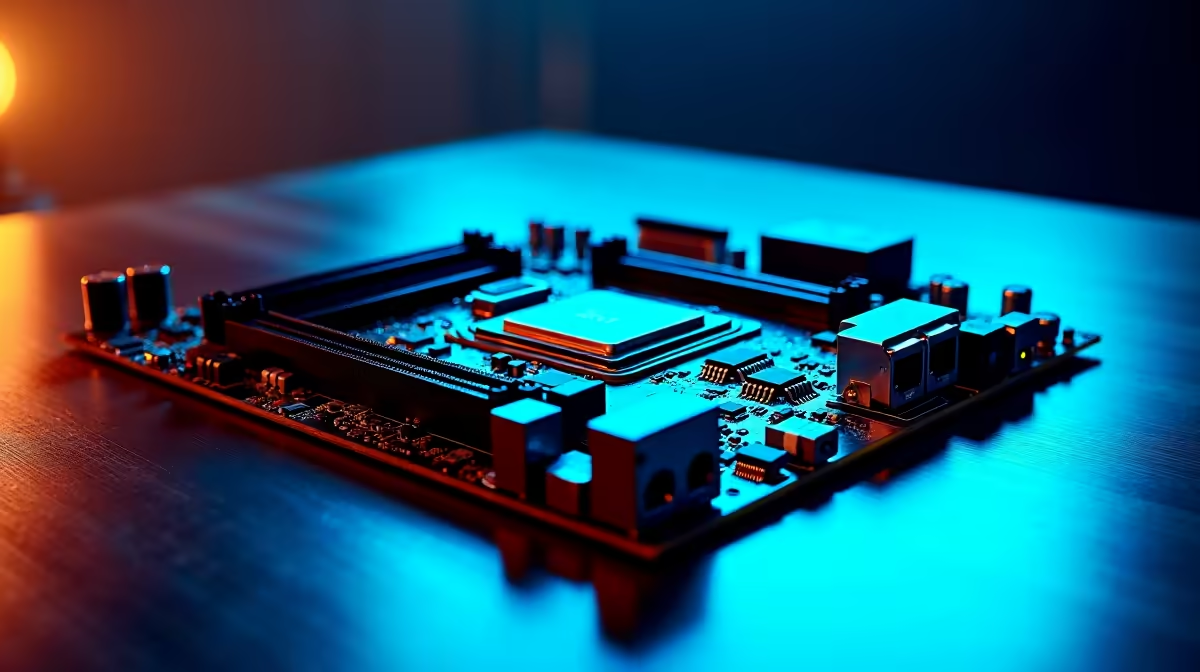
You are browsing for a new rig and see a spec sheet boasting a "14+2+1 power stage design". Sounds impressive... but what does it mean? If you want to push frame rates in South Africa without crashing to a blue screen, understanding motherboard power delivery is vital. Let us break down how this impacts your gaming and overclocking experience.
The Basics of Motherboard Power Delivery ⚡
At the heart of this technical jargon is the VRM, or Voltage Regulator Module. When your power supply sends 12V to the board, your CPU cannot handle that raw voltage. It usually needs somewhere between 1V to 1.5V. The VRM steps this high voltage down smoothly and safely.
If you are running powerful desktop processors, they demand incredibly clean and consistent power to function properly. A cheap VRM will struggle to deliver this... leading to system instability and random reboots. This is exactly why top-tier motherboards proudly advertise their advanced power stages on the retail box.
Decoding the 14+2+1 Power Stage Design 🔧
Let us decode those specific numbers. In a 14+2+1 setup, the first number represents the power phases dedicated purely to the CPU cores. Having 14 phases means the heavy electrical workload is shared efficiently. This keeps the individual components cooler and ensures rock-solid CPU stability under heavy loads.
The second number feeds the memory controller and integrated graphics. A dedicated 2-phase setup here is crucial when you are pushing high-speed memory kits to their absolute limits. Finally, the "+1" handles auxiliary power. This covers essential motherboard features like PCIe lanes and USB ports. By separating these power deliveries, your system runs efficiently and helps optimise overall performance.
Why This Matters for CPU Stability and Overclocking 🚀
When you decide to overclock, you force your processor to run faster than its factory settings. This naturally requires more voltage. A robust 14+2+1 power stage design prevents sudden voltage drops that cause frustrating system crashes. It spreads the intense thermal load across multiple phases... meaning your motherboard stays cooler even during marathon gaming sessions.
If you are spending thousands of ZAR on a premium setup, you cannot afford to skimp on power delivery. Whether you are building from scratch or looking at premium pre-built gaming PCs, checking the VRM setup is always a smart move. You want hardware that lasts. Fortunately, you can often find boards with excellent power designs hiding in our latest component specials.
The Real-World Gaming Benefit ✨
Let us talk about everyday performance. You might not be a hardcore overclocker. However, a strong power design still benefits you. Modern CPUs use automatic boosting algorithms. They constantly adjust their clock speeds based on available power and thermal headroom. A 14+2+1 power stage design gives your processor the clean power it needs to sustain those high boost clocks for longer periods. This translates directly to smoother frame rates.
Overclocking Pro Tip ⚡
When pushing your CPU clocks higher, always monitor your VRM temperatures using software like HWiNFO. Even with a stellar 14+2+1 power stage design, good case airflow is essential to keep those heatsinks doing their job properly.
Ready to Build a Rock-Solid Rig? Now that you understand how a 14+2+1 power stage design guarantees CPU stability and overclocking headroom, it is time to upgrade. Explore our massive range of motherboard specials and find the perfect foundation to conquer your gaming world.