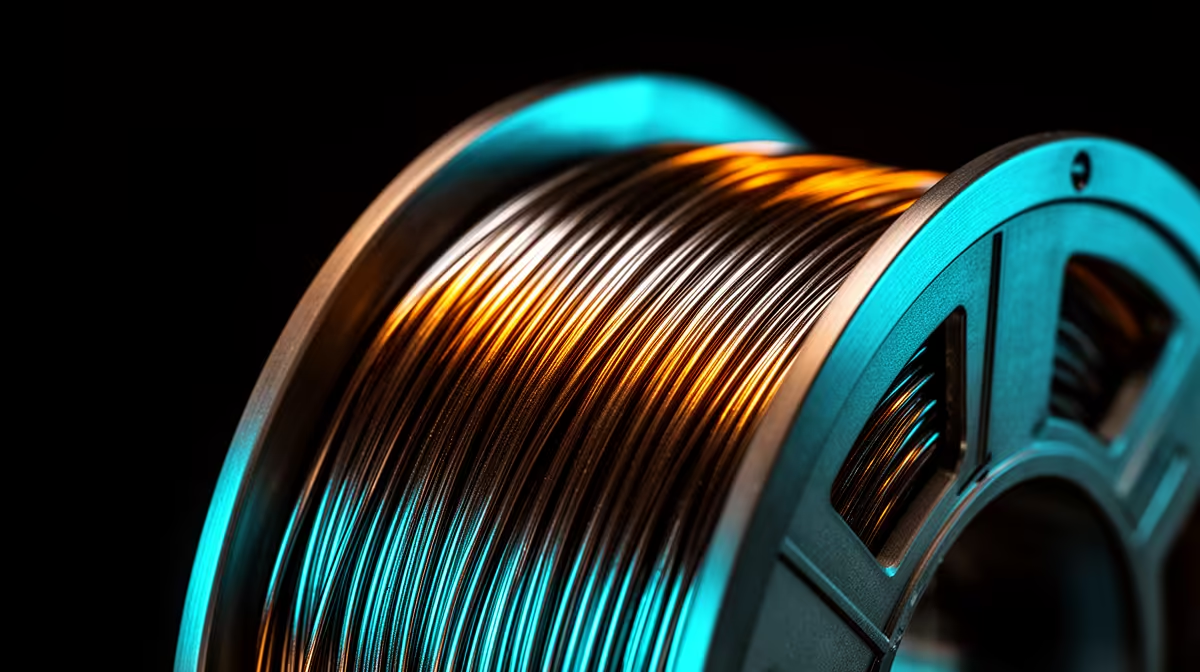
Pull a freshly printed vase off the bed in silk filament and it already gleams like brushed satin, no rattle-can, no clear coat, no afternoon of wet-sanding. That is the whole appeal of shiny filaments: the finish comes off the nozzle. Silk PLA and metallic filament both get you there, but they get there differently, and choosing wrong means either a brittle print or a chewed-up nozzle.
Quick Answer
For a shiny finish with no painting, silk PLA is the easier, safer pick: it uses polymer additives to throw a glossy, almost metallic sheen and is non-abrasive on your nozzle. True metallic filament contains real metal powder for a denser, more authentic metal look, but it is abrasive and needs a hardened nozzle. Silk for looks, metallic for weight and realism.
How each one gets its shine
Silk PLA is ordinary PLA blended with additives, typically low-molecular-weight polymers or silicone-style agents, that make the surface reflect light in a smooth, directional way. The result reads as satin or light metallic under good lighting, and it photographs beautifully. There is no actual metal in it.
Metallic filament is a different recipe. It carries fine metal powder, often bronze, copper, or steel, suspended in a PLA base. That powder gives the print real heft and a duller, more convincing metal surface, and it lets you take post-processing further, since some metal-fills can be polished or even lightly tarnished to look aged. The trade-off lives in that powder.
The nozzle question nobody mentions first
Silk PLA is not abrasive. You can run it through a standard brass nozzle for years and it will not wear noticeably. Metallic filament is the opposite: the suspended metal particles grind at brass over time, so a hardened steel or ruby-tipped nozzle is close to mandatory if you print it regularly. Budget for that nozzle before you buy a spool of metal-fill, because a worn brass nozzle quietly degrades print quality long before it fails outright.
This single fact pushes most hobbyists toward silk for decorative pieces and reserves metallic for the occasional project where genuine metal weight and texture are the point.
Print behaviour and brittleness
Silk PLA tends to be slightly more brittle than standard PLA, so it is a poor choice for functional parts that flex or take load. It also strings a little more readily, which means retraction tuning matters. For best results, slow the outer wall down and consider ironing the top surfaces, which dramatically lifts the sheen on flat areas like lids and faces.
Metallic filament prints closer to standard PLA in toughness but is heavier and can settle in the nozzle if left hot and idle. Both materials reward a clean, well-levelled first layer because the shine makes any first-layer flaw stand out, and a smooth, glassy build surface transfers its finish to the bottom of the print, which is a free way to add gloss to the base of a display piece.
Print speed also influences the look more than it does with matte filament. Slowing the outer perimeters gives the additives time to settle into an even, reflective layer, while printing too fast can leave a slightly inconsistent sheen on visible walls. It is worth running a small test object at a couple of speeds with a new spool to find where that particular filament looks its best before committing to a long print.
Where each finish actually wins
Silk is the go-to for display models, vases, faux-chrome accents, cosplay jewellery, and anything that needs to catch the eye on camera. Mixing two silk colours in a single print can produce a shimmering dual-tone that no paint job replicates easily. It is the practical choice for a metallic look without the metal-filled hassles.
Metallic filament wins when you want a part to feel like metal in the hand, a faux bronze bust, a steel-look gear, a prop that should have real weight. The denser surface also takes polishing and patina techniques that silk simply cannot, because there is real metal on the surface to work with.
If you are weighing up a machine that handles both, the current line-up in the 3D printer range at Evetech covers the all-metal hotends and hardened-nozzle options that make metallic filament viable, while any of them will run silk PLA happily on the stock nozzle.
Lighting and photography change everything
Both finishes are reflective by nature, which means how you light and photograph them dramatically alters the result. Silk PLA in particular looks transformed under directional light: a single bright source raking across the surface makes the satin sheen pop, while flat, even lighting can make the same print look almost matte. If you are printing display pieces to photograph or sell, this is worth knowing before you decide a print looks dull, it may simply be badly lit.
Metallic filament reacts differently. Its duller, denser surface reads as genuine metal under soft, broad lighting and benefits from a little post-processing, brushing, sanding, or polishing, to bring up the metallic character. Where silk wants a hard highlight to shine, metallic wants you to work the surface so the embedded powder catches the light. Matching your lighting to the finish is the cheapest upgrade either material gets.
Layer orientation affects the sheen
One detail that trips up newcomers: the way a silk print catches light changes with the angle of each surface, because the additives align with the extrusion direction. Curved and angled surfaces can show subtle banding or colour shifts that flat faces do not. This is usually attractive, it is part of why silk looks dynamic, but if you need a perfectly uniform sheen across a large flat area, ironing the top layers evens it out considerably. Plan the orientation of important faces in your slicer so the best-looking surface is the one people see first.
A quick setup checklist before you buy
Decide whether the project is about looks or about feel. For looks, order silk PLA in the colour you want and keep your brass nozzle. For feel, plan on a hardened nozzle and accept slower, fussier prints. Either way, a few maintenance basics keep results consistent, and the nozzles, cleaning tools, and spares worth keeping nearby tend to sit among the most-bought accessories at Evetech.
Frequently Asked Questions
Will silk PLA look as good as real chrome paint?
It gets remarkably close for a no-paint finish, especially with ironing on top surfaces and good lighting. It reads as satin metallic rather than mirror chrome. For a true mirror, you would still need polishing or a chrome spray, but silk skips painting entirely for most decorative needs.
Do I need a special nozzle for silk PLA?
No. Silk PLA is non-abrasive and runs fine on a standard brass nozzle. The special-nozzle requirement applies to metallic filament, whose metal powder wears brass quickly.
Is metallic filament worth the extra hassle?
Only if you want genuine metal weight and the ability to polish or patina the surface. For a purely visual metal look, silk PLA delivers most of the effect with none of the nozzle wear or extra cost, so most makers start there.
Why are my silk prints stringy?
Silk PLA strings more than standard PLA because of its additives. Tighten retraction settings, drop the temperature slightly within the filament's range, and slow travel moves. A quick stringing test print after any change saves a lot of trial and error.
Can I mix silk and matte in one print?
You can swap materials between layers if your printer supports it, but they behave differently, so plan the transition carefully. Mixing two silk colours is the more common and reliable way to get a shimmering multi-tone effect.
Want shiny prints straight off the bed without a single coat of paint? Match a machine to your finish goals in the 3D printer range at Evetech and choose between silk-ready brass and hardened-nozzle setups.