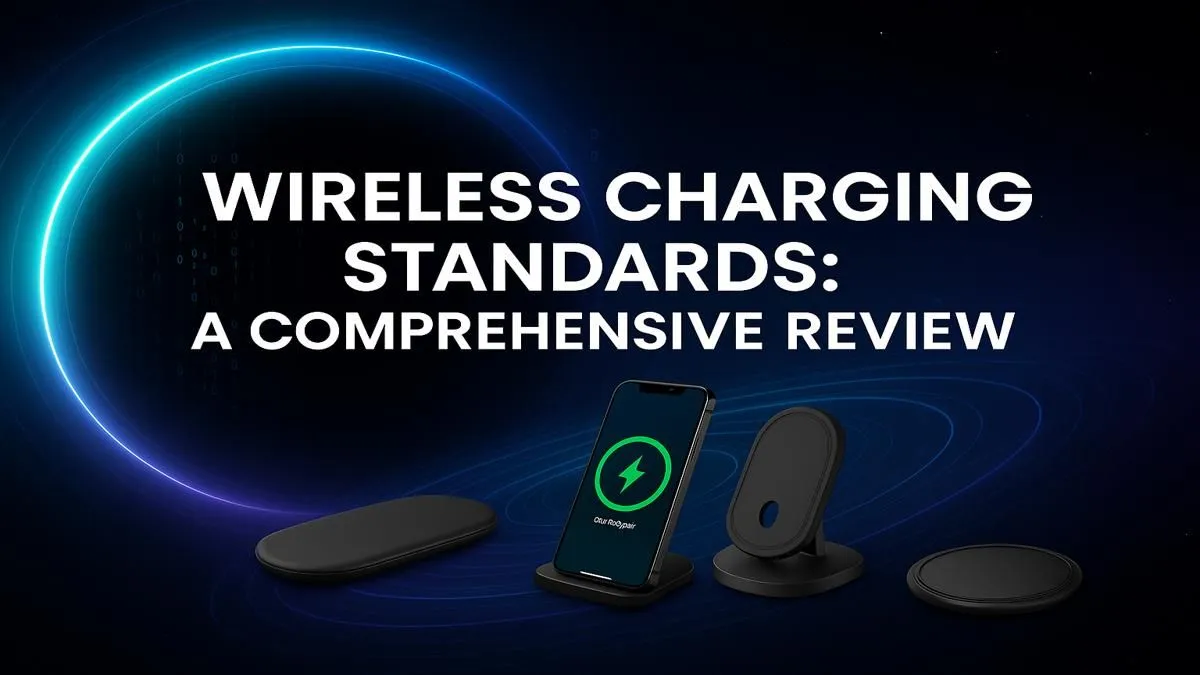
Tangled cables... the ancient enemy of every clean gaming setup in South Africa. You've spent hours optimising your rig, only to have a mess of charging wires ruin the aesthetic. Wireless charging promises a sleek, cable-free future, but then you see the jargon: Qi, Qi2, MagSafe. What's the difference, and which one is right for your gear? Let's cut through the noise and explain the wireless charging standards that actually matter.
Understanding the Basics of Wireless Charging
At its core, wireless charging (the kind in your phone) uses a principle called inductive charging. Imagine two copper coils. One in the charging pad creates a magnetic field, and a second coil in your device converts that field back into electricity to charge your battery. Simple, right? ⚡
But for this to work between a Samsung phone and an Anker charger, they need to speak the same language. That's where wireless charging standards come in. They ensure that devices and chargers from different manufacturers are compatible, safe, and efficient. The big boss in this space is the Wireless Power Consortium (WPC), and their standard is called Qi.
The Qi Standard: The Universal Foundation
Pronounced "chee," Qi is the OG, the universal standard you'll find in millions of devices worldwide, from flagship smartphones to wireless earbuds. It’s the reason you can place your Android phone on a charging pad in a coffee shop and have it just... work.
However, the original Qi standard has its quirks. Its biggest drawback is alignment. If you don't place your device perfectly on the charging coil, it might charge slowly or not at all, generating excess heat. While it supports up to 15W, many devices and pads only negotiate slower speeds. It’s a solid foundation, but there was room for improvement, especially when you need a reliable charge for all your charging pads for gaming accessories.
Enter Qi2: The Smarter, Faster Successor
This is where things get exciting. Qi2 (pronounced "chee-two") is the next major evolution of the wireless charging standard, and it brings a massive upgrade by officially incorporating a Magnetic Power Profile (MPP). If that sounds familiar, it's because it's built on the MagSafe technology Apple introduced.
So, what does Qi2 mean for you?
- Perfect Alignment, Every Time: Magnets snap your device into the optimal charging position. No more waking up to a phone that didn't charge. ✨
- Improved Efficiency: Better alignment means less energy is wasted as heat, making the process faster and safer for your device's battery.
- Guaranteed 15W Charging: Qi2 provides a consistent and reliable 15 watts of power for compatible devices, levelling the playing field for both Apple and Android users.
Best of all, Qi2 is fully backwards-compatible. A new Qi2 charger will still power up your older Qi-only devices perfectly. It's a true step forward, and you can explore some of the latest charging solutions to see this tech in action.
Check Your Wattage! 🔌
A powerful wireless charger needs a powerful wall adapter. Plugging a 15W wireless pad into an old 5W phone brick will bottleneck your charging speed. Always match your power adapter's output (in watts) to your wireless charger's requirements for the best performance.
Why Wireless Charging Standards Matter for Your Setup
Okay, but how does this tech talk translate to your desk? Imagine this: you’ve just wrapped up a marathon session of Helldivers 2. Your phone and wireless headset are both low on juice. Instead of fumbling for two different cables in the dark, you simply snap them onto a multi-device Qi2 charging stand. It's clean, convenient, and keeps your battle station looking pristine. 🚀
Understanding these wireless charging standards ensures you buy gear that works together seamlessly. Investing in a Qi2-certified charger today is a smart move, future-proofing your setup for the next generation of devices while still supporting your current tech. For a reliable experience, it's always best to stick with quality Promate chargers and other certified brands.
Beyond Qi2: What's Next and How to Choose
The future of wireless power is even more ambitious, with technologies aiming to charge devices over a distance, no contact required. But for now, Qi2 is the pinnacle of convenient, reliable charging.
When you're ready to upgrade, here's what to look for:
- Check Your Device: Does your phone or accessory support Qi or the newer Qi2 standard? The latest iPhones (13 and newer) and some new Androids are Qi2-ready.
- Look for the Logo: Only buy chargers with the official Qi or Qi2 logo. This guarantees they've been tested for safety and performance.
- Consider Your Needs: Do you need a simple flat pad, an upright stand, or a 3-in-1 station for your phone, watch, and earbuds?
Don't risk your expensive tech with a cheap, uncertified knock-off. A quick search for certified Promate chargers is a great place to start for gear you can trust.
Ready to Cut the Cord for Good?
Understanding wireless charging standards like Qi and Qi2 means you can build a smarter, cleaner, and more efficient tech setup. Stop wrestling with cables and step into the future. Explore our huge range of chargers and find the perfect power solution for your gear today.