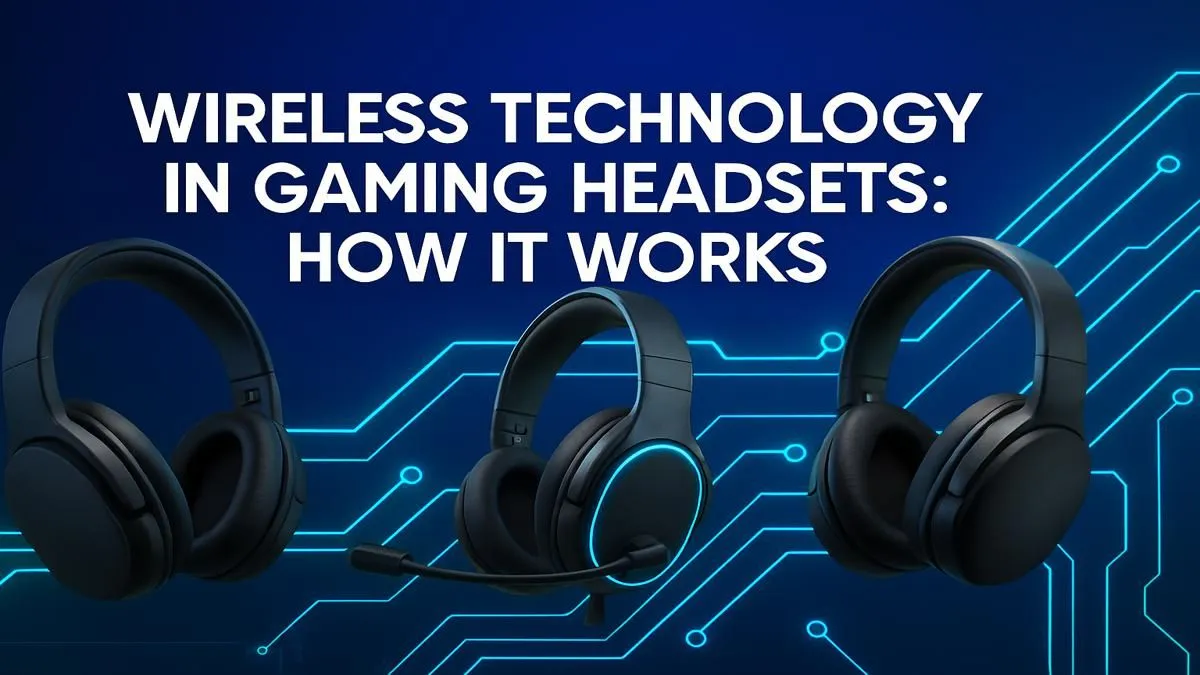
You’re in a 1v3 clutch on Anubis. You hear the last enemy defusing... you swing around the pillar, but your mouse cable snags on your headset wire. Yoh, that’s a rage-quit moment. It’s exactly why understanding the wireless tech in gaming headsets is so crucial for South African gamers. Cutting the cord isn't just about convenience; it’s about untethered performance when it matters most. Let’s dive into what makes modern gaming headsets tick.
The Core Wireless Headset Tech Explained
So, how does that crystal-clear audio get from your PC or console to your ears without a single wire? It boils down to two main technologies: 2.4GHz Radio Frequency (RF) and Bluetooth. Think of it like this: 2.4GHz is your own private, high-speed lane on the N1, while Bluetooth is more like a busy public road with other traffic. Both get you there, but one is built for pure, uninterrupted speed. ⚡
For gaming, that speed translates to lower latency—the delay between an in-game sound happening and you hearing it. Lower latency is non-negotiable for competitive play.
2.4GHz vs. Bluetooth: The Gamer's Choice
Choosing the right wireless audio technology depends entirely on your needs. Are you a competitive fragger or a casual adventurer?
2.4GHz RF: For the Competitive Edge
This is the gold standard for serious gaming. It works via a small USB dongle that creates a dedicated, low-latency connection with your headset. This means a rock-solid signal with minimal delay, so you hear enemy footsteps the instant they happen. If you're chasing high ranks in Valorant or Apex Legends, this is the tech you need. It's the reason most options in our range of wireless headsets use 2.4GHz.
Bluetooth: The Versatile All-Rounder
Bluetooth is brilliant for its convenience. You can connect to your PC, your phone, or your laptop without needing a specific dongle. It's perfect for casual single-player games, listening to music, or jumping on a Discord call while making coffee. The trade-off is slightly higher latency and a connection that can sometimes be less stable in crowded wireless environments.
Pro Tip: Dongle Placement Matters
For the best 2.4GHz connection, plug your dongle into a front USB port on your PC, or use a USB extension cable to get it closer to you. This minimises signal interference from other components.
What About Console Gaming? 🎧
Console gamers have unique needs, and headset manufacturers have developed specific wireless tech to match.
- PlayStation: Sony's PS5 uses its own Tempest 3D AudioTech to create incredibly immersive soundscapes. To get the most out of it, you'll want headsets optimised for PlayStation that can seamlessly integrate with the console's audio processing.
- Xbox: Microsoft uses a proprietary "Xbox Wireless" protocol. This allows certain licensed Xbox wireless headsets to connect directly to the console just like a controller—no dongle required. It’s a beautifully simple and stable solution.
But Is Wired Still Relevant?
Absolutely. While wireless offers freedom, you can never beat the raw, unfiltered performance of a wire. For audiophiles who want the absolute best sound quality for their ZAR, or for streamers who need a zero-latency connection that will never run out of battery mid-stream, a high-quality wired headset remains an unbeatable choice. It's a simple, reliable, and often more affordable way to get premium audio. ✨
Ready to Cut the Cord?
The right wireless tech in a gaming headset can seriously elevate your play. Whether you need the split-second response of 2.4GHz or the versatility of Bluetooth, the perfect fit is waiting for you. Check out the latest gaming headset deals and find your competitive edge today.