That familiar, nagging ache after a marathon gaming session… or a long day chasing deadlines. Your wrists are complaining, and that crisp, clicky mechanical keyboard you love suddenly feels like the enemy. You're not alone. Mechanical keyboard wrist pain is a common issue for many South African gamers and professionals. But don't ditch your beloved board just yet. The solution isn't giving up the gear you love; it's about optimising your setup and habits. ⌨️
Understanding the Source of Keyboard Wrist Pain
Before we dive into fixes, let's quickly understand the problem. Most wrist pain from mechanical keyboards comes from two main ergonomic mistakes:
- Wrist Extension: This happens when your wrists are bent upwards to reach the keys. Standard keyboards are often thick, forcing your hands into this unnatural angle.
- Ulnar Deviation: This is when your wrists bend outwards towards your pinky fingers to align with the standard key layout.
Over time, holding these positions causes strain on your tendons and nerves, leading to discomfort and potentially more serious repetitive strain injuries (RSI). The goal is to keep your wrists as straight and neutral as possible.
Your First Line of Defence: Ergonomic Setup
Getting your posture right is the most crucial step in preventing wrist pain from your keyboard. It costs nothing but a few minutes of adjustment and makes a massive difference.
The 90-Degree Rule
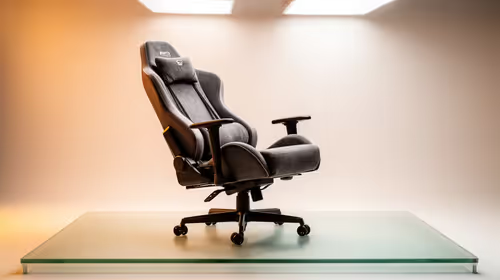
Your chair and desk are the foundation of your comfort. Sit with your back straight, feet flat on the floor. Adjust your chair height so that your elbows are bent at a roughly 90-degree angle when your hands are on the keyboard. Your wrists should float in a straight line from your forearms to your fingers, not be bent up or down.
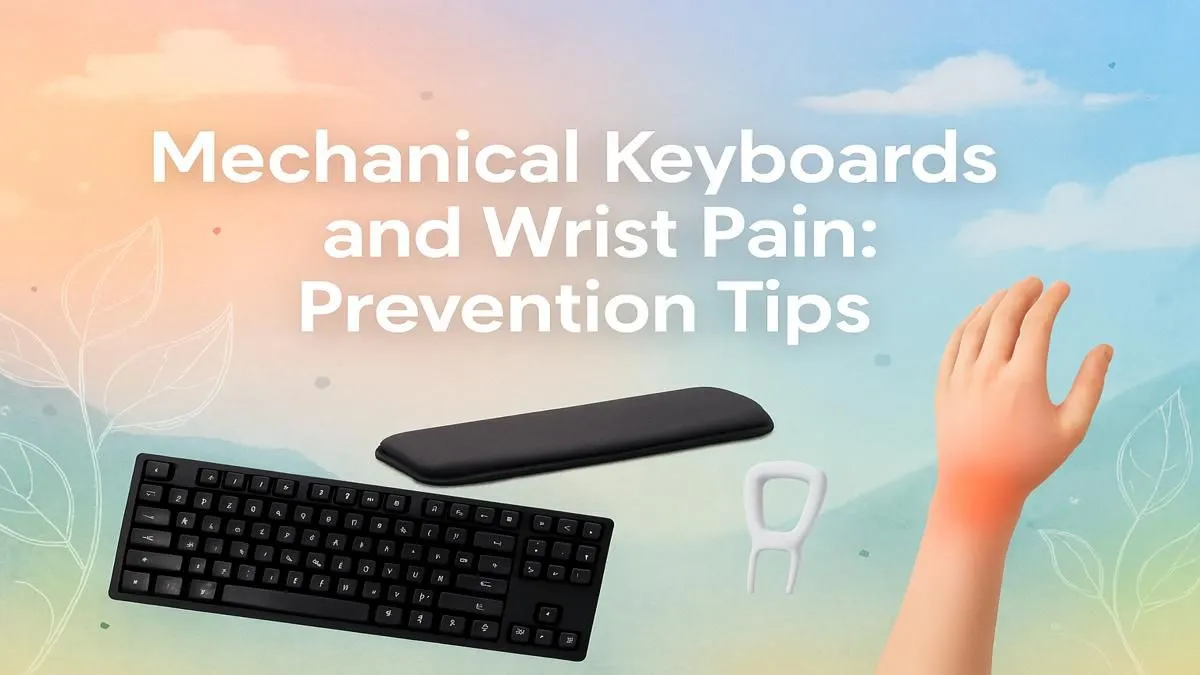
This is where a dedicated wrist rest can be a lifesaver. It elevates your palms, helping to maintain that crucial neutral wrist position and reducing extension. Investing in a quality wrist rest is one of the most effective upgrades you can make to combat mechanical keyboard wrist pain.
Ergonomics 101 Check ⚡
Look down at your forearms and hands while typing. Is there a straight line from your elbow to your fingertips? If your wrist is bent up or down, your setup needs adjustment. This simple visual check can save you a world of hurt.
Choosing the Right Gear to Prevent Strain
While posture is key, your hardware definitely plays a role. If you're serious about comfort, consider how your keyboard's design impacts your body.
Keyboard Profile and Switches
Not all mechanical keyboards are created equal. High-profile keyboards with steep angles can worsen wrist extension. Look for lower-profile designs or keyboards with negative tilt options (where the back is lower than the front).
The type of switch also matters. If you're using heavy, tactile switches, the repeated force can contribute to finger and wrist fatigue. Trying out boards with lighter, linear keyboard switches might reduce the effort needed for each keystroke, lessening overall strain.
Ergonomic Layouts and Combos
For those who spend all day typing, an ergonomic keyboard with a split or contoured layout can be a revelation. These designs position your hands more naturally, eliminating that harmful ulnar deviation. You can find excellent ergonomic keyboard and mouse combos that solve the problem for your entire desk setup. Even customising your board with sculpted keycap sets can subtly improve the feel and reduce reach. ✨
Smart Habits for Pain-Free Gaming and Work
Your gear and setup can only do so much. Developing healthy habits is the final piece of the puzzle for preventing long-term wrist strain.
- Take Frequent Breaks: It's easy to get lost in a competitive match or a complex spreadsheet. Set a timer to remind yourself to stand up, stretch, and give your hands a rest for a few minutes every hour.
- Perform Simple Stretches: Gently flex and extend your wrists. Make a fist, then spread your fingers wide. These simple movements improve blood flow and relieve tension.
- Type Lighter: Many of us hammer our keys with more force than needed. Try to relax and use a lighter touch. Your keyboard (and your tendons) will thank you.
You don't need to spend a fortune to be comfortable. Even many of the most affordable mechanical keyboards in South Africa can be part of a pain-free setup when combined with good posture and smart habits.