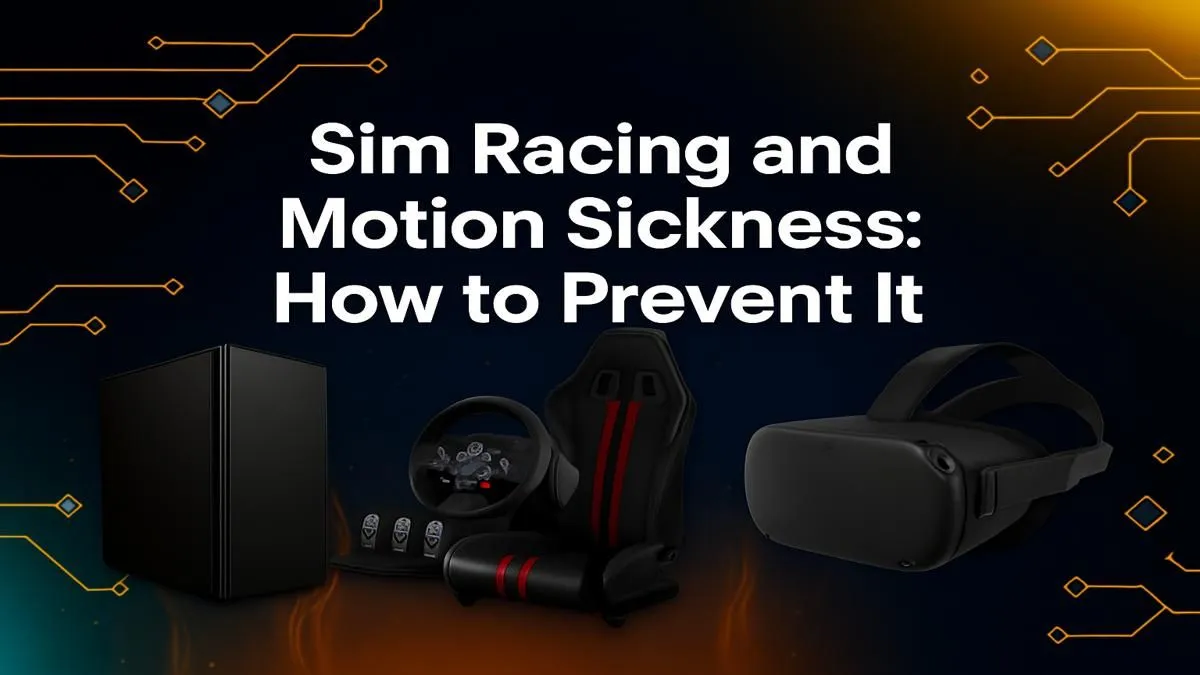
You’re lining up the perfect overtake at Kyalami. You nail the braking point, turn in... and then it hits you. That horrible, queasy feeling. Your head starts to spin, a cold sweat breaks out, and your race is ruined. Sim racing motion sickness is a frustrating reality for many drivers, turning a thrilling hobby into a nauseating experience. But don't hang up your helmet just yet. This guide will help you diagnose the cause and get back on track, sickness-free.
Understanding Sim Racing Motion Sickness
So, what causes this dreaded feeling? It's all about a sensory mismatch. Your eyes are screaming at your brain, "We're hurtling around a track at 200 km/h!" while your inner ear, which controls balance, calmly reports, "Nope, we're sitting perfectly still in a chair." This conflict between vision and physical sensation is what triggers the symptoms of motion sickness. The good news is that you can minimise this disconnect by optimising your setup and settings.
Optimise Your Rig to Prevent Nausea 🔧
Your physical setup is the first line of defence against sim racing nausea. A stable, correctly configured rig provides a solid foundation for your brain to believe the illusion of driving, reducing that sensory conflict.
Dial In Your Field of View (FOV)
This is arguably the most critical setting. An incorrect FOV, whether too wide or too narrow, forces your brain to work harder to process spatial information, leading to disorientation. Use an online FOV calculator to get a precise value based on your monitor size and distance from the screen. A correct FOV makes the in-game world look and feel natural, drastically reducing the chances of motion sickness.
Frame Rate is King
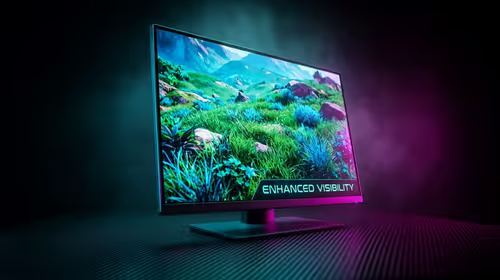
A smooth, stable frame rate is non-negotiable. Your brain hates stuttering, screen tearing, and sudden frame drops. Aim for a consistent 60 FPS or higher. If your PC is struggling, lower some graphical settings like shadows or post-processing. A consistent visual feed is much more comfortable than a choppy, high-detail one.
Quick Fix for Screen Tearing ⚡
If you're seeing jagged, torn frames, try enabling V-Sync or, if your monitor supports it, G-Sync FreeSync. This synchronises your monitor's refresh rate with your GPU's output, creating a much smoother and more comfortable visual experience that can help prevent motion sickness in sim racing.
A Rock-Solid Cockpit
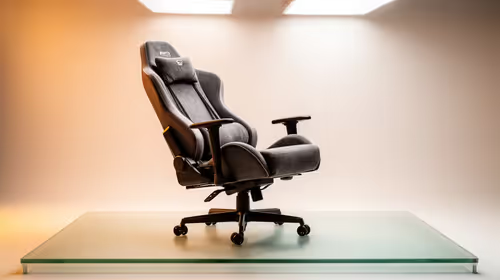
A wobbly desk or unstable wheel stand can make motion sickness worse. Every little movement that doesn't correspond to the on-screen action contributes to the sensory mismatch. Securing your gear is vital. For the ultimate stability and ergonomic positioning, nothing beats a purpose-built cockpit. A dedicated Playseat chair not only eliminates wobble but also improves your posture and immersion, making your brain feel more connected to the car.
In-Game Settings That Make a Difference
Once your hardware is sorted, it's time to dive into the game's graphics menu. Many racing sims include effects designed to increase "realism" that can actually be major triggers for motion sickness.
Start by disabling these settings:
- Motion Blur: This effect is a primary cause of nausea for many people. Turn it off completely.
- Camera Shake / Head Bobbing: While it might seem immersive, this artificial movement is a fast track to feeling ill. Look for settings like "Lock to Horizon" to keep your view stable.
- Depth of Field: A shallow depth of field can cause eye strain and disorientation. Disable it for a clearer, more comfortable view.
Personal Tips for a Sickness-Free Race 🏁
Sometimes, the final adjustments are about you, the driver. Building up your tolerance and creating a comfortable environment can make all the difference.
Start with short 15-20 minute sessions and take breaks. Don't try to push through the feeling of nausea; it will only get worse. Over time, your brain will adapt, and you'll be able to drive for longer periods. Pointing a small fan at your face can also work wonders. The moving air helps trick your senses and keeps you cool under pressure. Finally, responsive hardware reduces the delay between your input and the car's reaction. Using a high-quality Thrustmaster wheel and pedals can make the experience feel more direct and intuitive, further closing that gap between your actions and what you see on screen.
Ready to Build Your Ultimate Rig?
Sim racing motion sickness is beatable, and the right gear is a massive part of the solution. From stable cockpits to ultra-responsive wheels, a proper setup provides the immersive, comfortable experience you need to race for hours. Explore our complete sim racing range and find the perfect hardware to leave motion sickness in your rearview mirror.