

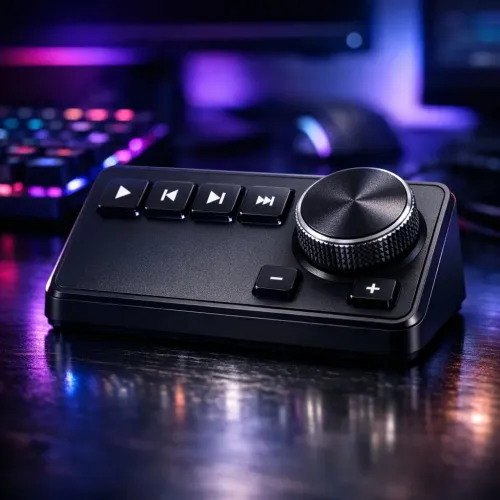
Dedicated Media Keys for Streamers: Improve Workflow Fast
Dedicated media keys give streamers one-touch control to mute, switch scenes, clip highlights, and adjust audio — cutting task time and boosting consistency 🎛️⚡
Read moreSearching for the best 240Hz gaming monitor? Unlock ultra-smooth gameplay and gain a competitive edge with our expert guide. We break down panel types, response times, and top picks to help you choose the perfect display for your rig. Get ready for buttery-smooth visuals! 🚀🎮
Chasing that final circle in Apex Legends? Every millisecond counts. In the hyper-competitive world of South African esports, a standard monitor just won't cut it. Upgrading to one of the best 240Hz gaming monitors isn't just a luxury; it's a fundamental step towards unlocking your true potential. This guide will help you navigate the specs, decode the jargon, and find the perfect high-refresh-rate display for your battle station right here in SA. 🚀
So, what’s the big deal with 240Hz? It’s all about smoothness and speed. A 240Hz monitor refreshes the image on screen 240 times per second—four times faster than a standard 60Hz display. For fast-paced games like Valorant, CS2, or Warzone, this translates into a massive competitive advantage.
You'll experience:
It’s the kind of upgrade you feel immediately. If you're serious about competitive gaming, finding the right high-refresh-rate screen from Evetech's massive range of gaming monitors is a non-negotiable step up.
Not all 240Hz monitors are created equal. Getting the best performance for your ZAR means understanding the core components that make up the ultimate 240Hz gaming monitor. Let's break down the essentials. 🔧
In 2025, the choice is simpler than ever. While older TN panels offered speed at the cost of poor colour, modern IPS (In-Plane Switching) panels deliver the best of both worlds: lightning-fast response times and vibrant, accurate colours. VA (Vertical Alignment) panels offer deeper blacks but can sometimes struggle with ghosting in dark scenes. For most gamers, an IPS panel is the top choice.
This is a crucial decision that depends entirely on your GPU.
Before buying a 240Hz monitor, make sure your graphics card can actually push 240 FPS in your favourite games at your chosen resolution. There's no point in a super-fast screen if your rig can only manage 100 FPS!
For many, a curved screen adds a new level of immersion, wrapping the game world around your field of view. This is especially noticeable on larger displays (27 inches and up). A subtle curve can make gameplay feel more natural and reduce eye strain during long sessions. If you want that wrap-around feeling, it's well worth it to explore these stunning curved monitors to see if one fits your setup.
Once you've nailed down the core specs, the final choice comes down to your budget and specific needs. Do you need a highly adjustable stand for perfect ergonomics? How many DisplayPort or HDMI inputs do you require? These small details can make a big difference in day-to-day use.
The good news is that what was once enthusiast-only tech is now more accessible than ever. You can find a fantastic 240Hz monitor without breaking the bank. It always pays to check for specials and find some kief bargains on our best PC monitor deals page, where top-tier performance meets incredible value. Whether you are building a new rig or just upgrading your screen, you can browse all our PC monitors to find the perfect fit. ✨
Ready to See the Difference? Your search for the ultimate 240Hz monitor ends here. Shop the best PC monitor deals at Evetech for performance that leaves lag in the dust.
Absolutely. For competitive gamers, especially in FPS titles, a 240Hz monitor provides incredibly smooth motion and reduced input lag, offering a tangible advantage over 144Hz.
To consistently hit 240 FPS, you'll need a powerful GPU. Aim for an NVIDIA GeForce RTX 3070 / 4060 or an AMD Radeon RX 6800 / 7700 XT or higher for optimal performance.
The best 240Hz monitor for FPS games often features a 1ms response time and a TN or fast IPS panel for minimal motion blur, like models from Alienware, BenQ, or ASUS ROG.
1080p is easier for GPUs to run at 240 FPS, making it ideal for pure competitive performance. 1440p offers better visual fidelity but requires a more powerful graphics card.
Both technologies prevent screen tearing. G-Sync is NVIDIA's proprietary tech, often found on premium monitors. FreeSync is an open standard from AMD, offering wider compatibility.
Yes, especially in fast-paced games. The jump from 144Hz to 240Hz results in noticeably smoother visuals and faster on-screen response, crucial for competitive play.
Dedicated media keys give streamers one-touch control to mute, switch scenes, clip highlights, and adjust audio — cutting task time and boosting consistency 🎛️⚡
Read more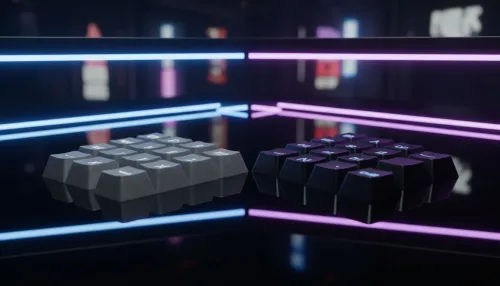
PBT vs ABS keycaps: Clear, local guide for South African gamers—compare feel, sound, durability and where to buy. Find the best material for your budget and playstyle 🎮🇿🇦
Read more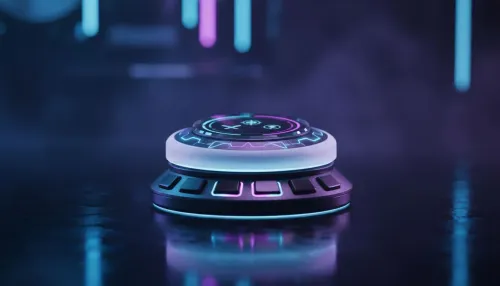
- Multi-Function Digital Dial: define benefits - Show gamer setups and macros - Offer buying and setup tips Multi-Function Digital Dial puts programmable control at your fingertips for faster actions and smoother streaming. 🎮⚙️
Read more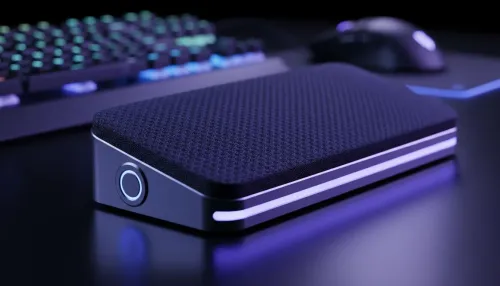
- Explain benefits; - Show the science; - Compare options; - Recommend picks. Magnetic wrist rest for gaming cuts wrist strain and boosts comfort during long sessions 🕹️✨
Read more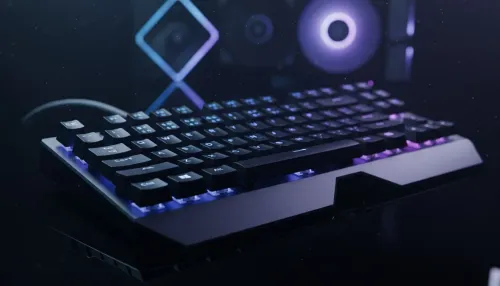
best gaming keyboard South Africa: Learn how to pick a low-latency mechanical keyboard, choose switches, layout and budget for competitive play 🎮⚡
Read more
Best wireless keyboard and mouse combo for small desks — curated, space-saving picks that boost comfort and productivity in tight setups. Find low-profile layouts, compact mice, and reliable range to fit your compact workstation. 🖱️⌨️
Read more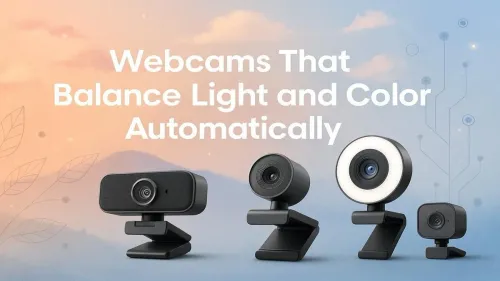
Discover webcams that automatically adjust light and color for crystal-clear video calls 🎥✨. Boost your streaming quality today!
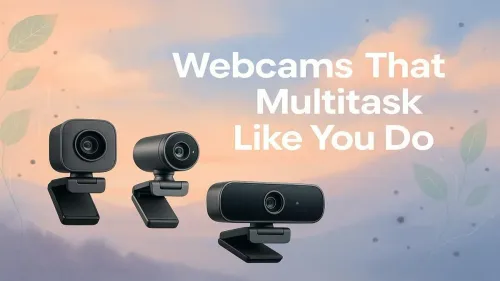
Discover webcams that blend into your workflow 🎯 Capture moments while you work, stream, or create. Upgrade your setup with smart, multitasking tech!
Dedicated media keys give streamers one-touch control to mute, switch scenes, clip highlights, and adjust audio — cutting task time and boosting consistency 🎛️⚡
PBT vs ABS keycaps: Clear, local guide for South African gamers—compare feel, sound, durability and where to buy. Find the best material for your budget and playstyle 🎮🇿🇦
- Multi-Function Digital Dial: define benefits - Show gamer setups and macros - Offer buying and setup tips Multi-Function Digital Dial puts programmable control at your fingertips for faster actions and smoother streaming. 🎮⚙️
- Explain benefits; - Show the science; - Compare options; - Recommend picks. Magnetic wrist rest for gaming cuts wrist strain and boosts comfort during long sessions 🕹️✨