Quick Answer
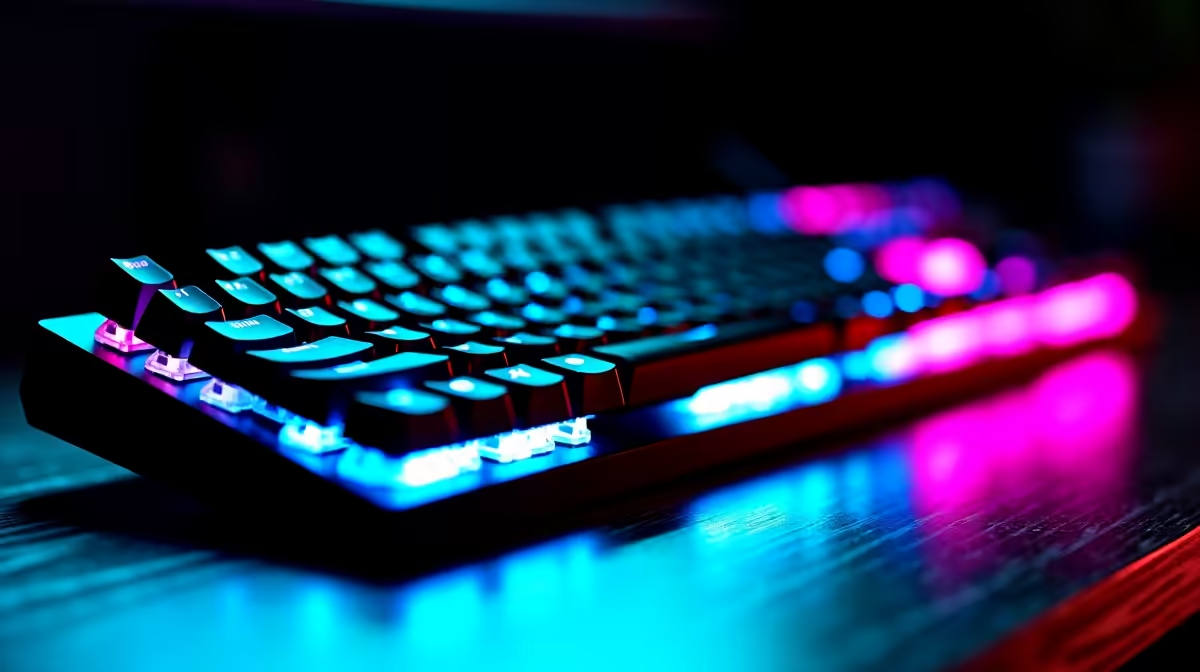
The best keyboards for fighting games prioritise fast, consistent actuation and precise key registration for executing complex inputs like special moves, supers, and frame-perfect combos. Mechanical keyboards with linear or tactile switches are the top choice, and features like N-key rollover and minimal input latency separate the best options from the rest.
Why Switches Matter More Than Brand for Fighting Games
Fighting games punish imprecise inputs. A missed hadouken or a dropped combo because a keypress registered late or not at all has direct consequences in competitive play. The switch type under each keycap determines how much force is needed to actuate, how far the key must travel before registering, and how tactile the feedback is. For fighting games, linear switches are popular because they actuate smoothly without a tactile bump or click, making rapid repeated inputs and rolling motions easier to execute cleanly. Common linear options include Cherry MX Red and Speed Silver, Gateron Yellow, and Kailh Red. Tactile switches like Cherry MX Brown give a bump feedback that some players prefer for directional inputs, as the tactile sensation confirms the input without requiring the key to bottom out.
N-Key Rollover and Anti-Ghosting
N-key rollover (NKRO) is a critical feature for fighting game keyboards. It means every key on the board can be pressed simultaneously and registered independently, with no missed inputs regardless of how many keys are held. This matters because fighting game inputs often involve holding a direction while pressing two or three attack buttons simultaneously. A keyboard without NKRO or with only 6-key rollover may drop inputs during complex multi-button presses, costing you a move or a combo at the worst possible moment. All quality gaming keyboards sold in South Africa include at least 6-key rollover, and most dedicated gaming boards offer full NKRO. Confirm this specification before buying.
Actuation Force and Travel Distance for Fighting Games
Fighting game inputs benefit from switches that actuate with low to moderate force and short travel distance. This allows quick succession inputs like quarter-circle motions to be completed cleanly without requiring full key travel. Cherry MX Speed Silver switches actuate at 1.2mm of travel compared to 2mm for standard MX Reds, making them among the fastest-actuating options available. However, very short actuation distance can cause accidental inputs if your fingers rest lightly on keys between inputs. Most experienced fighting game keyboard players find standard linear switches at 2mm actuation a good balance between speed and input accuracy. High actuation force switches like Cherry MX Black (60g) are rarely recommended for fighting games as they slow down rapid input sequences.
Keyboard Form Factor and Layout Considerations
Full-size and tenkeyless (TKL) keyboards are both widely used for fighting games. The numpad is irrelevant for fighting game inputs, so TKL is a popular choice for its smaller footprint without sacrificing the keys used in gameplay. Some players prefer compact 65% or 75% layouts that remove the function row as well, though this can complicate access to in-game menu navigation. A stable, heavy keyboard with good rubber feet is important: fighting game inputs involve fast directional movements, and a lightweight keyboard can slide on a desk during intense play. Keyboards with a sturdy aluminium top plate or heavier plastic housing stay in place better than ultra-light boards.
Frequently Asked Questions
Is a mechanical keyboard better than a controller or arcade stick for fighting games? All three are viable at competitive levels. Keyboards offer precise digital input for directional commands, which some players find easier than analogue stick motions. Many top-level players in titles like Street Fighter and Tekken compete successfully on keyboard.
Do optical switches work well for fighting games? Yes. Optical switches actuate via a light sensor rather than a metal contact, offering fast and consistent registration without the debounce delay present in some mechanical switches. They are an excellent choice for fighting games.
What polling rate do I need on a keyboard for fighting games? A 1000Hz polling rate is standard on gaming keyboards and sufficient for fighting games. Some keyboards now offer 4000Hz or 8000Hz, which reduces input latency further, though the difference is marginal in practice.
Can I use a budget mechanical keyboard under R500 for fighting games? Yes. Many budget gaming keyboards include linear or tactile mechanical switches and adequate N-key rollover. The key is confirming the switch type and NKRO support rather than focusing on brand or RGB features.
Ready to Find Your Perfect Match? Shop gaming keyboards at Evetech