Quick Answer
For first-year UP students, a 24-inch 1080p IPS monitor at 75-100Hz hits the sweet spot for studying, light gaming and koshuis-friendly desk space. Stretch to 27-inch 1440p only if your course involves CAD, design or coding with multiple windows.
What First-Year UP Students Actually Need
Lectures at Hatfield campus mean long hours in front of slides, PDFs and online resources. A flicker-free IPS panel with low blue light modes saves your eyes during late-night Stellenbosch-style assignments. The display should fit a typical res-room desk where space is tight, so 24-inch usually works better than a sprawling ultrawide. Adjustable height also matters because koshuis desks are rarely the right ergonomic height by default. Most first-year courses lean heavily on PDF textbooks, ClickUP videos and live online tuts, so panel comfort matters more than gaming-grade refresh rates for the average student.
Best Budget Pick for Most UP Courses
A 24-inch 1080p IPS monitor like the MSI Pro MP243 or LG 24MR400 lands in the R2,200 to R3,200 range in SA. Both run 75Hz refresh, AMD FreeSync compatibility and HDMI plus VGA inputs that work with older campus projectors during group presentations. Battery-friendly DisplayPort over USB-C variants exist for around R3,500, useful if you're carrying a laptop between res and lecture halls. Built-in speakers are usually rubbish on monitors at this price, so plan to keep using your laptop speakers or a pair of headphones for zoom tuts.
Stepping Up for Engineering, BSc or BIS
Engineering, computer science and information science students who run AutoCAD, Solidworks, MATLAB or Visual Studio benefit from a 27-inch 1440p IPS. The extra resolution lets you run a code editor and a browser side by side without fonts looking cramped. Models like the LG 27QN880 or AOC Q27P3CW run around R5,500 to R7,500. The bigger panel means moving to a dedicated desk rather than a corner of your bed, which is honestly better for productivity anyway. Engineering students working on large CAD assemblies will also appreciate the colour accuracy of these IPS panels for rendering work.
Gaming on the Side
If you're bringing a gaming laptop or desktop to res for after-hours play, 144Hz becomes worth the extra rand. A 24-inch 1080p 144Hz panel like the MSI G244F runs around R3,800. It still handles study tasks fine and handles Valorant or CS2 LAN sessions when the digs crew is around. NSFAS-funded students should prioritise a base 1080p IPS first and chase higher refresh on year-two upgrades. UP res LAN nights happen often enough that a slightly higher refresh panel pays off socially.
Loadshedding and Power Tips
Monitors aren't huge power draws (most modern IPS panels under 30W), but plugging through a small UPS keeps your screen on during stage 4 to 6 transitions, especially useful when finishing assignments before midnight cut-offs on ClickUP. A 600VA UPS handles a laptop and monitor for 30+ minutes, plenty to wrap up and save before total shutdown. UP campus has fairly reliable backup, but res accommodation often shares the broader suburban grid.
Connectivity for SA Student Setups
Most modern monitors include HDMI, DisplayPort and sometimes USB-C with power delivery. USB-C is genuinely useful if your laptop supports it, since one cable charges the laptop and drives the display, leaving the koshuis desk less cluttered. Older laptops might only have HDMI, which works fine but means a separate charging cable. Check your laptop's spec sheet before assuming USB-C support exists.
Mounting and Desk Space
VESA mount support (100x100mm) lets you swap to a desk arm later, freeing up surface space for a coffee mug, notepad and lecture-recording mic. Cheap desk arms run around R600 to R1,200 in SA and dramatically improve a small res desk's usability.
Frequently Asked Questions
Is curved monitor worth it for first year?
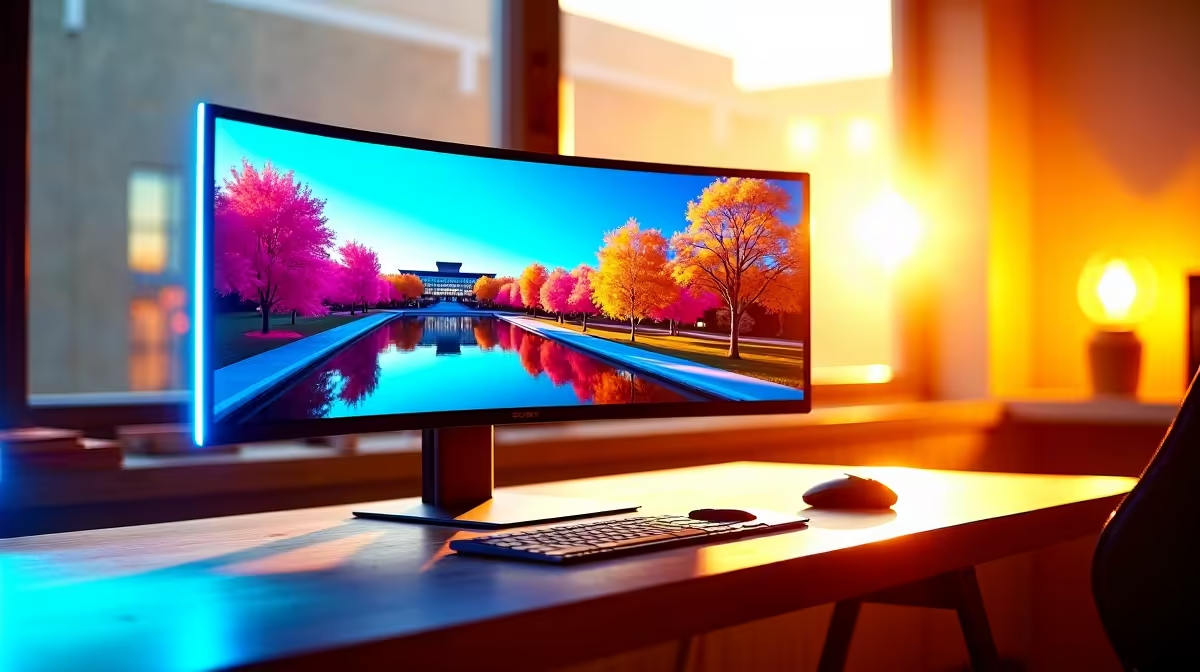
Probably not. Curved is nice for immersion in racing games, but for studying, a flat panel keeps document edges undistorted. Save the curve upgrade for honours year.
Should I get USB-C connectivity?
Worth it if your laptop has Thunderbolt or USB4. One cable handles video, charging and peripherals, which keeps the koshuis desk tidy. Expect to pay R800 to R1,500 extra for that feature.
Can I share one monitor between desktop and laptop?
Yes. Most monitors have multiple inputs (HDMI plus DisplayPort) and a button or auto-detect to swap sources. Useful for switching between a desktop tower and a course laptop.
Ready to Find Your Perfect Match? Pick a monitor that suits res life and your degree workload. Shop monitors at Evetech