

Quick Answer
The best pop filters for gaming setups in South Africa in 2026 include dual-layer nylon and metal mesh designs priced between R200 and R800. A good pop filter eliminates plosive sounds on vocals and microphone recordings, improving stream and podcast audio quality significantly without requiring expensive microphone upgrades.
A pop filter is one of the highest-return investments in any gaming setup that involves a microphone - whether you are streaming, recording podcasts, doing voice overs for content, or joining voice chat with clarity. In South Africa in 2026, quality pop filters are more accessible than ever, and understanding what separates a functional product from a waste of money makes the buying decision straightforward.
What a Pop Filter Actually Does
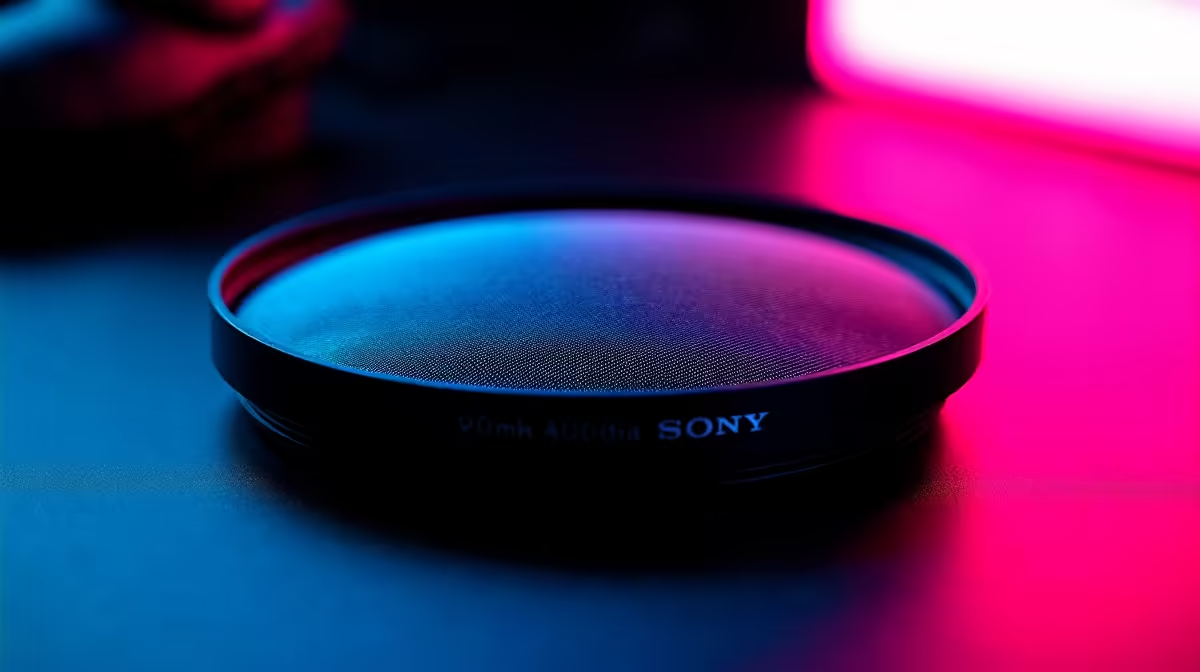
A pop filter sits between your mouth and your microphone capsule and disperses the burst of air that accompanies plosive consonants - specifically the hard ''p'' and ''b'' sounds that cause a low-frequency thump in audio recordings. Without a pop filter, these plosives overload the capsule momentarily and produce an unpleasant boom that is almost impossible to remove cleanly in post-production. A well-designed pop filter scatters this air burst across a larger surface area before it reaches the capsule, eliminating the problem at the source. Secondary benefits include reducing sibilance on ''s'' sounds and blocking saliva particles from reaching and degrading the microphone capsule over time - relevant for long streaming sessions.
Nylon vs Metal Mesh Pop Filters
The two dominant pop filter materials are nylon fabric stretched across a frame and metal mesh with etched perforations. Nylon pop filters are the traditional choice - inexpensive, effective, and widely available. They attenuate high frequencies very slightly, which some vocal coaches consider a benefit for harsh-sounding voices. Metal mesh pop filters preserve high-frequency detail more accurately, making them preferred for music recording and professional-grade content creation where the full frequency response of a condenser microphone matters. For gaming streamers and voice chat, either material works well. Metal mesh is easier to clean and more durable but costs more. For most South African buyers in the R200–R500 price range, a quality dual-layer nylon pop filter is entirely adequate.
Mounting, Positioning, and Compatibility
Pop filters attach to microphone stands via a gooseneck clamp with an adjustable clip. The clamp should accommodate your stand''s vertical tube - most use a standard 5/8-inch thread and clamp diameter. Position the pop filter 5–10 cm in front of your microphone capsule and at a slight angle (10–15 degrees off perpendicular to the mic axis) so deflected air does not bounce directly back at the capsule. Speaking into the microphone at the same distance ensures the pop filter intercepts all plosives. For USB microphones on desk stands - common in South African gaming setups - confirm the pop filter clamp is compatible with your specific stand geometry before purchase. Some USB microphones have proprietary stand bases that require a flexible gooseneck attachment rather than a standard clamp.
Best Options for SA Gaming Setups
In the South African market, Blue Microphones'' pop filters (including those bundled with Blue Yeti accessories) are widely available and match the Yeti and Snowball USB microphones that dominate the entry-level streaming market here. Rode''s pop filters, designed specifically for use with the Rode NT-USB and PodMic, offer excellent build quality and precise fit for those microphones. Generic dual-layer pop filters available locally in the R150–R250 range are functional for gaming and streaming - check that the nylon is taut with no sag and that the gooseneck is long enough to position correctly. For content creators using XLR condenser microphones on boom arms, a professional-grade metal mesh pop filter in the R400–R800 range is a worthy long-term investment.
Frequently Asked Questions
Q: Do I need a pop filter if my microphone already has a built-in foam windscreen? A: Foam windscreens primarily reduce wind noise and minor breath sounds but are less effective at stopping hard plosive bursts than a dedicated pop filter. For indoor streaming and recording with no airflow, a pop filter provides better plosive control than foam alone.
Q: Can I use a pop filter with a headset microphone? A: Headset microphones are too small and close to the mouth for a standard pop filter to work effectively. The correct solution for headset plosives is adjusting the microphone position - slightly below and to the side of your mouth rather than directly in front.
Q: Will a pop filter affect my microphone''s sound quality? A: A quality nylon or metal mesh pop filter introduces no perceptible degradation to your recording at normal use distances. Budget nylon filters with loose or very thick weave can mute high frequencies slightly, which is why tautness and weave density matter when evaluating cheaper options.
Q: How do I clean a pop filter? A: Nylon pop filters can be gently hand-washed with mild soap and left to air dry. Metal mesh pop filters can be wiped down with a lightly damp cloth or rinsed under running water. Allow both to dry completely before use to avoid moisture reaching the microphone capsule.
Ready to Find Your Perfect Match? Upgrade your gaming and streaming setup with accessories and hardware from Evetech - South Africa''s gaming gear destination.











