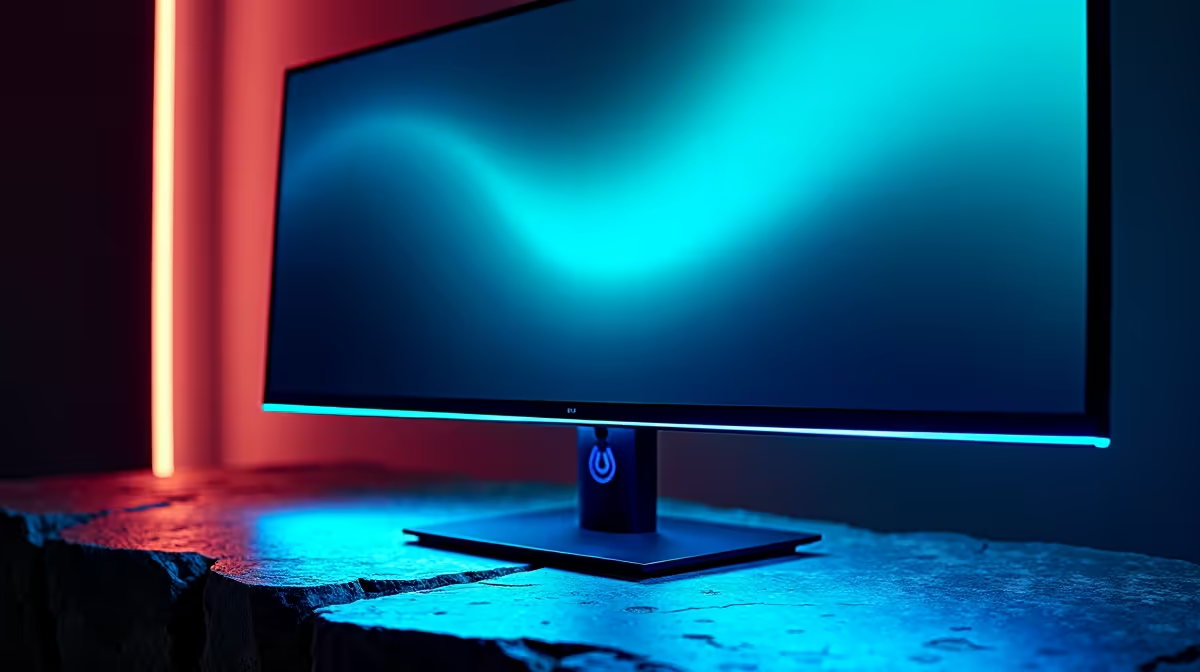
Ever crept through a dark corridor in Cyberpunk 2077 only to be distracted by a weird, hazy glow around your crosshair? That annoying halo effect, known as "blooming," can pull you right out of the game. It's a common issue on monitors with Full-Array Local Dimming (FALD) technology. The good news? You can easily run a FALD blooming test at home to see how your screen stacks up. Let's dive in.
What is FALD and Why Does It Cause Blooming?
Full-Array Local Dimming (FALD) is a premium backlight technology found in many high-end LCD/LED monitors. Instead of lighting the whole screen at once, it uses dozens or even hundreds of individual LED zones that can be dimmed or brightened independently. This allows for deep, inky blacks right next to brilliant highlights, creating stunning contrast. ✨
The catch? When a very bright object appears on a very dark background, the LED zone lighting it up can "bleed" light into neighbouring dark zones. This creates a visible halo or "bloom." A high-quality FALD blooming test helps you assess how well your monitor controls this effect. The quality of the local dimming algorithm and the number of zones play a huge role in minimising it across all types of PC monitors.
How to Perform a FALD Blooming Test at Home 🔧
Running a test for FALD blooming is simple and requires no special software. You just need the right conditions and content to reveal your monitor's true performance.
Step 1: Set the Scene
Turn off all the lights in your room. For the most accurate results, you need to be in near-total darkness. Any ambient light can mask subtle blooming and other screen imperfections.
Step 2: Find the Right Test Content
The easiest method is to open a pure black image and move your white mouse cursor around the screen. Alternatively, search YouTube for "FALD blooming test" or "local dimming test" videos. These often feature bright white objects moving slowly against a black background, which is perfect for spotting monitor blooming issues.
Pro Monitor Tip ⚡
Before you start, dive into your monitor's on-screen display (OSD) menu. Find the "Local Dimming" setting and cycle through its levels (e.g., Low, Medium, High). Some modes handle blooming better than others, and you might find a setting that offers the best balance of contrast and control for your specific panel.
Step 3: Observe Critically
As the bright object moves across the screen, pay close attention to its edges.
- Do you see a soft, hazy halo around it?
- Does the black background nearby suddenly look greyish as the object approaches?
- How far does the bloom extend from the object?
A good FALD implementation will keep this halo tight and minimal. If the bloom is large, distracting, and drastically changes the black levels, your monitor's local dimming might be on the aggressive or lower-quality side. This is a crucial check when browsing all our gaming monitors for your next purchase.
Interpreting Your FALD Blooming Test Results 🤔
So, you've run the test... now what? It's important to have realistic expectations.
A small amount of blooming is normal for almost all FALD monitors. Even the most expensive models can exhibit it in extreme-contrast scenes. The real question is: does it bother you during normal use? If you only notice it in a specific FALD blooming test video but never during gameplay or watching movies, you're probably in the clear.
However, if you constantly see distracting halos around subtitles, UI elements, or in-game scenery, it might be a sign of a panel with too few dimming zones or a less-optimised algorithm. This can be especially noticeable on immersive curved monitors where you expect a flawless wrap-around view. The goal is to find a monitor where the benefits of FALD's incredible contrast far outweigh the minor artefacting, especially on high-resolution 4K and 5K monitors where clarity is paramount.
Beyond Blooming: Other Flaws to Spot
While you're in a dark room scrutinising your screen, you can also check for other common display issues.
- Backlight Bleed: This typically occurs on edge-lit monitors and looks like patches of light leaking from the edges of the screen on a black background. Unlike blooming, it's static and doesn't follow objects.
- IPS Glow: This is a characteristic of IPS panels where you see a faint "glow" in the corners of the screen, often with a slight colour shift, when viewing dark content from an angle.
Understanding these differences helps you correctly identify any potential flaws in your display, whether it's a desktop powerhouse or one of the latest portable monitors. For perfectionists, investing in proper calibration tools and other monitor accessories can also help you get the absolute best picture possible.
Ultimately, performing a quick FALD monitor check empowers you as a buyer. It helps you understand the technology's trade-offs and decide if your current screen is truly delivering the premium, immersive experience you paid for.
Ready for a Flawless View?
A great monitor is the window to your gaming world, and you deserve a view without distracting flaws. If your FALD blooming test revealed some issues, or you're just ready for an upgrade, we've got you covered. Explore our massive range of PC monitor deals and find the perfect screen to conquer your next adventure.