If your stream looks 4K crisp but sounds like you’re shouting from a tin shack in the Karoo, viewers will bounce instantly. Audio is the backbone of content creation. For years, the GoXLR reigned supreme, but in 2025, the Rodecaster series is challenging the throne. We are breaking down the GoXLR vs Rodecaster debate to help you decide which audio interface deserves a spot on your desk. 🎧
The Legacy vs. The Revolution
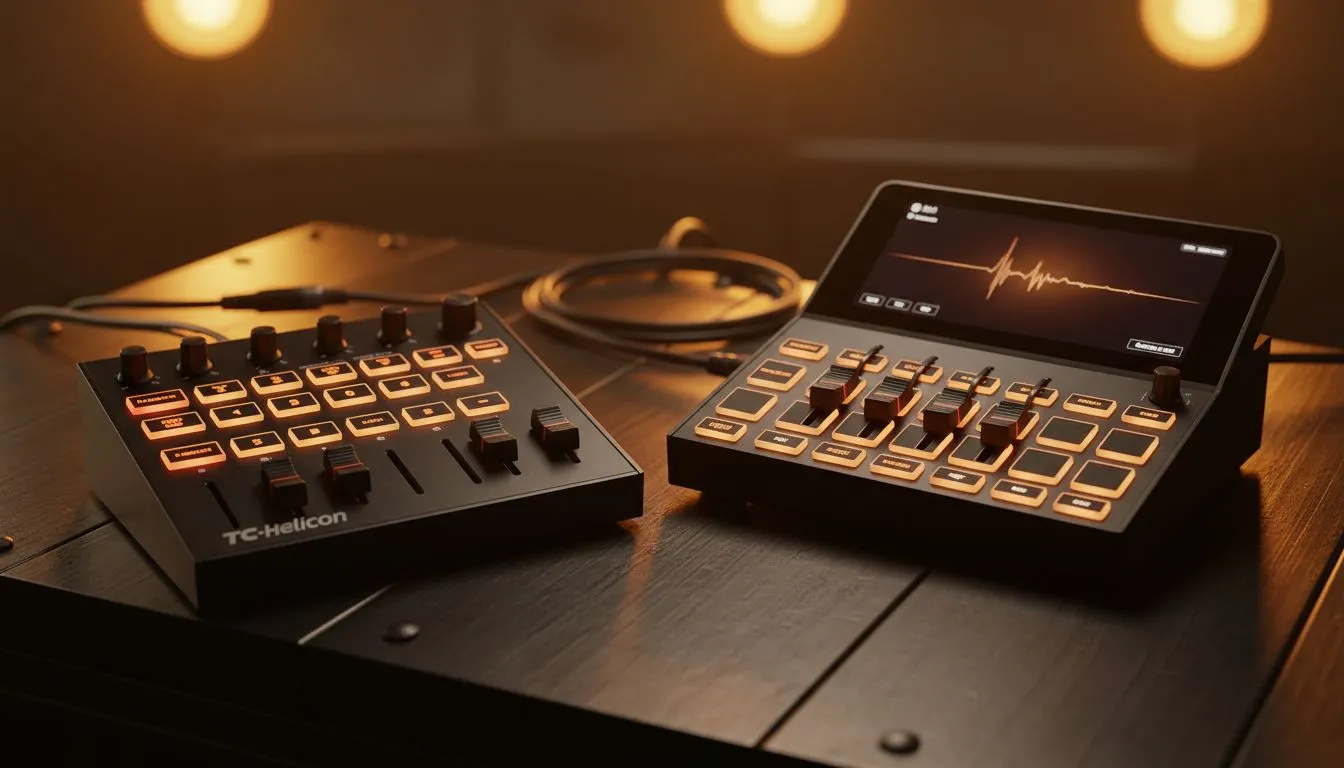
For a long time, the TC-Helicon GoXLR was the only serious option for streamers. It combined a mixer, sampler, and voice effects into one unit. However, with software support slowing down, many South African creators are looking at the Rodecaster Pro II and Rodecaster Duo.
While the GoXLR offers that classic "gamer" aesthetic with RGB sliders, the Rodecaster brings broadcast-grade preamps that can power even the most demanding microphones without needing a cloud lifter. If you are chasing pure audio fidelity in 2025, the hardware inside the Rodecaster is objectively newer and quieter.
Routing and Software Control
The magic of these devices lies in how they handle audio routing... sending game audio to the stream while keeping Discord chat private, for example. The GoXLR’s routing table is legendary for its simplicity. You can drag and drop sources easily. However, it requires a PC to function.
The Rodecaster is a standalone unit. It has its own OS. This means if your PC crashes, your audio keeps going. To manage these complex audio lanes visually, you will want decent screen real estate. Having dual PC monitors is essential so you can keep your OBS and audio software open simultaneously without alt-tabbing.
The Dual PC Dilemma
This is where the Rodecaster Duo and Pro II truly shine. They feature dual USB-C interfaces. You can plug in a gaming PC and a streaming PC simultaneously with a single cable each. The GoXLR requires a mess of 3.5mm aux cables and ground loop isolators to achieve the same setup.
If you are building a dedicated streaming rig, you are likely looking at streaming essentials like capture cards and lights. The Rodecaster simplifies the audio part of that equation significantly, clearing up desk space for your gaming mouse so you aren't bumping into cables during a clutch moment.
Audio Routing Tip ⚡
When setting up your mixer, assign your 'System' audio to a fader that doesn't go to the stream. This prevents copyright strikes if you are watching YouTube videos during a break, but still lets you hear them through your headset.
Tactile Control and Workflow
Streamers love physical buttons. The GoXLR has four motorized faders and a sampler bank. The Rodecaster Pro II has six physical faders and virtual ones. Both allow you to trigger sound effects instantly. This is much faster than trying to hit a macro key on even the cheapest gaming keyboard in South Africa.
However, monitoring is key. You need to hear exactly what your audience hears. Both devices feature high-quality headphone amps, but you need studio-grade headphone headsets to accurately gauge your levels. If your bass is muddy, no mixer can fix it if you can't hear it.
Recording Capabilities
Here is a massive win for Rode: onboard recording. You can record your podcast or stream audio directly to a microSD card or external drive. The GoXLR cannot do this; it only processes audio for the PC.
If you plan on editing VODs for YouTube later, recording high-quality multi-track audio internally is a lifesaver. You can then transfer those files to your fast solid state drives for editing without worrying about PC resource usage during the stream.
Console Streaming Integration
For the variety streamers who switch between PC titles and console exclusives using gaming controllers, the Rodecaster's standalone nature is superior. You can plug console audio directly into the inputs, whereas the GoXLR often requires complex optical audio workarounds that are becoming obsolete with modern consoles like the PS5.
Which One Should You Buy?
If you already own a GoXLR and it works, keep it. It is still a powerful tool. But if you are buying new in 2025, the Rodecaster series offers better future-proofing, standalone recording, and superior preamps. It is a heftier investment in ZAR, but for professional audio quality, it is the new standard. 🚀
Ready to Upgrade Your Stream? Whether you need the crystal-clear input of a new mic or the processing power to handle a dual-PC setup, we have the gear to make you stand out. Explore our massive range of streaming gear and find the perfect setup to conquer your audience.