Picking a magnetic phone mount from the dozens of options available is far easier once you know which features actually change the daily experience and which are marketing noise. This guide runs through the checklist a practical buyer should use before committing to a mount that will spend years on the dashboard of a South African vehicle.
Quick Answer
The features that matter most in a daily-use magnetic mount are magnet array size (five or more magnets for shear resistance), ball-joint angle range (at least 360 degrees of rotation), mounting location compatibility with your car's interior, wireless-charging pass-through, and build quality in the clamp or adhesive mechanism. Everything else is secondary.
🧲 Magnet Array Size and Configuration
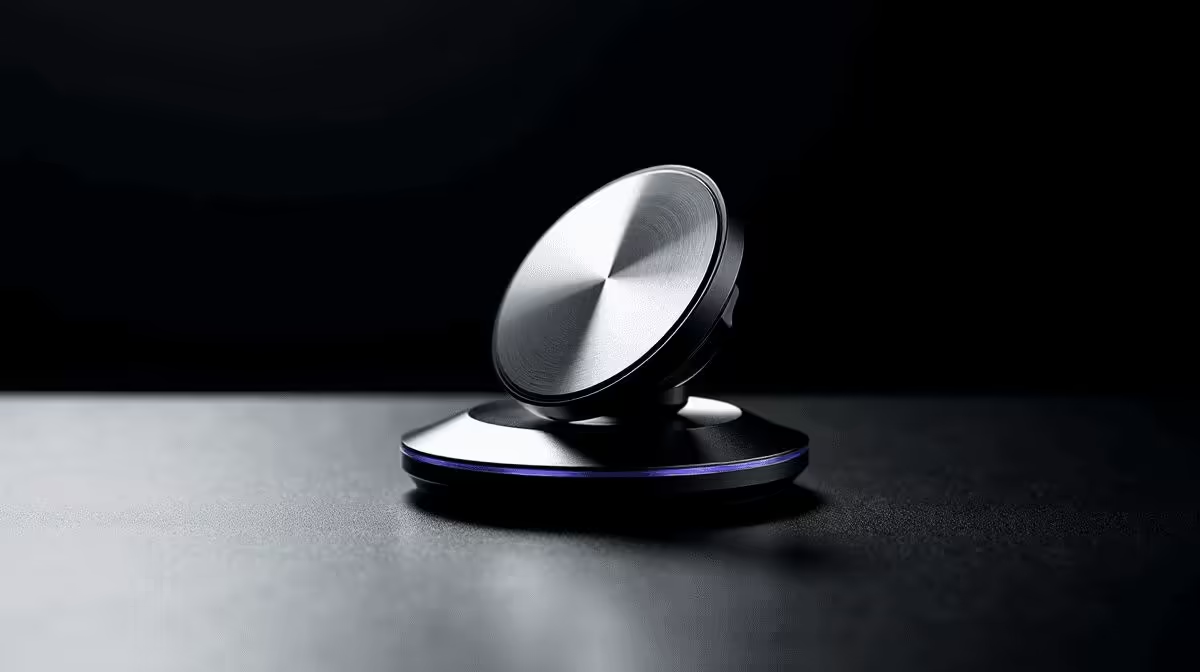
The number and arrangement of magnets in the mount head is the single biggest determinant of day-to-day reliability. A single central magnet can hold a 150-gram phone in a straight line but struggles under the lateral loads from braking or cornering. A five- or six-magnet ring array spreads the holding force across a wider zone, so shear resistance rises substantially.
Look at the specifications or product images rather than the marketing copy. A mount described as "super strong" with no magnet count given is worth scrutinising. Legitimate quality mounts specify N52-grade neodymium elements because the grade is a verifiable claim. Avoid mounts that list only a vague "powerful magnetic force" without supporting detail.
The magnet face diameter also matters. A 40 mm face area gives the steel plate more surface to engage than a 25 mm face, which translates directly to better grip especially for heavier phones. This is the most overlooked spec in budget buying.
🔄 Ball-Joint Range and Mounting Location
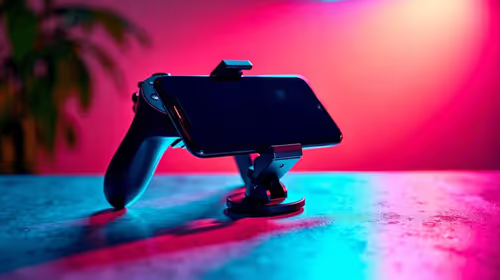
A mount that cannot rotate freely becomes awkward within days. You want a ball joint that offers full 360-degree rotation combined with at least 90 degrees of tilt so the phone can sit portrait or landscape regardless of where the mount is installed. Mounts with a fixed-head or limited-pivot design force you to position the mount base precisely and hope it never shifts. That precision is hard to maintain on an air vent mount where the blades flex.
Mounting location shapes the daily experience. Air vent mounts are the most popular because they reposition easily and keep the phone within sightline reach, though sustained SA summer heat through the vent can affect phone thermals. Dashboard adhesive mounts are more stable but semi-permanent. Windscreen suction mounts may conflict with certain provincial regulations on interior windscreen attachments. Choose the position that keeps the phone visible without blocking your line of sight, then pick the mount type to match.
🔌 Charging Pass-Through and Build Quality
Wireless-charging pass-through distinguishes a convenience-focused mount from a basic holder. A mount with a ring-shaped magnet array leaves the centre clear, which allows the phone's Qi coil to align with a wireless charging pad if the mount is positioned near one, or simply means no interference with charging. If you charge by cable while driving, check that the mount design does not block the USB-C port; some low-profile mounts sit very close to the port and make cable insertion awkward.
Build quality shows in the base. Vent clips should use rubber-lined jaws that grip blade edges without scratching. Dashboard pads should use VHB-grade adhesive rather than generic tape; VHB survives SA temperature cycling without lifting. A well-specified mount costs R150 to R350. Entry-level options below R100 nearly always compromise on magnet count, rotation range, or base adhesive quality.
Frequently Asked Questions
Should I choose a vent mount or a windscreen mount for everyday use?
Vent mounts suit most drivers because they are easily moved between vehicles, keep the phone in peripheral view, and do not require drilling or permanent adhesive. Windscreen mounts give a more stable base but check local regulations, as some SA provinces restrict objects affixed to the interior windscreen below the mirror line.
How do I know if a mount supports landscape orientation properly?
Check that the ball joint or swivel head allows at least 90 degrees of tilt and locks firmly at any intermediate angle. A mount that only clicks into portrait or landscape with nothing in between is frustrating when the ideal angle is slightly off vertical.
Does the included steel plate work with all phone models?
The plate is universal; it attaches to the back of any phone or inside any case using adhesive tape. What varies is the plate shape needed. A ring-shaped plate is preferable if you use wireless charging; a rectangular plate gives maximum contact area if wired charging is your only option.
Can I use the same mount in multiple cars?
Vent mounts clip on and off with no tools and can be moved between vehicles in seconds. Dashboard mounts are semi-permanent once the adhesive pad is bonded. Windscreen suction mounts are the easiest to transfer but need the suction cup reset on each move.
What should I check if the mount stops holding firmly after a few months?
Inspect the steel plate for surface contamination, as oils from handling can reduce magnetic contact. Clean the plate with isopropyl alcohol and a lint-free cloth. Also check the mount base; a loose vent clip or lifting adhesive pad allows the whole mount to flex under load, which feels like weak magnets but is actually mount movement.
Found the feature set you need? Pick your next daily-driver mount from Evetech's car phone mount range and enjoy one-handed convenience from your first drive.