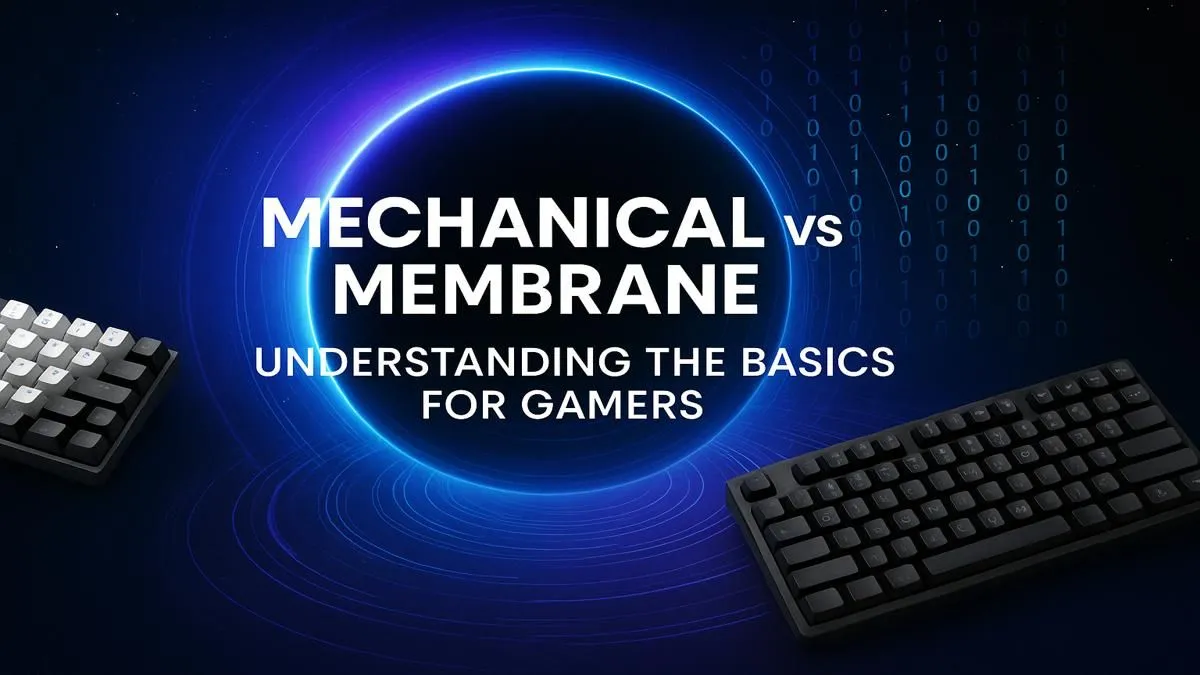
You’ve lined up the perfect headshot... you press ‘E’ to defuse... but nothing happens. A split-second of input lag from a mushy key, and it’s game over. Sound familiar? That single moment is why the mechanical vs membrane keyboard debate is so fierce in South Africa’s gaming scene. Your keyboard isn't just a peripheral; it's the core of your command centre. Choosing the right one can literally mean the difference between victory and defeat.
Understanding the Core Technology
Before you can decide which keyboard is best for your gaming, you need to know what’s happening under the keycaps. The difference between a mechanical and a membrane keyboard isn't just about the noise; it's about fundamental engineering.
How Membrane Keyboards Work
Think of the standard office keyboard. That’s likely a membrane. Underneath the keys is a single rubber dome sheet. When you press a key, it pushes down on the dome, which connects a circuit on the layer below to register the keystroke. It’s simple, quiet, and cheap to produce. This makes them a great entry point, often found in great value keyboard and mouse combos.
How Mechanical Keyboards Work ⚙️
This is where things get interesting for gamers. A mechanical keyboard ditches the single rubber sheet for individual, spring-loaded switches under every single key. Each press feels distinct and provides clear feedback. There's a huge variety of individual mechanical switches available, each offering a different feel—from smooth and linear to tactile and "clicky".
The Mechanical vs Membrane Keyboard Showdown
So, how do these two technologies stack up where it matters most... in the heat of a competitive match? Let's break down the key differences to help you decide which keyboard is best for gaming.
Feel and Feedback
This is the most noticeable difference. Membrane keyboards often feel "mushy" or "spongy" because you have to press the key all the way down (called "bottoming out") to activate it.
Mechanical keyboards, on the other hand, offer crisp, tactile feedback. You know the exact moment a key is registered, which can lead to faster, more confident typing and gaming.
Performance and Speed
In gaming, speed is everything. Mechanical switches actuate (register a press) halfway down, meaning you don't need to bottom them out. This allows for quicker repeated presses and a faster response time. Many also feature N-key rollover, ensuring every single keypress is registered, no matter how many you press at once.
Durability and Lifespan
A standard membrane keyboard is typically rated for about 5-10 million keystrokes. A mechanical keyboard? Most switches are rated for 50 million keystrokes or more. They are built to withstand years of intense gaming sessions, making them a solid long-term investment.
Price Point (ZAR)
There's no hiding it: membrane keyboards are easier on the wallet. You can find many affordable gaming keyboards that use membrane technology. Mechanical keyboards represent a higher initial cost, but their durability and performance can provide better value over time.
Customisation and Aesthetics ✨
This is a huge win for the mechanical camp. You can completely personalise your board. Don't like the feel or look? You can swap out your keycaps for different colours and profiles. You can even improve your setup's ergonomics by adding a comfortable wrist rest. This level of customisation is rarely an option with membrane boards.
Try Before You Buy ⚡
The world of mechanical switches can be confusing (Linear, Tactile, Clicky?). The best way to find your perfect match is to feel them. If you can, visit a store to test display models. This hands-on experience is invaluable and will tell you more than any review ever could about which switch type feels right for you.
The Verdict: Which Keyboard is Best for You?
The "best" keyboard really depends on your needs and budget. The mechanical vs membrane keyboard debate doesn't have one right answer, but we can point you in the right direction.
Choose a Membrane Keyboard if:
- You're on a tight budget.
- You need a quiet keyboard for a shared space or late-night gaming.
- You're a casual gamer who values simplicity.
Choose a Mechanical Keyboard if:
- You're a competitive or serious gamer who needs peak performance and speed.
- You type a lot and appreciate a superior typing experience.
- You love customisation and want a keyboard that reflects your style.
- You see your keyboard as a long-term investment in your setup.
Ultimately, upgrading to one of our premium gaming keyboards offers a tangible advantage in speed, feel, and durability that most serious gamers in South Africa find impossible to ignore.
Ready to Feel the Difference? The choice between the satisfying click of a mechanical switch and the quiet press of a membrane is a personal one. But for a true competitive edge, the precision and durability of a mechanical keyboard is undeniable. Explore our massive range of gaming keyboards and find the perfect weapon for your gaming arsenal.