Criminals know this. A small, silent investment in a mini UPS for your security cameras keeps your eyes open when the lights go out. It's the simple, affordable peace of mind every South African homeowner needs. But how do you pick the right one? Let's break it down.
Why Your Security System Needs a Mini UPS
When Eskom flips the switch, your Wi-Fi router and your IP cameras go dark. This creates a blind spot in your home's security, leaving you vulnerable. A standard PC UPS is overkill for this job… it's big, noisy, and inefficient for low-power devices. A mini DC UPS, however, is designed specifically for this task. 🔌
It acts as a seamless power bridge, instantly taking over when the mains power drops. This means your cameras and router never reboot, ensuring continuous recording and remote access. Investing in a reliable uninterruptible power supply is one of the smartest security upgrades you can make in South Africa today.
How to Choose the Right Mini UPS for Your Cameras
Choosing the best mini UPS for security cameras isn't about buying the biggest box. It's about matching the device to your specific needs. Getting it right is easy if you follow a few simple steps.
1. Check Your Camera's Power Needs (Volts & Amps)
First, you need to play detective. Look at the power adapter that came with your camera (and your router, if you plan to power both). You're looking for two key numbers:
- Voltage (V): This is usually 5V, 9V, or 12V. Your mini UPS must have an output that matches this exactly.
- Amperage (A): This is the current your device draws. Your UPS output must provide at least this much amperage, but having more is perfectly fine.
Using the wrong voltage can permanently damage your equipment, so double-check this!
Powering Your Router Too? 💡
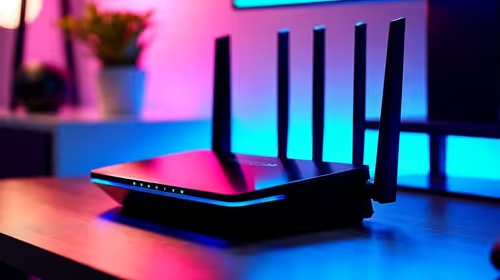
Many South Africans use a single mini UPS to power their security camera and their fibre LTE router. Simply add up the Amperage (A) needed for both devices (if they share the same Voltage). For example, a 12V 1A camera and a 12V 1.5A router need a UPS that can supply at least 12V at 2.5A.
2. Calculate Your Runtime Requirements
How long do you need your cameras to stay on during a power cut?
- Stage 2 (2.5 hours): Most entry-level mini UPS units can handle this easily.
- Stage 4+ (4.5 hours): You'll need a model with a larger battery capacity, measured in milliamp-hours (mAh) or watt-hours (Wh). The higher the number, the longer it will last.
A good backup power solution for security cameras should comfortably outlast the longest power outage you typically experience.
3. Consider Your Connectors and Cables
The final piece of the puzzle is the physical plug. Most cameras use a standard DC barrel jack, but they come in different sizes. The good news is that most quality mini UPS kits include a variety of adapter tips and a splitter cable, allowing you to power multiple devices from a single unit. Always check the box contents to ensure you get the right connectors for your setup.
Key Features to Look For 🛡️
When comparing models, a few features separate the basic from the brilliant. Look for a unit with lithium-ion batteries for a longer lifespan and a more compact design. Features like overload and short-circuit protection are non-negotiable for safeguarding your expensive cameras.
You don't have to break the bank to get these features. There are many excellent and affordable mini UPS options under R800 that provide fantastic value and reliable performance for a typical home setup. Keeping your security cameras online has never been more accessible.
Ready to Secure Your Home, 24/7?
A simple mini UPS is the key to uninterrupted surveillance and peace of mind. Explore our complete range of UPS solutions and find the perfect backup power for your security setup today.