The Reality of Loadshedding and Your Devices
The lights flicker... then total silence. It is a familiar frustration for every South African gamer. One moment you are mid-raid, and the next, your devices are dying. When the grid fails, the debate between Power Banks vs Traditional Chargers: Best Options During Loadshedding becomes a matter of digital survival. Understanding which gear keeps you connected is essential for outlasting the next blackout. ⚡
Traditional Chargers: Speed Meets Stability
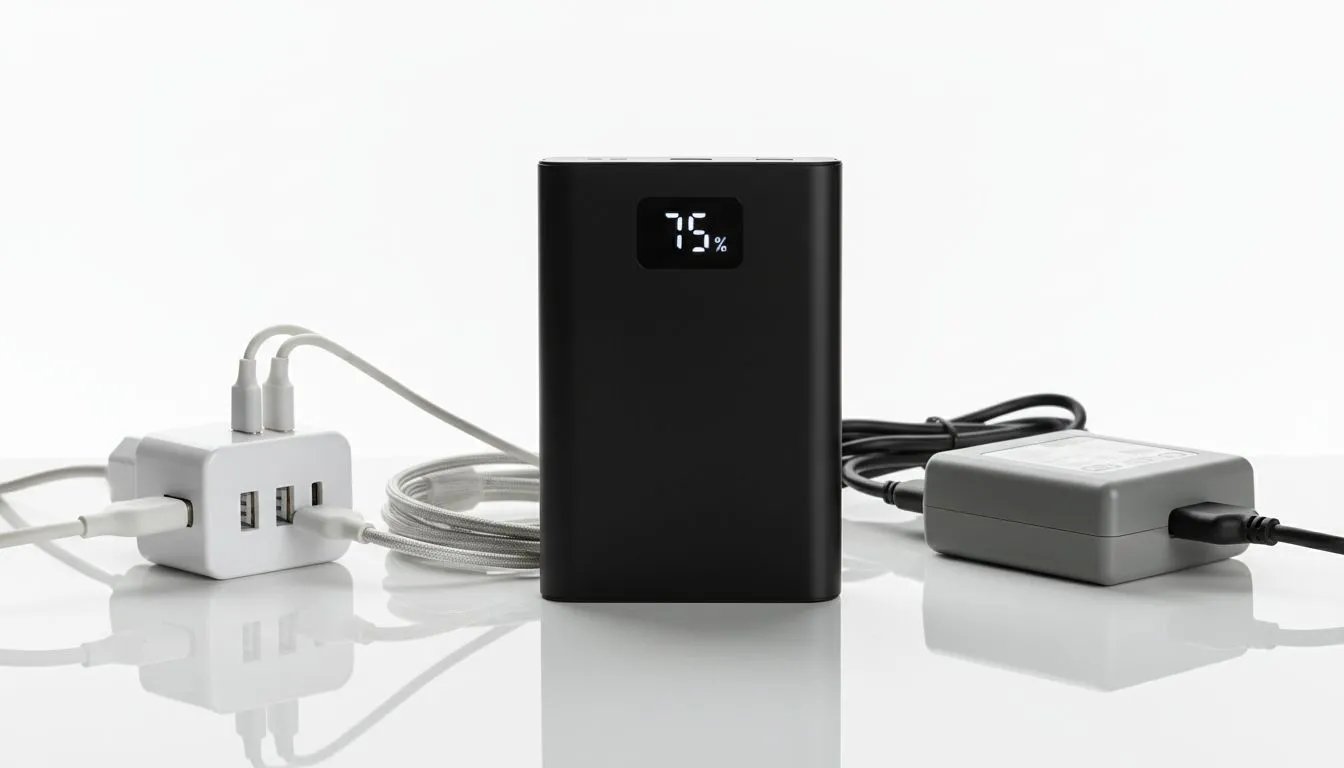
Traditional wall chargers are the gold standard when Eskom is behaving. They offer the fastest possible charging speeds by drawing directly from your home’s AC outlet. If you have a high-wattage GaN charger, you can top up a smartphone in minutes. However, their biggest weakness is their reliance on the grid. When the schedule hits Stage 4 or higher, these chargers become expensive paperweights.
If you are looking to stay powered up before the lights go out, starting your backup journey doesn't have to be expensive. You can find reliable power banks under R500 that are perfect for keeping your smartphone or controller alive during a two-hour block.
Power Banks: Your Portable Power Station
Power banks are the ultimate counter-move to loadshedding. These portable batteries store energy while the power is on, allowing you to discharge it whenever you need it most. For South African tech enthusiasts, versatility is key. You need something that can handle a phone, a tablet, or even a low-power laptop.
For those who need more juice and faster charging protocols, power banks under R1200 offer a significant step up in capacity and port selection. If you want premium build quality and rugged reliability, Promate power banks are a fantastic choice for local users who need gear that can survive daily travel. 🚀
Loadshedding Pro Tip ⚡
Always check the 'Wh' (Watt-hour) rating on your power bank rather than just the mAh. If you plan to fly locally or internationally, most airlines limit you to 100Wh. To calculate this, multiply the mAh by the voltage (usually 3.7V) and divide by 1000. It is a lifesaver for ensuring your gear is travel-legal while still packing enough punch for a Stage 6 evening.
Power Banks vs Traditional Chargers: Best Options During Loadshedding
Choosing between the two depends on your lifestyle. A traditional charger is for your desk... a power bank is for your life. In the context of Power Banks vs Traditional Chargers: Best Options During Loadshedding, the winner is clear for anyone living in South Africa. A wall charger is a tool for convenience, but a high-quality portable battery is a tool for necessity.
To ensure you are never caught with a dead battery, exploring the full range of power bank options is the best way to optimise your setup. Look for features like Power Delivery (PD) and Quick Charge (QC) to ensure your devices charge just as fast as they would from a wall socket. ✨
Ready to Find Your Perfect Match? The battle against the blackout is a tough one, but with the right gear, you can stay connected and keep gaming. Explore our massive range of power bank specials and find the perfect backup to conquer the darkness.