Quick Answer
The best ISPs for gaming in South Africa in 2026 are those offering fibre connections with low ping to local servers, consistent speeds, and minimal packet loss. Fibre-to-the-home (FTTH) from providers with local peering agreements delivers the lowest latency for South African gamers, with ping to local gaming servers typically ranging from 5-20ms.
Why ISP Choice Matters More Than Speed for Gaming
For online gaming, raw download speed is less important than latency, jitter, and packet loss. A 100Mbps fibre connection with 8ms ping and 0% packet loss will outperform a 500Mbps connection with 35ms ping and 2% packet loss in every competitive gaming scenario. South African gamers face the additional challenge that many popular game servers are hosted in Europe or North America, meaning international routing quality is as important as local infrastructure. ISPs with strong peering agreements at the NAP of Africa (the neutral Internet exchange point in Johannesburg) provide more consistent international routing.
Fibre vs Fixed Wireless vs LTE for Gaming
Fibre-to-the-home (FTTH) is the gold standard for SA gaming. Dedicated fibre lines deliver symmetric speeds, consistent latency, and no congestion-related packet loss during peak hours. Fixed wireless access (FWA) using millimetre-wave technology can match fibre latency in ideal conditions but degrades in rain or when line-of-sight is obstructed - relevant in areas with variable weather. LTE and 5G home broadband are viable alternatives where fibre is unavailable but introduce higher and more variable latency, typically 20-50ms to local servers. For SA gamers in areas where fibre has not yet reached, 5G home broadband from a quality provider is the next best option.
Local vs International Server Ping Benchmarks
SA-based game servers hosted in Johannesburg deliver ping of 5-15ms on FTTH connections from major urban areas. Cape Town players typically see 10-25ms to Johannesburg-hosted servers depending on routing. International servers in Europe (Frankfurt, London) show 150-180ms for SA players, while North American servers add 200-250ms. For competitive titles where server region selection is important, SA players should always prioritise SA or African regional servers. Games with no local SA servers - still common in some titles - require choosing the lowest-latency international option, usually a European server.
What to Look for in a Gaming ISP in 2026
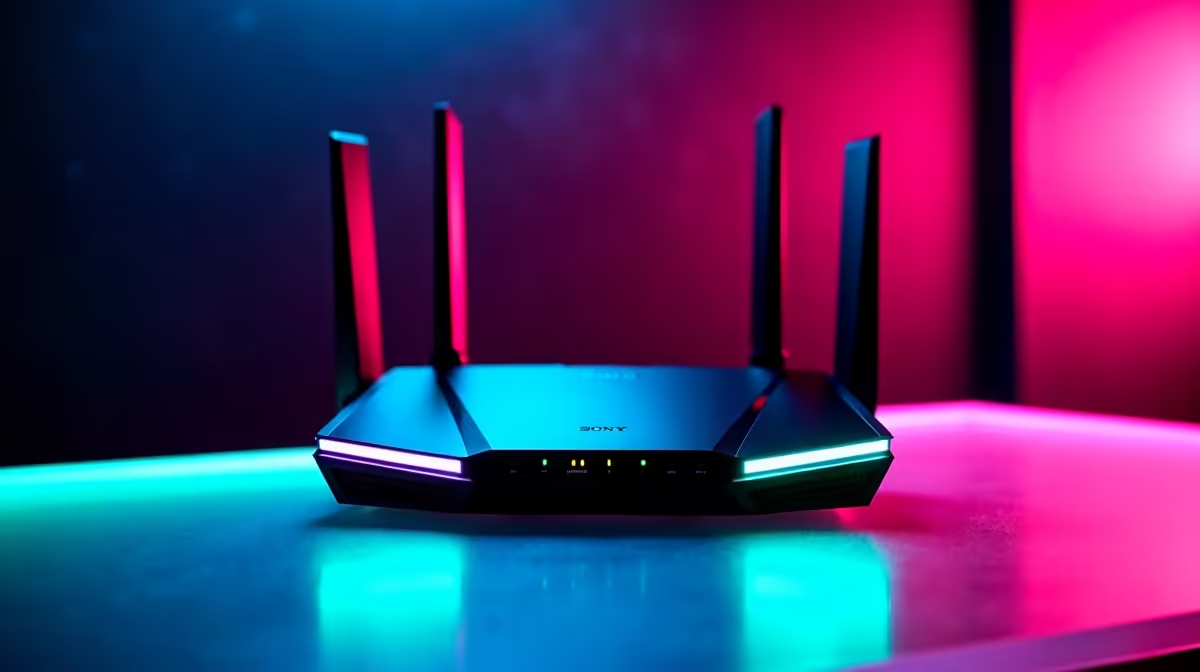
When evaluating ISPs for gaming in South Africa, prioritise: uncapped data plans (capped plans create anxiety around usage during extended gaming sessions), consistent speeds during peak hours (test forums and ISP review sites for real-world evening performance data), local peering quality (determines both local server latency and international routing efficiency), and support responsiveness. For SA gamers experiencing loadshedding, an ISP that maintains service through outages via battery backup at the local exchange is a valuable differentiator. Many fibre network operators now publish their uptime and backup power specifications.
Frequently Asked Questions
What ping is good for online gaming in South Africa? Under 20ms to local servers is excellent. 20-50ms is good. 50-100ms is acceptable for casual play but disadvantages competitive gamers. Above 100ms introduces noticeable input lag in fast-paced titles.
Is fibre better than 5G for gaming in South Africa? In most cases, yes. Fibre provides lower and more consistent latency than 5G home broadband. However, high-quality 5G from a good provider in a strong signal area can match fibre latency and is a strong alternative where fibre is unavailable.
Does ISP choice affect game download speeds? Yes. ISPs with strong peering to content delivery networks (CDNs) used by Steam, PlayStation Network, and Xbox deliver faster game download speeds regardless of your plan speed tier.
Does loadshedding affect fibre internet in South Africa? Loadshedding affects fibre if the local exchange or OLT (Optical Line Termination) loses power. Many exchanges have battery backup for several hours. Your home router also needs power - a UPS for your router maintains connectivity during outages.
Ready to Find Your Perfect Match? Shop gaming networking gear and routers at Evetech