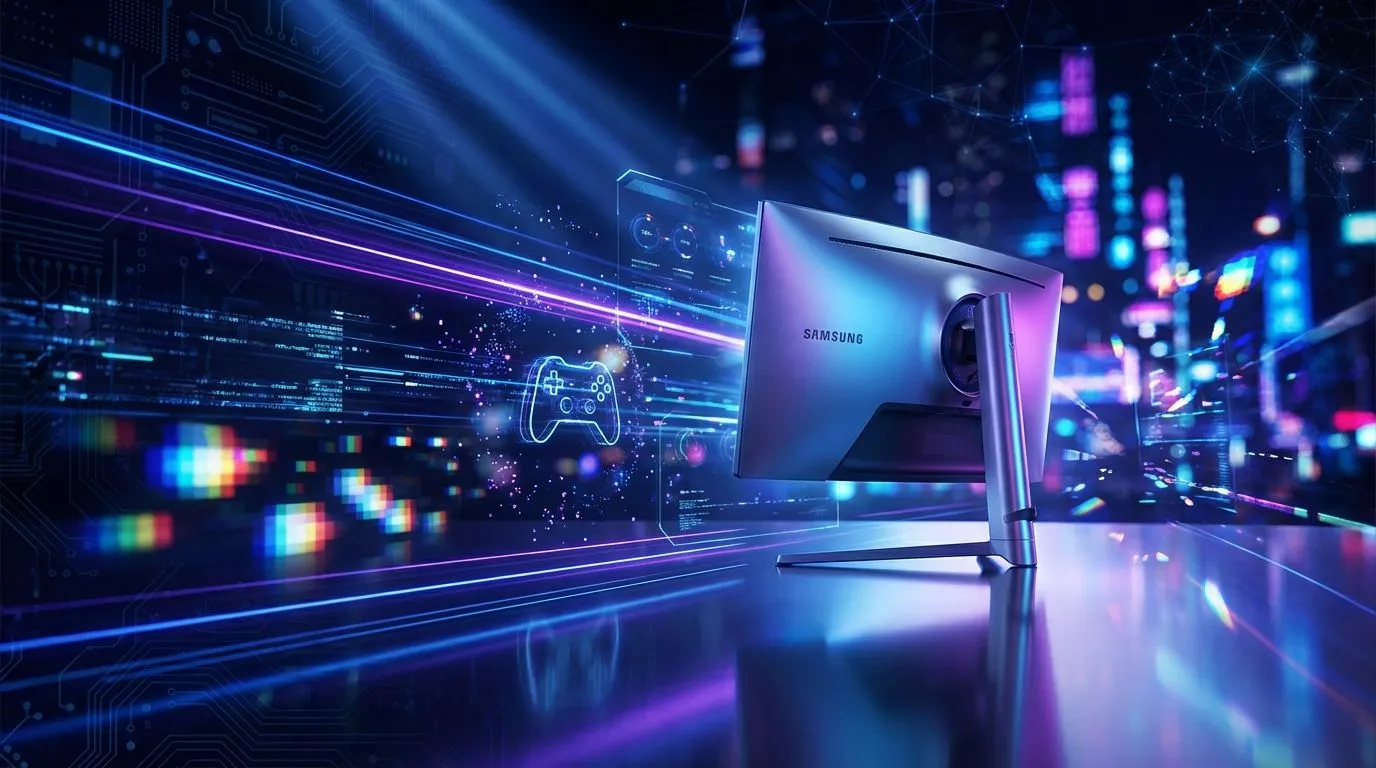
Forget 240Hz. The future is knocking, and it’s screaming ‘500Hz’. Samsung’s rumoured Odyssey G6 promises a speed we’ve only dreamed of, but let's get real. For us gamers in South Africa 🇿🇦, is this the ultimate competitive edge for 2026, or just an impossibly expensive dream? We’re diving deep into our speculative Samsung 500Hz Odyssey G6 review to see if it’s worth saving your hard-earned Rands for.
First Look: Unpacking the 500Hz Dream
Picture this: it’s 2026. You’ve unboxed the sleek, futuristic chassis of the Samsung Odyssey G6. This isn't just another screen; it's a statement. We expect it to be a 24.5-inch, 1080p or 1440p beast, because hitting 500 frames per second at 4K is still the stuff of science fiction. The main event, of course, is that blistering 500Hz refresh rate. It promises motion clarity so smooth it could make a 240Hz panel look choppy.
While this specific model is still on the horizon, the technology it represents is the next frontier in a market already packed with incredible PC monitors. But does refreshing the screen 500 times a second actually make you a better player?
Our Samsung 500Hz Odyssey G6 Review: Beyond the Numbers
Let's be clear: the difference between 240Hz and 500Hz is a game of diminishing returns. The leap from 60Hz to 144Hz is life-changing. The jump from 144Hz to 240Hz is noticeable, especially in fast-paced shooters like Valorant or Apex Legends. But 500Hz? That’s a territory reserved for the esports elite.
For this Samsung 500Hz Odyssey G6 review, we're predicting a new generation of ultra-fast IPS monitors that finally kills the ghosting issues of older VA panels while delivering incredible colour. To achieve the lowest possible input lag for competitive play, it would almost certainly be a flat screen, as preferred by most pros for its geometric consistency. That said, many casual and sim-racing gamers will still prefer the immersive feel of curved monitors.
In simulated tests, the primary benefit is in micro-adjustments and tracking. An enemy peeking a corner appears on-screen fractions of a millisecond sooner, giving a pro player a tangible, albeit tiny, advantage. For the average gamer… it’s a much harder sell.
Optimise for High FPS 🚀
To push extreme frame rates, don't just lower texture quality. In games like CS2 or Valorant, settings like Shadow Quality, Shader Detail, and Anti-Aliasing are huge resource hogs. Dropping these first will give you the biggest FPS boost with the least impact on visual clarity where it counts. Also, ensure NVIDIA Reflex or AMD Anti-Lag is enabled for the lowest system latency!
The Reality Check: Powering a 500Hz Beast in South Africa
Here’s the kicker. A 500Hz monitor is useless if your PC can't consistently push 500 FPS. In 2026, we’ll likely be looking at NVIDIA’s RTX 5080 or AMD’s RDNA 4 equivalent as the minimum requirement. The cost of that kind of rig in South Africa will easily run into the tens of thousands of Rands. ⚡
And what happens when your frames dip? That’s where screen-tearing prevention becomes critical. A monitor like the Odyssey G6 would need flawless variable refresh rate support. It would have to be certified for both G-Sync (NVIDIA) and FreeSync (AMD) to ensure a tear-free experience, no matter your GPU. This technology, broadly known as Adaptive Sync, is non-negotiable at this level of performance.
The Verdict: Is the Samsung 500Hz Odyssey G6 Worth It for SA in 2026?
So, is this 500Hz gaming monitor the future for South African gamers?
For 99% of us, the answer is probably no. The immense cost of the monitor and the required PC, coupled with the tiny performance gain over existing high-refresh-rate panels, makes it a niche product for aspiring pro players with deep pockets.
Instead of dreaming about a 500Hz future, the smartest move for most gamers is to focus on the incredible value available right now. The performance sweet spot for competitive gaming and buttery-smooth visuals is firmly in the range of 170Hz – 240Hz monitors. These displays offer a massive upgrade over 60Hz or 75Hz panels at a fraction of the cost, and modern PCs can actually drive them effectively.
The Samsung 500Hz Odyssey G6 will be an amazing piece of technology, but it’s a glimpse of a future that isn't quite here yet for the mainstream SA gamer.
Ready to Find Your Perfect Match?
The race for higher refresh rates is exciting, but the sweet spot is where value meets performance. For most South African gamers, a killer high-refresh-rate monitor is already within reach. Explore our massive range of PC monitors and find the perfect display to dominate your game.