

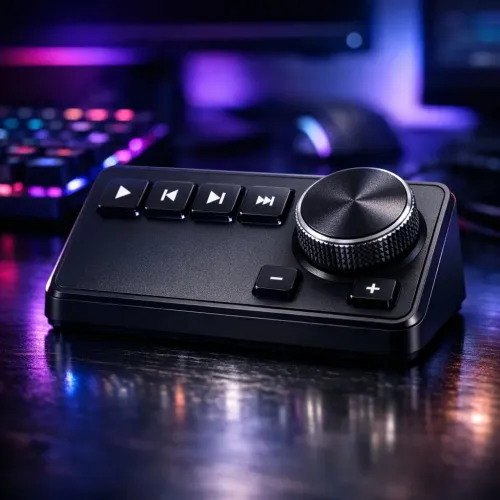
Dedicated Media Keys for Streamers: Improve Workflow Fast
Dedicated media keys give streamers one-touch control to mute, switch scenes, clip highlights, and adjust audio — cutting task time and boosting consistency 🎛️⚡
Read moreSSD for video editing must deliver sustained speeds, endurance, and capacity to smooth 4K rendering and timelines. Learn NVMe specs, TBW, cache, and buying tips to pick the right drive 🎬🛠️

Struggling with sluggish playback or endless render times on your 4K video projects? As content creation booms across Mzansi, the demand for buttery-smooth editing experiences is higher than ever. If you’re serious about producing stunning 4K content, whether for YouTube, client work, or personal passion, your storage choice is paramount. An ordinary hard drive just won't cut it. It’s time to upgrade your understanding, and your rig, for peak performance.
Gone are the days when a mechanical hard drive (HDD) could comfortably handle professional video production. Raw 4K footage is massive, with data rates soaring into hundreds of megabytes per second. Imagine trying to scrub through a timeline with multiple 4K video layers and effects – an HDD will stutter, lag, and test your patience. This is precisely why a high-performance SSD for video editing is no longer a luxury but a necessity.
Solid-state drives (SSDs) offer vastly superior read and write speeds compared to traditional HDDs. This translates directly to faster project loading, smoother timeline playback, quicker renders, and rapid exports. For any serious editor working with 4K resolution, an SSD transforms a frustrating workflow into an efficient, enjoyable creative process. It reduces bottlenecks, allowing your CPU and GPU to work at their full potential.
Choosing the right SSD for 4K rendering involves more than just picking the cheapest option. Several critical factors influence its performance and suitability for demanding video workloads.
4K video files are enormous. A single hour of H.264 4K footage can easily be 50GB to 100GB, and uncompressed or ProRes files are even larger. For a comfortable workflow, especially with multiple projects or large asset libraries, a minimum of 1TB is advisable for your primary editing drive. However, for serious professionals, 2TB SSDs are quickly becoming the standard, offering ample space for active projects without constant offloading. You can explore a range of high-capacity options to suit your needs.
This is where the rubber meets the road. While any SSD is faster than an HDD, not all SSDs are created equal.
Video editing involves a lot of writing and rewriting data – rendering previews, exporting files, caching. SSDs have a finite number of write cycles. Endurance is measured in Terabytes Written (TBW). While modern SSDs are incredibly durable, opting for a drive with a higher TBW rating provides peace of mind, ensuring your investment stands up to years of intensive use. Reputable brands like Kingston offer SSDs known for their excellent reliability and endurance, making them a solid choice for any content creator.
The M.2 form factor has become the standard for high-performance NVMe SSDs. These compact sticks plug directly into your motherboard, eliminating cables and optimising airflow. Ensure your motherboard has sufficient M.2 slots that support PCIe Gen4 (or Gen5) for maximum performance. If you're building a new system or upgrading, an M.2 NVMe slot should be a top priority for your SSD for video editing setup.
using two SSDs: a smaller, super-fast NVMe for your OS, applications, and project files, and a larger, slightly slower (but still fast) SATA or secondary NVMe SSD for raw footage and media cache. This balances speed with cost-effective storage.
When it comes to selecting an SSD for 4K rendering, sticking with trusted brands is always a smart move. Companies like Corsair are renowned for their high-performance NVMe SSDs, offering a blend of speed, reliability, and robust software support, perfect for demanding video workflows. Similarly, ADATA provides excellent value, often delivering impressive speeds and endurance at competitive prices, making high-end performance more accessible to Mzanzi’s aspiring creators.
Before making your final choice, always check the specific read/write speeds, TBW rating, and warranty offered by the manufacturer. Consider your current system’s motherboard compatibility, especially regarding PCIe generation. Investing in a quality SSD for your 4K video editing needs will not only accelerate your workflow but also provide a more stable and enjoyable creative experience.
Upgrade Your Editing Game Today Don't let slow storage hold back your creative vision. Experience the difference a high-performance SSD makes for your 4K video editing. Shop all SSDs at Evetech for performance that leaves lag in the dust.
Prioritize sustained sequential read/write speeds, high IOPS, low latency, and strong thermal management to handle large 4K frames without stutter.
Yes. NVMe delivers much higher sequential throughput and IOPS than SATA, so nvme ssd for video editing is recommended for 4K and multicam workflows.
Aim for 1TB minimum for active projects; choose 2TB or larger if you work with RAW 4K footage or long timelines to avoid constant swapping.
TBW (terabytes written) indicates endurance. Higher TBW means the drive tolerates more writes from rendering, exports, and continuous proxies.
A single high-end NVMe is simpler and often faster for editing. Use RAID for capacity or redundancy but expect added complexity in management.
Yes. DRAM and effective SLC cache sustain long write bursts and prevent throttling during long 4K exports and renders.
Portable NVMe SSDs with Thunderbolt or USB4 can handle 4K transfers and playback, but check sustained write speeds and thermal throttling limits.
Dedicated media keys give streamers one-touch control to mute, switch scenes, clip highlights, and adjust audio — cutting task time and boosting consistency 🎛️⚡
Read more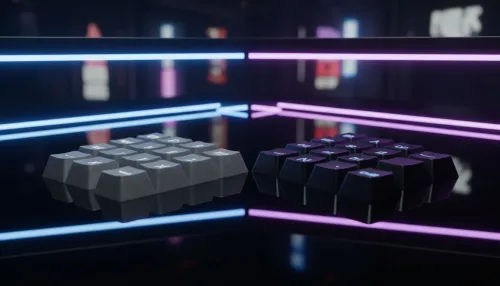
PBT vs ABS keycaps: Clear, local guide for South African gamers—compare feel, sound, durability and where to buy. Find the best material for your budget and playstyle 🎮🇿🇦
Read more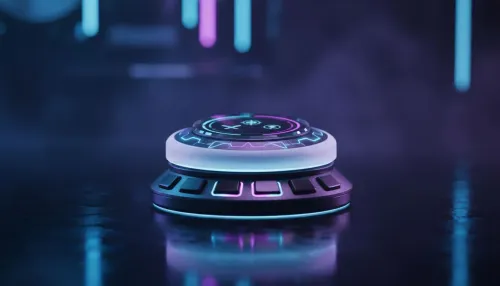
- Multi-Function Digital Dial: define benefits - Show gamer setups and macros - Offer buying and setup tips Multi-Function Digital Dial puts programmable control at your fingertips for faster actions and smoother streaming. 🎮⚙️
Read more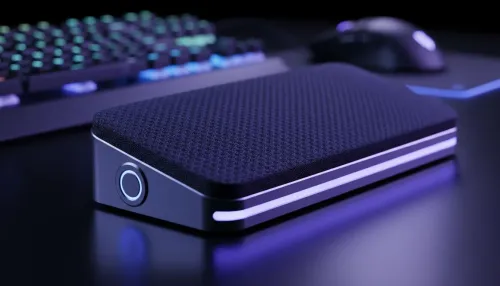
- Explain benefits; - Show the science; - Compare options; - Recommend picks. Magnetic wrist rest for gaming cuts wrist strain and boosts comfort during long sessions 🕹️✨
Read more
best gaming keyboard South Africa: Learn how to pick a low-latency mechanical keyboard, choose switches, layout and budget for competitive play 🎮⚡
Read more
Best wireless keyboard and mouse combo for small desks — curated, space-saving picks that boost comfort and productivity in tight setups. Find low-profile layouts, compact mice, and reliable range to fit your compact workstation. 🖱️⌨️
Read more
Discover webcams that automatically adjust light and color for crystal-clear video calls 🎥✨. Boost your streaming quality today!
Read more
Discover webcams that blend into your workflow 🎯 Capture moments while you work, stream, or create. Upgrade your setup with smart, multitasking tech!
Read more Dedicated media keys give streamers one-touch control to mute, switch scenes, clip highlights, and adjust audio — cutting task time and boosting consistency 🎛️⚡
Read more PBT vs ABS keycaps: Clear, local guide for South African gamers—compare feel, sound, durability and where to buy. Find the best material for your budget and playstyle 🎮🇿🇦
Read more - Multi-Function Digital Dial: define benefits - Show gamer setups and macros - Offer buying and setup tips Multi-Function Digital Dial puts programmable control at your fingertips for faster actions and smoother streaming. 🎮⚙️
Read more - Explain benefits; - Show the science; - Compare options; - Recommend picks. Magnetic wrist rest for gaming cuts wrist strain and boosts comfort during long sessions 🕹️✨
Read more