Understanding the USB vs 3.5mm Headset: Which Sounds Better for Meetings
Ever sat in a crucial Teams call while your neighbour's generator roars in the background? You need clear audio. Choosing between a USB vs 3.5mm headset: which sounds better for meetings depends on your hardware. While the old jack is familiar, USB offers digital perks that could save your professional reputation. Let's break down which connection type actually delivers the crispest voice for your daily grind.
The Analogue Reliability of 3.5mm Connections
The classic 3.5mm jack has been around for decades for a reason. It is simple, universal, and requires no drivers. When you plug a headset into your laptop's audio port, you are relying on the device's internal sound card to convert digital signals into the sound you hear.
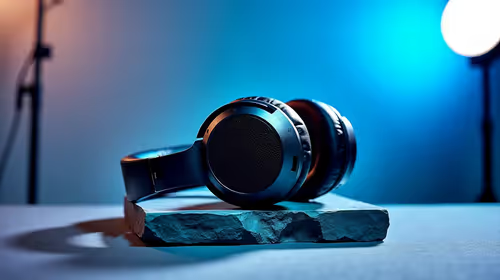
If you are using a high-end workstation, the audio might be pristine. However, budget motherboards often suffer from electrical interference, leading to that annoying hiss or hum during quiet moments in a meeting. If you prefer the versatility of using one pair of cans for your phone and your PC, browsing the headphone and headsets category will show you plenty of analogue options that offer great comfort for those back-to-back sessions.
Audio Clarity Pro Tip ⚡
To instantly improve your meeting quality on Windows, go to Sound Settings and ensure your 'Microphone Boost' isn't maxed out. Keeping it at +10dB or +20dB prevents that robotic clipping sound that drives colleagues crazy during long presentations.
Why USB Often Wins for Professional Voice Quality
When we ask "USB vs 3.5mm headset: which sounds better for meetings", the USB option usually takes the lead for one specific reason: the built-in DAC (Digital-to-Analogue Converter). Because a USB headset processes sound internally, it bypasses the potentially noisy electronics inside your PC.
This digital path allows for advanced features like active noise cancellation and sidetone... which lets you hear your own voice so you don't end up shouting at your boss. Many Razer headphones and headsets utilise this USB processing to provide crystal-clear microphone output, ensuring your voice sounds natural rather than compressed or tinny.
The Hybrid Solution for South African Professionals
Sometimes you don't want to choose. If your workday involves jumping from a Zoom call on your desktop to a mobile call while the power is out, a hybrid headset is the ultimate fix. Modern units offer the best of both worlds... digital precision when plugged in and analogue or wireless flexibility when you are on the move.
The Razer Barracuda X Chroma Wireless Headset is a prime example of this versatility. It handles the "USB vs 3.5mm headset: which sounds better for meetings" debate by simply offering high-quality digital audio that works across almost every platform. Whether you are in a boardroom or your home office, having that consistent audio profile ensures you are always heard clearly.
Ready to Find Your Perfect Match? The debate between USB and 3.5mm is all about your specific setup, but for maximum clarity and modern features in South Africa, a digital connection is hard to beat. Explore our massive range of headset specials and find the perfect gear to conquer your next meeting.