Quick Answer
For gaming in South Africa, a 25Mbps to 50Mbps fibre connection is more than enough for online gaming itself - but the quality of the connection (low latency and packet loss) matters far more than raw speed for a competitive gaming experience.
Why Speed Is Not the Most Important Fibre Spec for Gamers
The biggest misconception among SA gamers upgrading their fibre plans is that more megabits per second equals better gaming performance. In reality, online gaming data consumption is remarkably small. Most multiplayer games - Valorant, CS2, Call of Duty, FIFA EA FC, Apex Legends - consume between 50MB and 300MB of data per hour of gameplay. Even a 10Mbps connection has more than enough bandwidth to handle this comfortably.
What actually determines your gaming experience is latency (ping) and stability. Latency is the time it takes a data packet to travel from your PC to the game server and back, measured in milliseconds. Lower latency means more responsive gameplay, faster hit registration, and less rubber-banding. Packet loss - where data packets fail to arrive and must be resent - causes the stuttering, teleporting characters, and rubberbanding that makes online gaming genuinely frustrating. A 1,000Mbps connection with 120ms latency will give you a worse gaming experience than a 25Mbps connection with 15ms latency.
This distinction is especially important in South Africa, where game servers for major titles are hosted in Johannesburg (AWS Cape Town and Johannesburg, Microsoft Azure Johannesburg). Players in Johannesburg and Pretoria typically achieve 5ms to 25ms latency to these servers on a stable fibre connection. Cape Town players typically see 25ms to 50ms due to the routing distance. Understanding this geography helps set realistic expectations regardless of your line speed.
What Fibre Speed Do You Actually Need for Gaming in SA?
For a solo gamer, a 25Mbps to 50Mbps fibre plan is genuinely sufficient for all online gaming needs. Game downloads - which is where real bandwidth matters - complete in reasonable timeframes at 25Mbps. A 50GB game download takes approximately 4.5 hours at 25Mbps, or just over 2 hours at 50Mbps. If you are regularly downloading large game updates or installing new releases, 50Mbps to 100Mbps makes the experience more convenient without being strictly necessary.
In a shared household - which is typical for SA students in digs or res, or families where multiple people stream, work from home, and game simultaneously - the calculation changes. Add Netflix 4K (25Mbps), video calls (5 to 10Mbps), and another gamer, and a 25Mbps line becomes congested. For shared living scenarios, 100Mbps is the comfortable minimum and 200Mbps to 500Mbps plans allow everyone to do what they want without fighting for bandwidth.
The pricing landscape in South Africa in 2026 makes this more accessible than it once was. Uncapped 50Mbps fibre plans are available from multiple providers at R500 to R700 per month in most metros. 100Mbps plans sit at R700 to R1,000. The price-to-bandwidth ratio has improved substantially, making 100Mbps the value-consensus recommendation for households of two or more users.
Latency by SA City: What to Expect on Fibre
Understanding what latency is achievable in your city helps you set realistic expectations and identify when something is wrong with your connection versus when you are experiencing normal routing distances.
In Johannesburg and Pretoria, domestic fibre to Johannesburg-hosted game servers should deliver 5ms to 20ms on a quality connection. If you are seeing above 40ms consistently in Johannesburg, something is wrong - either your ISP's routing, the quality of your fibre line, or your home network equipment is introducing extra latency.
In Cape Town, routing to Johannesburg servers adds distance-related latency. 30ms to 55ms is the normal range for Cape Town fibre gamers connecting to Johannesburg-hosted servers. Servers hosted in the Cape Town AWS region deliver 5ms to 20ms for Cape Town players in supported titles. For games without a Cape Town server (most of them), the 30 to 55ms baseline is unavoidable and is perfectly adequate for most gaming genres.
In Durban, expect 20ms to 40ms to Johannesburg servers. Port Elizabeth and smaller cities may see 40ms to 70ms depending on routing. These ranges are all within comfortable gaming territory for everything except the highest levels of competitive FPS, where sub-20ms is preferred.
Loadshedding affects latency in ways that even good fibre connections cannot fully escape. When a local exchange or ISP's routing infrastructure loses power, packets reroute through secondary paths, increasing latency temporarily. Gaming during loadshedding on battery backup (UPS on your router and PC) avoids this for your own connection, but server-side infrastructure disruption is outside your control.
How to Test and Optimise Your SA Fibre Connection for Gaming
Before assuming your fibre plan speed is the issue, test the actual factors that matter for gaming. In-game ping shown in your game's network monitor is the most direct measure. Complement this with a tool that measures jitter (variation in latency) and packet loss, which are distinct from raw latency and equally important.
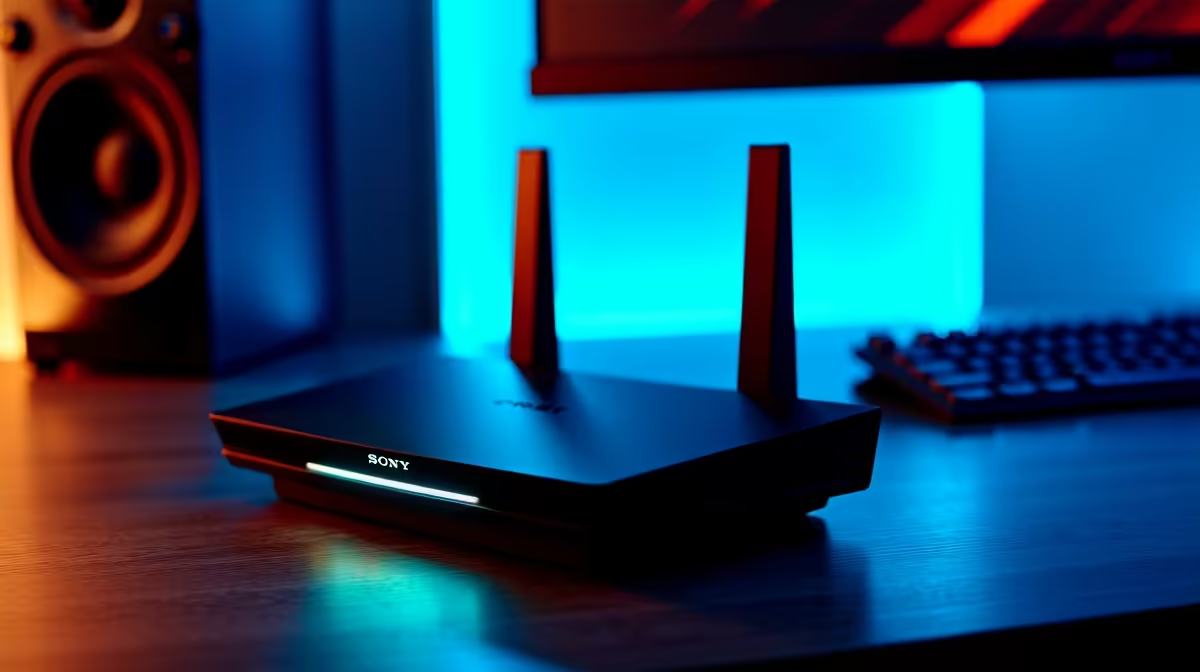
Placing your router as centrally as possible in your home and connecting your gaming PC via ethernet rather than WiFi eliminates the most common source of home-network latency. WiFi introduces variable latency of 2ms to 15ms above what an ethernet connection achieves, which is meaningful for competitive gaming. If running ethernet cable is impractical, WiFi 6 (802.11ax) routers deliver substantially more consistent latency than older WiFi 5 hardware.
DNS settings also affect apparent latency in ways that are easy to overlook. Your ISP's default DNS servers may be slow to resolve game server addresses. Switching to a fast South African or regional DNS service can shave 5ms to 20ms off the initial connection time for game servers, which some players perceive as improved responsiveness.
Finally, QoS (Quality of Service) settings on modern routers allow you to prioritise gaming traffic over other household traffic, ensuring your game packets get preferential treatment even when someone else is streaming 4K. This is particularly useful in shared households where bandwidth contention during peak evening hours affects gaming stability.
Frequently Asked Questions
Q: What is the minimum fibre speed for gaming in South Africa?
A: 10Mbps is technically enough for online gaming data, but 25Mbps to 50Mbps is the recommended minimum for a comfortable solo gaming experience including reasonable game download speeds. Shared households should target 100Mbps or more.
Q: Does fibre speed affect ping in South Africa?
A: Not directly. Ping (latency) is determined by routing paths and server distance, not line speed. A 25Mbps line can achieve the same ping as a 1,000Mbps line if they use the same routing infrastructure. Quality of the ISP's network matters more than the speed tier for latency performance.
Q: Is 100Mbps fibre overkill for gaming in South Africa?
A: For solo gaming only, yes. But for a household with multiple users streaming, working from home, and gaming simultaneously, 100Mbps is the comfortable sweet spot where no single activity constrains another.
Q: How does load shedding affect my fibre gaming connection in South Africa?
A: Loadshedding can disrupt your ISP's local infrastructure, causing temporary latency spikes even on quality fibre. Using a UPS on your router and PC ensures your local connection stays stable. ISP-side disruptions during outages are temporary and typically resolve within minutes of power restoration.
Also at Evetech: Graphics Card Deals | Evetech Best Sellers
Ready to Find Your Perfect Match? Shop at Evetech