Quick Answer
The best gaming chairs for built-in lumbar support are those with a rigid, adjustable lumbar mechanism integrated into the backrest rather than a loose pillow cushion. Chairs with a mechanical lumbar system - adjustable in both height and depth via a knob or lever - provide consistent, posture-correcting support that does not slide out of position during long sessions.
Lower back pain is the occupational hazard of serious gaming, and most casual chair buyers discover too late that the pillow-and-strap lumbar bundled with entry-level racing-style chairs is close to useless. It shifts, it compresses, and within weeks it is gathering dust. Purpose-built lumbar mechanisms integrated directly into the chair''s backrest structure are a fundamentally different proposition. This guide explains what separates genuine lumbar support from cosmetic padding, and what to prioritise when choosing your next gaming chair.
Built-in vs External Lumbar Support: Understanding the Difference
There are two lumbar approaches in the gaming chair market. The first is external: a memory foam or mesh pillow attached to the chair back via a strap. These ship with almost every racing-style gaming chair under R5,000 and are consistently the weakest ergonomic link. They are not adjustable for lumbar depth, they move when you move, and they cannot account for natural curve variation between different users'' spines.
The second is a structural lumbar mechanism - a rigid or semi-rigid pad built into the backrest''s lumbar zone and adjustable via a knob, lever, or slider. This pad moves with the chair back when you recline, maintains consistent contact with your lower back regardless of position, and can be tuned in height and depth to match your spinal curve. This is the feature worth prioritising, and it is found in mid-range and premium gaming chairs from established brands.
Key Features That Define Superior Lumbar Support
When evaluating chairs for lumbar quality, examine four things. First, adjustability range: a lumbar mechanism that only moves vertically is less useful than one adjustable in both height and depth (inward pressure). Depth adjustment is what changes how much the chair pushes against your lower back - height positioning without pressure control is incomplete. Second, material durability: foam pads compress over time. Chairs with a rigid plastic or metal-backed mechanism paired with a thin pressure-distributing pad hold their shape significantly longer than pure foam constructions.
Third, recline integration: the lumbar should maintain contact with your back at all recline angles you use. Test whether the mechanism follows the backrest curve or creates a gap when reclined. Fourth, seat depth interaction: lumbar support only functions correctly if your seating position allows your lower back to actually reach the lumbar zone. A chair that is too deep or too high negates even the best mechanism.
Chair Styles Best Suited to Lumbar Support
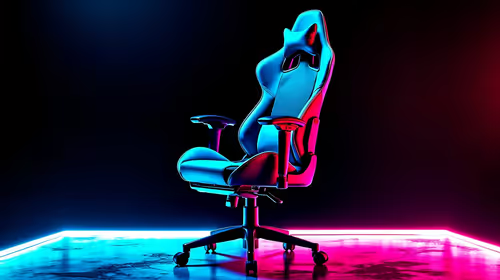
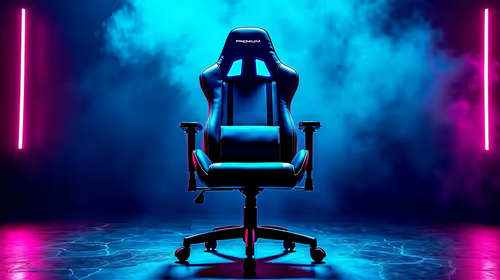
Racing-style gaming chairs dominate the SA market due to their aesthetic and accessible pricing. Among racing-style options, chairs with 4D armrests and a lumbar knob adjustment offer the most ergonomic flexibility, typically found in the R5,000–R10,000 price range. These position the lumbar correctly for upright gaming posture but may not suit users who game for long periods in a reclined position.
Hybrid ergonomic gaming chairs - blending gaming aesthetics with office ergonomics principles - are the most complete option for extended sessions. These feature waterfall seat edges, multi-directional lumbar mechanisms, and backrest profiles shaped to accommodate natural spinal S-curve alignment. They typically cost R8,000–R14,000 but represent a genuine investment in long-term spinal health for users who game more than four hours daily.
What to Avoid When Shopping in SA
Avoid chairs that advertise lumbar support only via a pillow listed as a selling feature. Similarly, chairs offering only height-adjustable lumbar without depth control give the appearance of ergonomic features without the substance. At the R2,000–R3,500 price bracket, genuine structural lumbar mechanisms are rarely found - the budget reality of the South African market. If your budget is constrained, a quality third-party ergonomic lumbar support positioned correctly can supplement an otherwise adequate chair while you save for an upgrade.
Frequently Asked Questions
Q: Can I add a lumbar support accessory to a gaming chair that lacks built-in lumbar? A: Yes. Third-party lumbar attachments with adjustable straps and memory foam or gel padding can meaningfully improve a basic chair''s ergonomics. They are not as effective as an integrated mechanism but are a practical upgrade for existing setups.
Q: How often should I replace the lumbar foam in my gaming chair? A: Memory foam lumbar pads typically retain their shape for 18–36 months under daily use before noticeable compression occurs. If your chair feels noticeably flatter in the lumbar zone, it is time to replace the pad or invest in a new chair with a fresh mechanism.
Q: Does the chair''s weight rating affect lumbar support performance? A: Indirectly, yes. Chairs rated for heavier users are built with more robust internal frames and denser foam, meaning the lumbar mechanism and padding are more durable under sustained load.
Q: Is lumbar support more important than armrest quality for gamers? A: Both matter, but lumbar support has the greater long-term health impact. Poor lumbar support causes lower back strain and postural issues that compound over months and years. Prioritise lumbar quality first, then assess armrest adjustability as a secondary criterion.
Ready to Find Your Perfect Match? Shop Evetech''s full range of gaming chairs and find a seat engineered for long-session comfort and proper lumbar support.