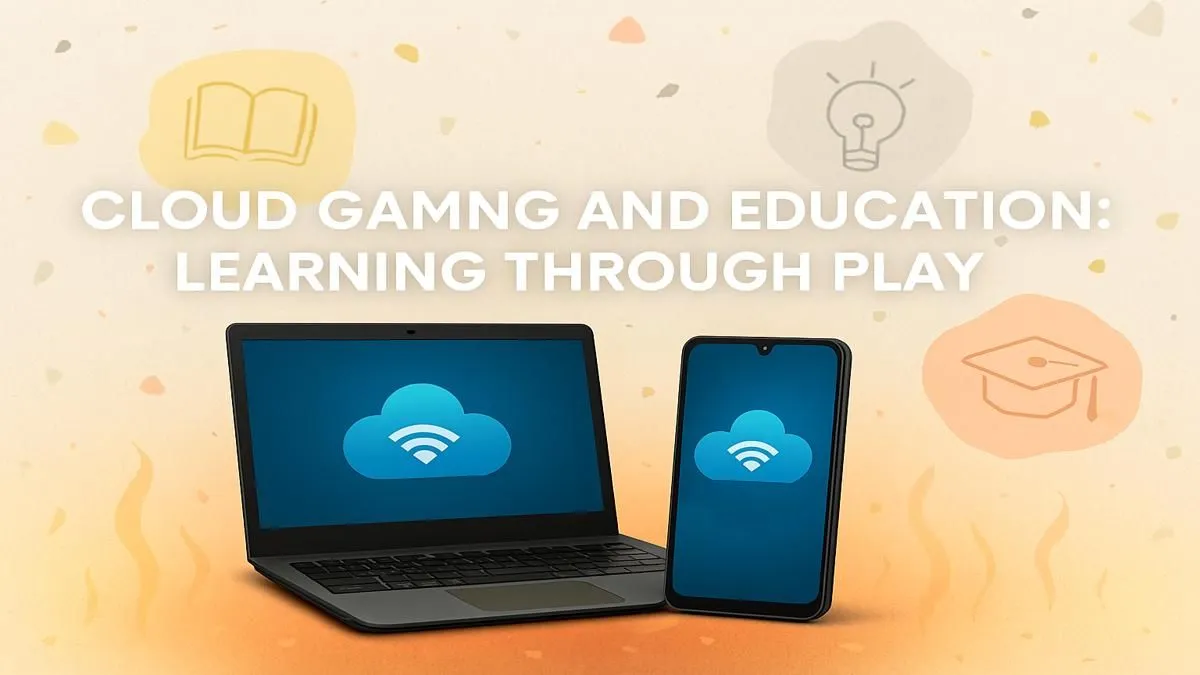
Remember those old school computer labs? The slow boot-up times, the outdated software, the one decent PC everyone fought over... Now, imagine every student having access to a high-end learning environment on any device, anywhere. That’s not science fiction; it's the promise of cloud gaming in education, a powerful shift that’s set to redefine how South African students learn, collaborate, and create. It’s about turning lessons into epic quests. ✨
Unlocking the Classroom with Cloud Gaming
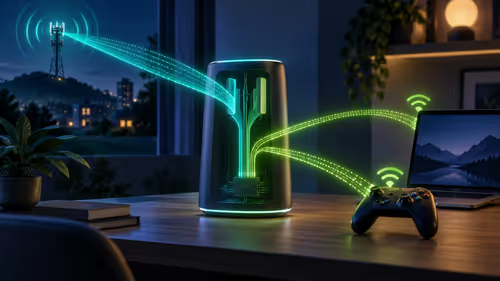
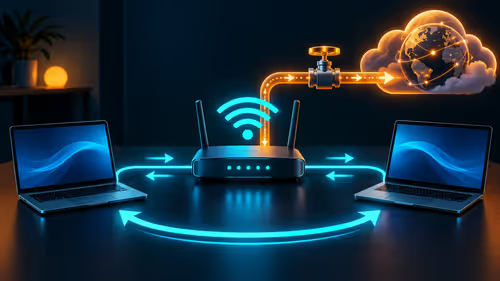
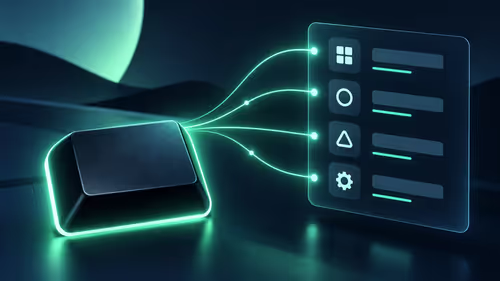
So, what exactly is cloud gaming? Think of it like Netflix, but for interactive software and games. Instead of running on a local device, the program runs on a powerful server miles away and streams the video feed to your screen in real-time. Your keyboard and mouse clicks are sent back instantly.
For schools, this is a massive leap forward. It means the end of expensive, cyclical hardware upgrades. An entire classroom can engage with complex 3D modelling software or detailed historical simulations using simple, affordable devices. The heavy lifting is done in the cloud, democratising access to top-tier educational tools. This approach makes learning accessible without needing a room full of high-end PCs over R20k to run demanding applications.
The Power of Learning Through Play
The core benefit of using cloud gaming in education is engagement. When learning feels like playing, students are more motivated, retain information better, and develop critical thinking skills without even realising it.
Imagine these scenarios in a South African classroom:
- History: Students don't just read about ancient civilisations; they walk through a fully realised virtual Rome, interacting with the environment to solve historical puzzles.
- Science: Instead of a textbook diagram, learners conduct virtual chemistry experiments in a safe, simulated lab, or explore the solar system in a spaceship.
- Coding: They learn programming logic by building game levels and solving interactive challenges.
This method of learning through play fosters collaboration, problem-solving, and creativity in a way traditional rote learning simply can't match. And with the cloud, these rich experiences can be delivered seamlessly to a classroom equipped with even affordable budget gaming PCs.
Case Study: Minecraft Education Edition 🎓
Minecraft isn't just about building with blocks; its Education Edition is a prime example of learning through play. Teachers use it to create immersive lessons in everything from mathematics (visualising area and volume) and coding (using in-game command blocks) to language arts (recreating scenes from literature). It’s a powerful tool that shows how cloud-accessible games can transform any subject into an adventure.
Cloud Gaming in the South African Educational Landscape
Of course, implementing this in South Africa comes with its own set of challenges, primarily connectivity. Reliable, high-speed internet isn't a given everywhere. However, with the continued rollout of fibre and 5G, the infrastructure is rapidly improving. 🚀
The opportunity here is immense. Cloud gaming for schools can bridge the digital divide, giving learners in under-resourced areas the same educational tools as those in top-tier private schools. A single, powerful server hub, perhaps built around a cluster of powerful pre-built PCs, could potentially serve an entire community or school district.
For parents, this shift means the family PC becomes even more central to their child's development. A good machine needs to be ready for homework, research, and this new wave of interactive education. Investing in one of the many capable PCs under R20k can provide a fantastic platform for both schoolwork and after-hours fun. Having a solid home base ensures your child can take full advantage of these new learning frontiers, supplementing what they do in the classroom. Even if the school day is over, the learning... and the playing... can continue on a machine that's up to the task. To get started, you can always explore the best gaming PC deals to find a setup that fits your family's needs and budget.
The future of learning is interactive, engaging, and accessible. And as technology evolves, cloud gaming in education is poised to be a cornerstone of the modern South African classroom.
Ready to Power Up Your Learning Journey? 🚀
While the cloud handles the heavy lifting, a reliable PC is still your portal to a world of learning and play. From homework to high-end gaming, the right machine makes all the difference. Explore our incredible range of gaming PC deals and find the perfect setup for your family's future.