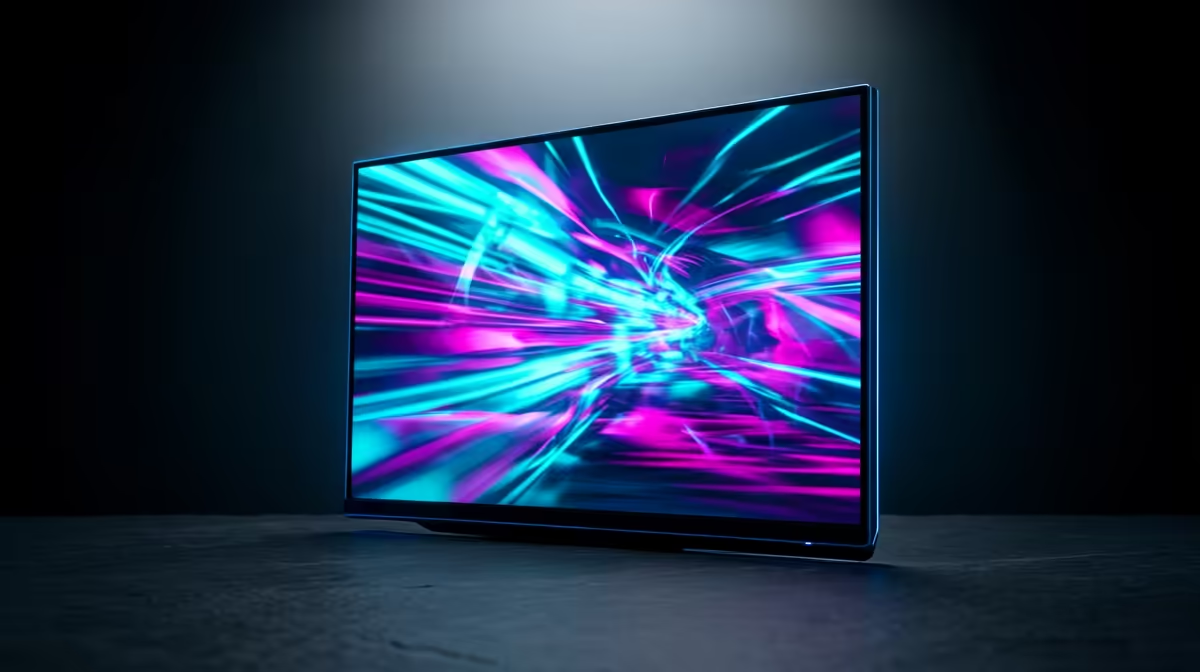
You’re in the final circle in Apex, the tension is thick… but as you flick your aim, a blurry trail follows your enemy. That, my friend, is the ghost in the machine. High-refresh-rate screens are essential for competitive play, but 240Hz monitor ghosting can ruin the experience. Don't stress, boet. We’re here to help you banish those visual artifacts and get the crisp, clean performance you paid for. ✨
What Causes 240Hz Monitor Ghosting?
In short, it’s all about pixel response time. Think of each pixel on your screen as a tiny light that has to change colour—from grey to white, black to red, and so on. Ghosting happens when these pixels can't change colour fast enough to keep up with the 240 frames your PC is pushing out every second. This delay creates a faint trail or "ghost" behind moving objects.
While panel technology has improved massively, some screens, particularly older models or certain VA panels, can struggle more than others. The good news is that many of today's modern gaming monitors are engineered to minimise this issue, but even the best displays can show ghosting if their settings aren't optimised.
Your Step-by-Step Fix for Ghosting 🔧
Before you think about replacing your screen, let's dive into the settings. Fixing 240Hz monitor ghosting is often a case of simple software and hardware tweaks.
Tweak Your Monitor's Overdrive Settings
This is your number one weapon against ghosting. Buried in your monitor's on-screen display (OSD) menu, you'll find a setting called "Overdrive," "Response Time," or "Trace Free." This feature pushes a little extra voltage to the pixels to make them change colour faster.
However, too much of a good thing can be bad. If you set it too high (e.g., to an "Extreme" setting), you can cause "inverse ghosting" or "coronas," which look like bright or oddly coloured trails. The key is to find the perfect balance.
Find the Overdrive Sweet Spot
The best setting is usually labelled 'Normal', 'Fast', or 'Medium'. Avoid 'Extreme' or 'Ultra' modes, as they often cause inverse ghosting. Use a test like the Blur Busters UFO Test online to see the changes in real-time and find your monitor's perfect balance.
Optimise Your Game and Driver Settings
Sometimes the problem isn't the monitor itself, but the signals it's being fed. Here are two quick checks:
- Turn Off Motion Blur: Go into your game’s graphics settings and disable Motion Blur. This is a post-processing effect designed to mimic ghosting, and it completely undermines the clarity of a high-refresh-rate panel.
- Confirm Your Refresh Rate: It sounds basic, but many gamers forget this. Go to your Windows Display Settings > Advanced display settings and make sure your monitor is actually set to run at 240Hz. Double-check this in your NVIDIA or AMD control panel, too.
When Is It Time for an Upgrade? 🚀
If you’ve tried every fix and that pesky 240Hz monitor ghosting still plagues your gameplay, it might be a limitation of the panel itself. Older high-refresh-rate monitors simply don't have the pixel response technology of today's top-tier displays.
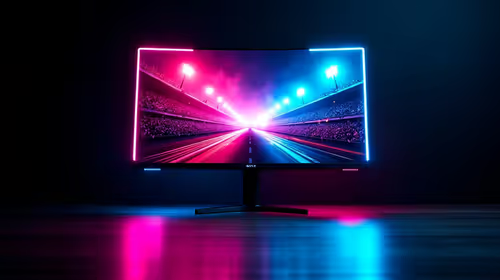
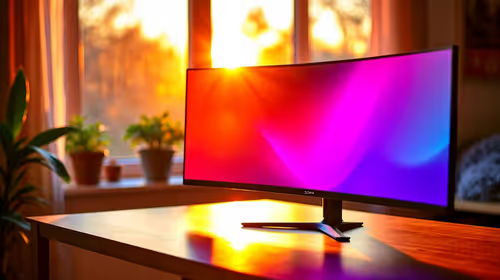
An upgrade isn't just about fixing a problem; it's about investing in a better, more responsive gaming experience. If you're considering a new screen, why not go for something that pulls you deeper into the action? The latest immersive curved monitors combine high refresh rates with incredible viewing angles for a truly next-level feel. Evetech has a wide range of PC monitors to suit any budget, ensuring you find a panel that eliminates ghosting for good.
Ready for a Ghost-Free Gaming Setup? Don't let blurry visuals hold back your K/D ratio. Check out the best PC monitor deals in South Africa and find a screen that keeps up with your reflexes. Shop now at Evetech for performance that leaves lag in the dust.