You’ve seen the hype. Pro players and streamers flash their lightning-fast gear, and the term "8000Hz keyboard" keeps popping up. It sounds impressive... but is it just marketing noise, or the secret weapon you need to dominate in 2026? For South African gamers trying to get the best bang for their buck, it’s a crucial question. Is spending the extra ZAR on an 8000Hz keyboard worth it, or is your trusty 1000Hz board still king?
What is an 8000Hz Keyboard, Anyway?
Before we dive into the "worth it" debate, let's quickly break down the tech. A keyboard's polling rate, measured in Hertz (Hz), is how often it reports your keystrokes to your PC.
- Standard Gaming Keyboard: 1000Hz = 1,000 reports per second (one every 1 millisecond).
- 8000Hz Keyboard: 8000Hz = 8,000 reports per second (one every 0.125 milliseconds).
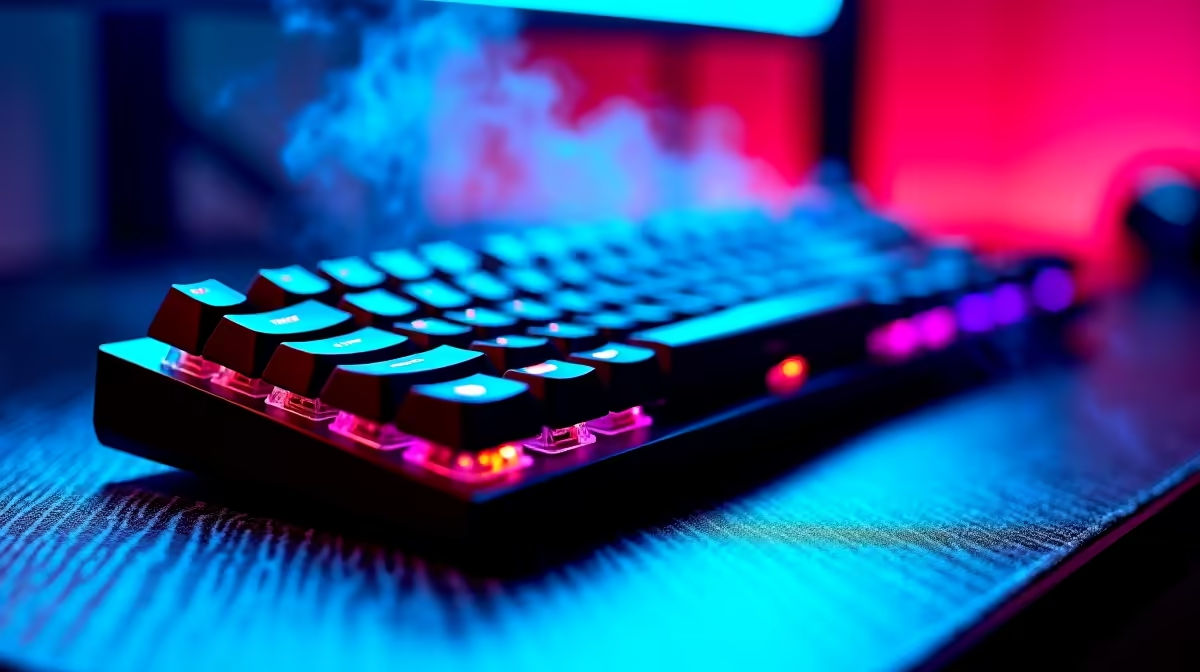
Think of it like this: a 1000Hz keyboard is taking a thousand photos of your actions every second, while an 8000Hz polling rate keyboard is taking eight thousand. It's capturing your every move with far greater precision, theoretically reducing input lag. This tech is all about shaving off microseconds between you pressing a key and the action happening on-screen. For anyone serious about their setup, understanding this is the first step to finding the right fit in our massive gaming keyboard range.
The On-Screen Difference: Can You Feel 0.875ms?
Here’s where it gets interesting. An 8000Hz keyboard delivers an input that's up to 8x faster than its 1000Hz counterpart. But can a human actually perceive a delay of less than a millisecond? For most of us... probably not. 😅
However, in the world of competitive esports, where a single frame can decide a match, the answer is more complex. The benefit of an 8000Hz keyboard is most noticeable when paired with a high-refresh-rate monitor (240Hz or higher) and a high-end PC. In games like Valorant or CS2, that tiny reduction in "click-to-screen" latency can mean landing a shot fractions of a second faster. For this reason, the most dedicated pros often stick to the lowest latency top-tier wired keyboards available.
While the hardcore crowd chases every millisecond, many gamers find that modern high-performance wireless options offer more than enough speed for both competitive and casual play, without the cable clutter.
Check Your System's Pulse ⚡
Before investing in an 8000Hz keyboard, make sure your CPU can handle it. The higher polling rate demands more processing power. Use Windows Task Manager (Ctrl+Shift+Esc) while gaming to monitor your CPU usage. If it's already maxing out, a high-polling-rate peripheral could potentially impact your frame rates.
Downsides and Diminishing Returns
So, why isn't everyone using an 8000Hz keyboard? There are two main reasons: cost and system resources.
- CPU Load: As mentioned, sending 8,000 signals per second requires more CPU power. While modern i5s, i7s, and Ryzen 5s can handle it easily, an older or budget PC might see a slight performance dip.
- Price: This is premium technology, and it comes with a premium price tag in ZAR. You have to ask yourself if that micro-improvement is worth the extra cash that could be spent on a better mouse or more RAM. Often, bundling peripherals with great keyboard and mouse combos provides better overall value.
The Verdict: Is an 8000Hz Keyboard Worth It in 2026?
For the vast majority of South African gamers, the answer is probably no. An 8000Hz keyboard is an incredible piece of engineering, but its benefits are for a niche, elite-tier audience. It's for the aspiring pro who already has a top-of-the-line rig and wants to eliminate every possible bottleneck. ✨
For everyone else, a high-quality 1000Hz mechanical keyboard remains the undisputed champion of value and performance. It's more than fast enough for 99% of gaming scenarios and won't strain your PC or your wallet. The real performance boost comes from great switches, solid build quality, and features that suit your playstyle... all of which you can find in the best gaming keyboard deals right here in SA.
Ready to Find Your Perfect Keystroke?
Whether you're chasing microseconds or just want a reliable, awesome-feeling keyboard, the right gear makes all the difference. Explore our massive range of gaming keyboard specials and find the perfect board to elevate your game.