Ah, 8K gaming. The final frontier... or is it? For years, it’s been a whisper on the lips of hardcore PC enthusiasts in South Africa—a resolution so crisp you could count the pores on a virtual troll's face. But the performance cost was brutal. Now, with the promise of technologies like NVIDIA’s next-gen DLSS 4 on the horizon, we have to ask the big question again: is 8K gaming with DLSS 4 finally worth the investment? Let's find out.
What is 8K Gaming with DLSS 4, Really?
Before we dive into framerates and ZAR figures, let's get on the same page. 8K resolution is a staggering 7680x4320 pixels. That's four times the pixels of 4K and sixteen times that of 1080p. It’s an insane amount of detail, promising unparalleled image clarity.
The problem? Pushing all those pixels is incredibly demanding, even for the beefiest graphics cards. This is where DLSS (Deep Learning Super Sampling) comes in. It’s NVIDIA's AI-powered magic trick that renders games at a lower resolution and then intelligently upscales the image to your target resolution, boosting performance significantly.
While DLSS 4 isn't officially detailed yet, we can look at the evolution to DLSS 3.5's Frame Generation and Ray Reconstruction to guess its potential. We're talking about smarter AI models that could make 8K gaming with DLSS 4 not just playable, but genuinely smooth. For now, many gamers are perfectly happy with the crispness offered by the latest 5K and 4K monitors, which represent the current sweet spot.
The Performance Test: What Rig Do You Need? 🚀
Let's be blunt: you're not getting into the 8K gaming club without a monster rig. We're talking top-tier hardware across the board.
The Unavoidable GPU Requirement
At the heart of any 8K setup is the graphics card. Currently, the NVIDIA GeForce RTX 4090 is the only consumer card that can realistically tackle 8K. Even with this beast, you'll be relying heavily on DLSS in Performance or Ultra Performance mode to hit a stable 60 FPS in demanding titles like Cyberpunk 2077 or Alan Wake 2. Anything less, and you're looking at a slideshow, not a gaming experience.
Beyond the GPU
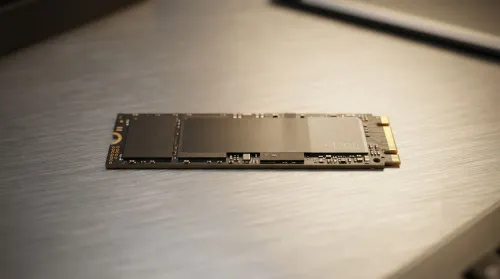
Your other components need to keep up, too. A high-end CPU (like an Intel Core i9 or AMD Ryzen 9), at least 32GB of fast DDR5 RAM, and a speedy NVMe SSD are non-negotiable to prevent bottlenecks. It's a full system commitment, which is why browsing through all gaming monitors is often the first step for builders to decide which performance target they're aiming for.
The Visual Payoff: Can You Even See the Difference?
This is the most critical question. Does 8K look significantly better than 4K? The answer is... it depends.
On a massive 55-inch+ screen sitting close up, the difference is noticeable. Edges are smoother, textures are sharper, and the sense of depth is enhanced. But on a typical 27 or 32-inch desktop monitor, the law of diminishing returns kicks in hard. The pixel density is already so high at 4K that the jump to 8K is subtle for many people. It’s a luxury, not a necessity. For many, the immersion from one of the many available curved monitors at 4K provides a more tangible benefit than the raw pixel count of 8K.
Optimise Your High-Res Display 🔧
In Windows, make sure to set your display scaling correctly (usually 150% for 4K or 200% for 8K on a desktop monitor). Also, enable ClearType and run the tuner to ensure text is perfectly crisp. These small tweaks make a huge difference in day-to-day use outside of gaming.
Ultimately, the goal is a smooth, immersive experience, and you can find a wide range of PC monitors that deliver exactly that without requiring a supercomputer to run them.
The ZAR Reality Check: The Price of Pixels 🤔
So, what's the cost of entry for 8K gaming in South Africa? Prepare your wallet. An 8K monitor alone can set you back anywhere from R40,000 to over R70,000. Add an RTX 4090 (another R40,000+) and the other high-end components, and you’re easily looking at a PC build well over R100,000.
For that price, you could build an absolutely elite 4K OLED gaming rig and still have cash left over. It’s crucial to check the best PC monitor deals to see how much more performance and value you can get by sticking to the 4K sweet spot. Don't forget the little things, either; you'll need high-quality DisplayPort 2.1 cables and other monitor accessories to get the most out of your investment. While the dream might be a huge 8K screen, sometimes a simple second screen, like one of the many portable monitors, is a more practical upgrade for multitasking.
The Verdict: Is 8K Gaming with DLSS 4 Worth It?
For the vast majority of gamers in South Africa right now, the answer is no. The cost is astronomical, the hardware requirements are extreme, and the visual benefits over a high-quality 4K display are minimal on typical desktop monitor sizes.
So, who is it for?
- The Ultimate Enthusiast: If you have the budget and want the absolute bleeding edge of technology, 8K gaming is your peak to conquer.
- The Professional: For creators working with 8K video or high-resolution assets, an 8K display is a legitimate productivity tool.
For everyone else, a high-refresh-rate 1440p or 4K monitor offers a far better balance of price, performance, and visual quality. The future of 8K gaming with DLSS 4 is incredibly exciting, but for now, it remains a tantalising glimpse of what's to come rather than a practical choice for today.
Ready for a Real Visual Upgrade? While 8K might still be on the horizon, a powerful graphics card is the key to unlocking incredible 4K and high-refresh-rate 1440p gaming today. Explore our massive range of GPUs and find the perfect engine for your next-level gaming experience.