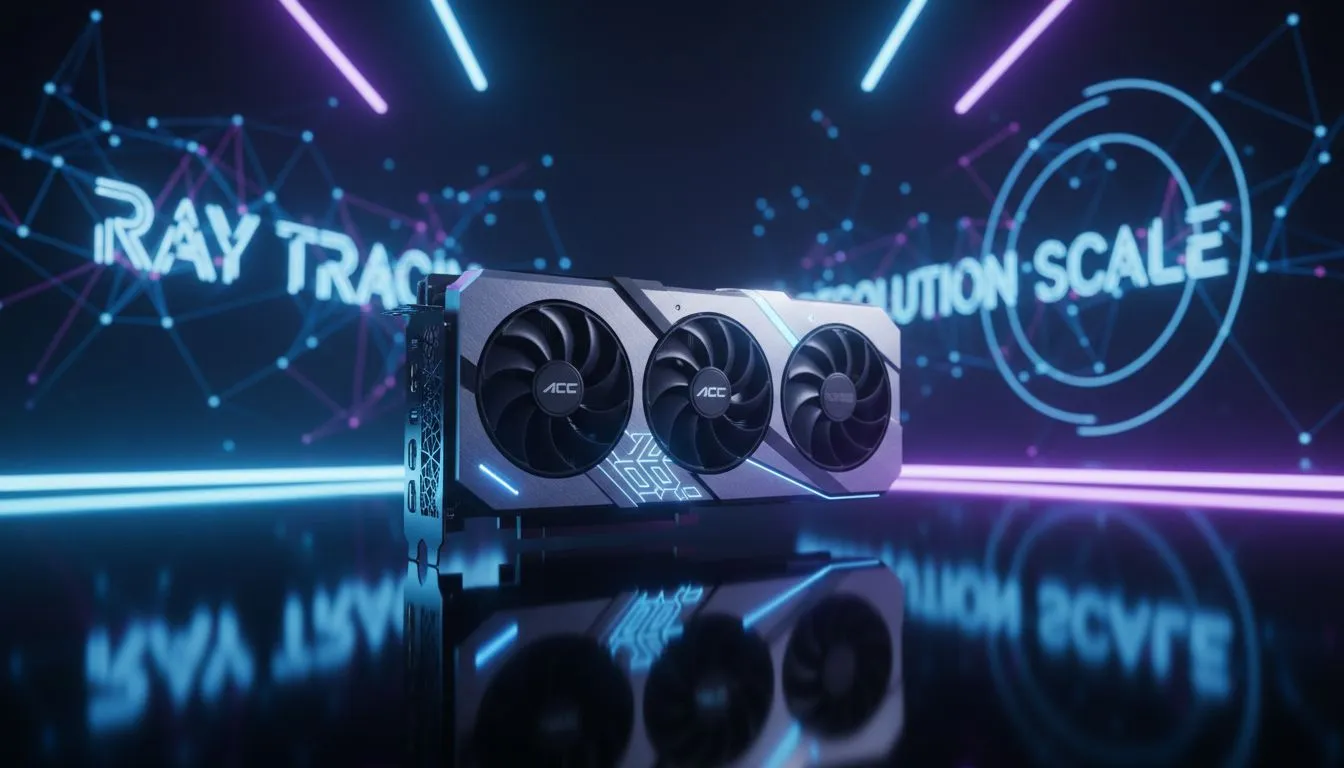
Staring down the main straight at Kyalami, every millisecond counts. In Assetto Corsa Competizione, the battle between ACC Ray Tracing vs Resolution Scale is real. Do you want those puddle reflections to look lifelike, or do you need the crispest image to hit your apex? Balancing these settings is the difference between a podium finish and a blurry mess in your rearview mirror. 🏎️
The Visual Duel: ACC Ray Tracing vs Resolution Scale
Assetto Corsa Competizione (ACC) is notoriously heavy on hardware. When you look at ACC Ray Tracing vs Resolution Scale, you are essentially choosing between lighting accuracy and spatial clarity. Ray Tracing in ACC focuses on high-quality reflections. It makes the rain-soaked tarmac of Spa look incredible... but it demands immense power.
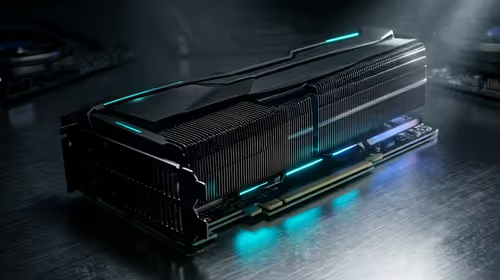
Most South African sim racers prioritising lap times usually lean toward Resolution Scale first. If your image is blurry, you cannot spot your braking markers. Upgrading to the latest high-performance graphics cards allows you to push both, but most mid-range builds must choose one.
Why Resolution Scale Dictates Your Racing Line
Resolution Scale determines the internal rendering resolution of the game. If you set this below 100%, the game renders at a lower quality and then stretches to fit your screen. This is a massive performance booster. However, in a title where "seeing the limit" is everything, a low scale makes the track look like oil paint.
For those using MSI graphics cards, using features like DLSS or FSR can help recover that lost clarity. If you are on a 1080p monitor, try to keep your scale at 100%. If you have moved to 4K, you might find that AMD Radeon graphics cards handle high native resolutions exceptionally well, even if you skip the Ray Tracing features.
Sim Racing Pro Tip ⚡
you are struggling with frame drops in the rain, try lowering your 'Visible Cars' count to 12 or 15 before touching Resolution Scale. This reduces the CPU load and keeps your frame times consistent without sacrificing that sharp 1:1 pixel look on the track.
When to Enable Ray Tracing in ACC
Ray Tracing is a luxury. In ACC, it specifically affects "Ray Traced Shadows." This adds depth to the cockpit and the way cars cast shadows on the track. It looks stunning during sunset races at Kyalami. However, the performance hit can be as high as 30%.
Even newer entries like Intel Arc graphics cards are beginning to handle these light loads better with driver optimisations. But if you are competitive, the extra frames from turning it off are usually worth more than the pretty shadows. 🚀
Finding the Performance Balance in South Africa
Hardware prices in South Africa mean we want our gear to last. Whether you are using professional workstation graphics cards for multi-screen rendering or a dedicated gaming rig, the goal is stability.
A stable 60 FPS with a 100% Resolution Scale will always feel better than a stuttering 40 FPS with Ray Tracing enabled. If you have the budget for a high-end RTX 40-series, you can enjoy the best of both worlds. For everyone else... clarity is king. 🔧
Ready to Find Your Perfect Match?
The ACC Ray Tracing vs Resolution Scale debate is complex, but for maximum power, choice, and value in South Africa, a dedicated GPU upgrade is hard to beat. Explore our massive range of graphics card specials and find the perfect hardware to conquer the track.