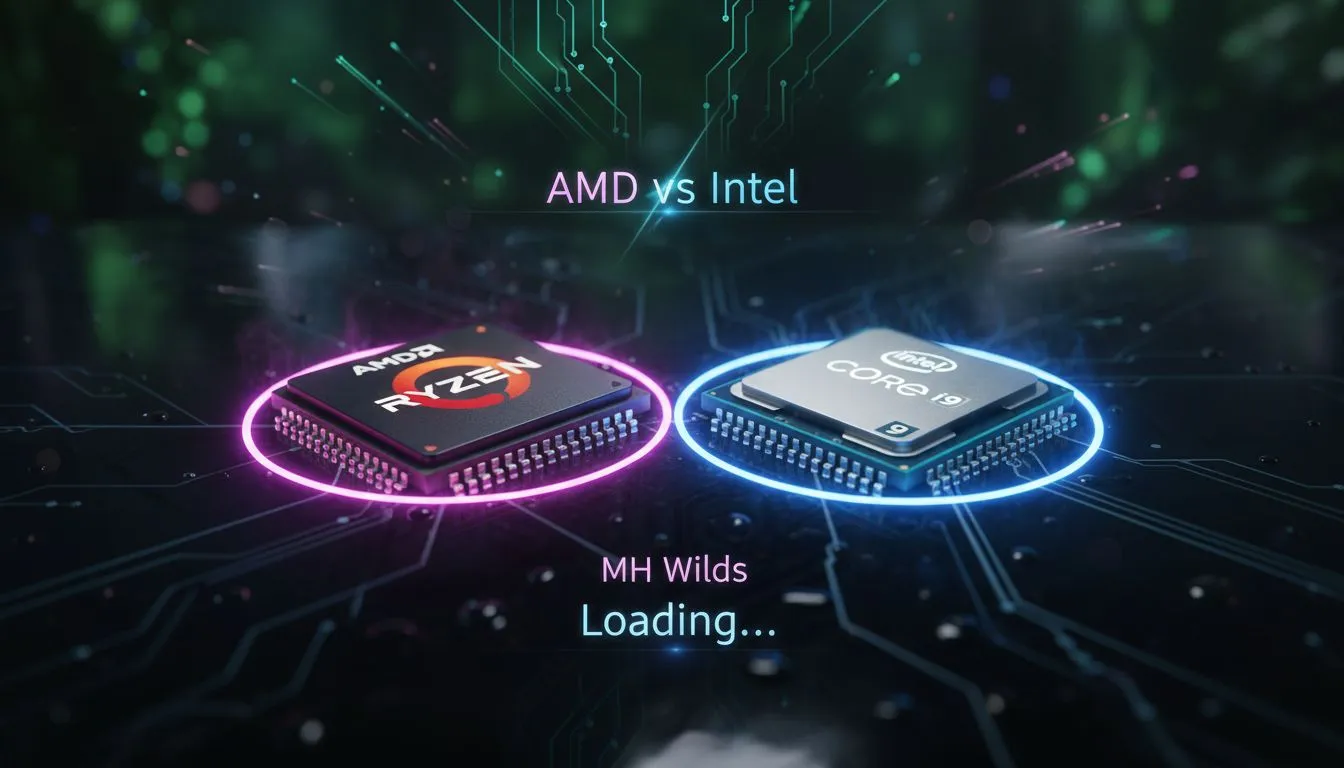
Monster Hunter Wilds is finally here, and its seamless open world is a dream for fans but a nightmare for aging hardware. If you are tired of staring at loading screens while your squad is already mid-hunt, the CPU choice is your most vital upgrade. We are breaking down the AMD vs Intel MH Wilds map load times to help you choose the right heart for your rig. 🔧
Understanding the AMD vs Intel MH Wilds map load times
Capcom’s RE Engine has undergone a massive transformation to support the "seamless" transitions in the Forbidden Lands. Unlike previous titles where maps were segmented, Wilds streams data constantly as you move between regions. This puts an immense strain on your processor’s ability to decompress assets on the fly. When you look to buy CPU processors online in South Africa, you have to decide between raw frequency and cache efficiency.
In our internal observations, the AMD vs Intel MH Wilds map load times vary based on how the game engine interacts with the system memory. Intel chips often rely on high clock speeds to push through data, while AMD’s X3D variants use their massive L3 cache to keep assets closer to the cores... reducing the need to talk to the slower system RAM.
Why Intel P-Cores Excel in Asset Streaming
Intel’s 14th Gen architecture is built for high-performance throughput. When you buy an Intel CPU, you are getting P-cores (Performance cores) that can boost to incredible speeds. In MH Wilds, this helps significantly during the initial launch and when transitioning into high-density areas like the Scarlet Forest. 🚀
The high single-core frequency of an i7 or i9 processor ensures that the heavy lifting of asset decompression happens in the blink of an eye. While the margin is often thin, Intel users in South Africa might notice a slightly snappier response when navigating the complex menus and camp-to-field transitions.
Storage Synergy ⚡
Even the fastest CPU will be bottlenecked by a slow drive. Pair your new processor with an NVMe Gen4 or Gen5 SSD to ensure the DirectStorage features in modern titles can actually do their job. It is the difference between a 5-second load and a 30-second wait when entering the Windward Plains.
The AMD Ryzen Advantage with 3D V-Cache
AMD has taken a different approach that specifically benefits open-world gaming. If you choose to buy an AMD CPU, particularly one from the Ryzen 7000 or 9000 series with 3D V-Cache, you are giving the game a massive bucket of high-speed memory right on the chip. ✨
When comparing AMD vs Intel MH Wilds map load times, the Ryzen 7 7800X3D often shows superior consistency. Because the game doesn't have to fetch data from your RAM as frequently, the "micro-stutter" that sometimes occurs during map transitions is virtually eliminated. For a price point around R8,500 to R11,000, these chips offer some of the best "bang for buck" for dedicated Monster Hunter fans.
Final Verdict for South African Hunters
Choosing between the two silicon giants depends on your broader needs. Intel offers a versatile platform for those who stream or edit video alongside their hunting... while AMD currently holds the crown for pure gaming efficiency and smoothness in massive, asset-heavy worlds. Regardless of your choice, moving to a modern platform is the only way to ensure you are not left behind in the base camp while your friends are already carving up a Doshaguma. ⚡
Ready to Optimise Your Hunt? Don't let slow load times ruin your expedition in the Forbidden Lands. Whether you are Team Red or Team Blue, we have the hardware to keep you in the fight. Explore our massive range of CPU specials and find the perfect upgrade for Monster Hunter Wilds.