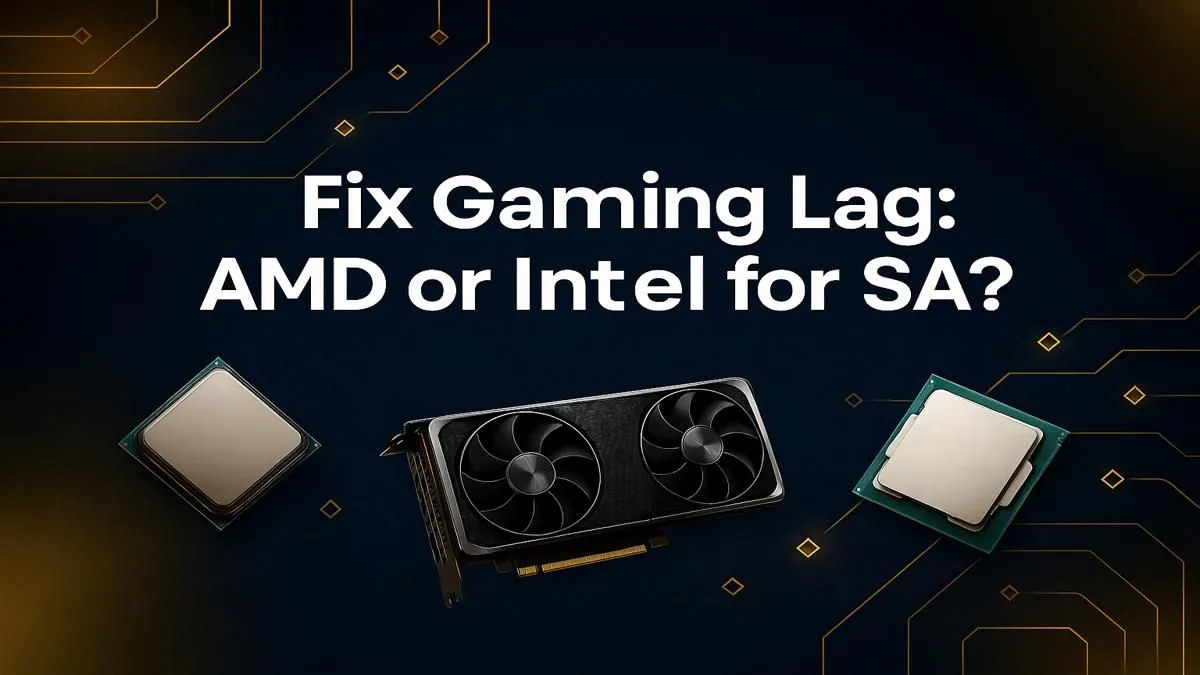
We’ve all been there… a tense standoff in Warzone, the final circle closing in, and your frames suddenly drop to a crawl. It’s not always your internet connection. In South Africa, the battle between AMD and Intel for gaming supremacy is intense. Choosing the right CPU isn't just about specs; it's about getting smooth, lag-free performance when it matters most. So, which team is right for your rig… Team Red or Team Blue? ⚡
Understanding the Core Issue: CPU vs. Gaming Lag
First, let's clear something up. "Lag" is often used to describe high ping from a slow internet connection. But if your game is stuttering or your frames per second (FPS) are tanking, that's a hardware problem. Your Central Processing Unit (CPU) is the brain of your PC, handling game logic, physics, and enemy AI. When it can't keep up, you get a "bottleneck," causing those frustrating performance dips. For any serious gamer, choosing the right CPU processors is the first step to a smoother experience.
Team Blue Breakdown: What Intel Brings to the Game
For years, Intel has been a giant in the gaming world, known for its powerful single-core performance. This is critical because many games still rely heavily on one or two fast cores to run smoothly. Their latest processors use a clever hybrid architecture with Performance-cores (P-cores) for heavy lifting and Efficient-cores (E-cores) for background tasks.
This design makes Intel CPUs fantastic all-rounders. If you're a streamer who needs to game, run Discord, and manage OBS simultaneously, this hybrid approach can be a massive advantage. For competitive titles like Valorant or CS2 where every millisecond counts, the raw speed of Intel's latest processors often provides a tangible edge.
Team Red's Rise: Why AMD is a Gaming Powerhouse
AMD's Ryzen CPUs completely changed the game, offering more cores and threads for your money. This multi-core strength is perfect for modern AAA titles that are optimised to use all the power you can throw at them. Games like Cyberpunk 2077 or Baldur's Gate 3 thrive on processors with plenty of cores.
AMD's secret weapon, however, is their 3D V-Cache technology, found in chips like the Ryzen 7 7800X3D. This tech stacks a massive amount of high-speed memory directly onto the CPU, which dramatically boosts gaming performance. For pure, unadulterated gaming FPS, it's tough to beat. You can explore AMD's Ryzen lineup to see which models feature this incredible innovation. ✨
Don't Forget the RAM! 🚀
AMD's Ryzen CPUs, especially the 7000 series, love fast RAM. Pairing your new processor with a good DDR5 kit (aim for 6000MHz with low CL timings) can unlock significant performance gains. It's a small detail that makes a big difference to your minimum frame rates, reducing those annoying stutters.
The Verdict for South African Gamers
So, in the AMD vs Intel gaming debate in South Africa, which CPU actually fixes lag? The honest answer is... it depends on you. There's no single "best" choice, only the best choice for your needs and budget.
- For the Ultimate Gaming Rig: If your only goal is the highest possible FPS in games, an AMD CPU with 3D V-Cache is often the champion.
- For the All-Rounder PC: If you game, stream, and create content, Intel's hybrid architecture offers incredible flexibility and power.
- For Budget-Conscious Builders: Both teams offer amazing value at different price points. The best deal often comes down to current ZAR specials and motherboard combo prices.
Ultimately, the power is in your hands to build a system that crushes stutter and lets you focus on the win. 🔧
Ready to Banish Lag for Good? The AMD vs Intel debate is fierce, but the right CPU for you depends on your games, budget, and goals. The best way to decide is to compare the latest deals. Explore our massive range of CPUs and build the lag-free rig you deserve.