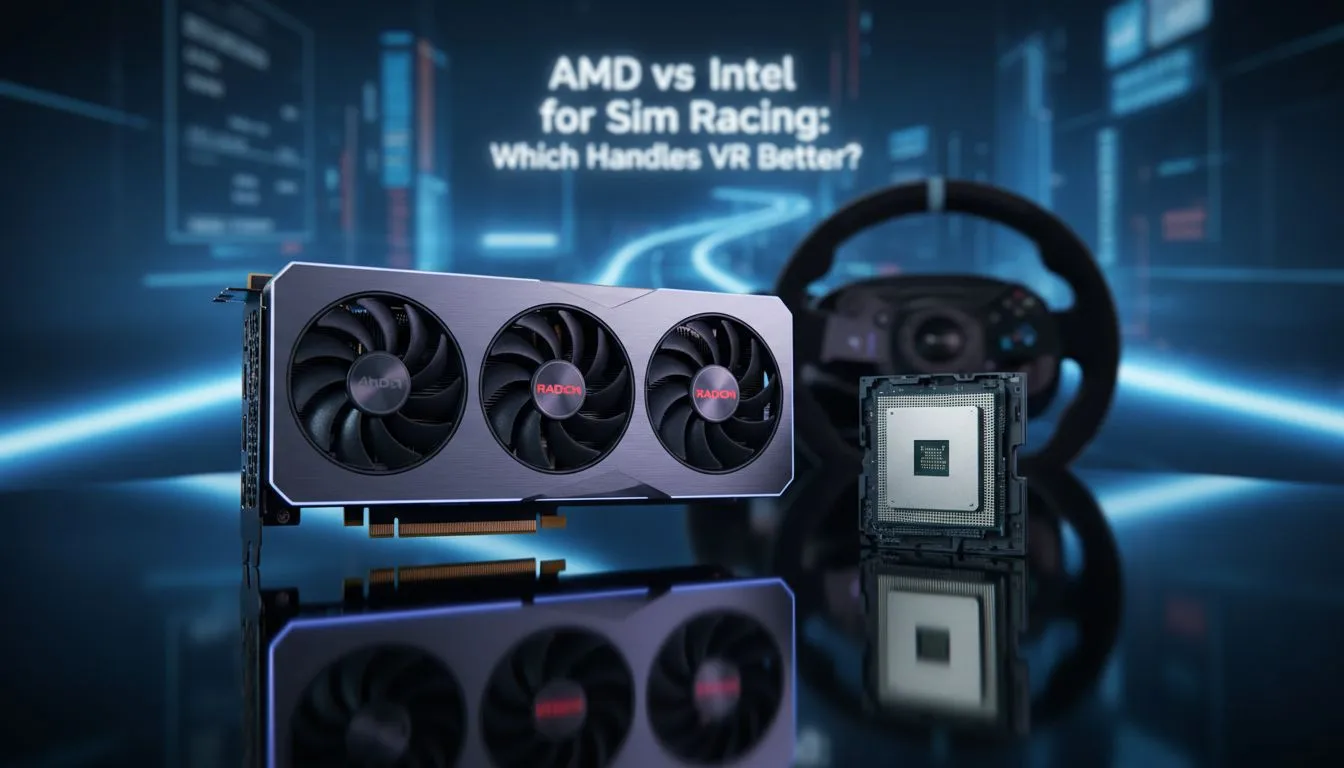
Imagine sitting on the grid at Kyalami... the rain is blurring your visor and the roar of thirty engines vibrates through your seat. In VR sim racing, immersion is everything, but a single stutter can break the magic... or cause a massive pile-up at Turn 1. Choosing between AMD vs Intel for VR Sim Racing is the most critical decision you will make for your virtual cockpit.
Understanding the CPU Bottleneck in Virtual Reality
Sim racing titles like Assetto Corsa Competizione and iRacing are notoriously heavy on a single core. Unlike standard gaming, VR requires your system to render two separate images at extremely high refresh rates... usually 90Hz or 120Hz. If your processor cannot keep up with the physics calculations and draw calls, your frame times will spike. Before you dive into the specifics, it is worth browsing the massive selection of CPU processors to see how the current market looks in South Africa.
Why AMD’s 3D V-Cache Wins in Simulation
For many local enthusiasts, the "X3D" series from AMD has become the gold standard. The secret lies in the massive L3 cache stacked directly on the processor. Simulation games thrive on data proximity... the more instructions the CPU can keep "on hand," the less it has to wait for slower system RAM.
When comparing AMD vs Intel for VR Sim Racing, the Ryzen 7 7800X3D often leads the pack. It provides incredibly stable 1% lows, which means fewer stutters when you are looking into the apex of a corner. You can find the latest AMD CPUs at competitive ZAR pricing, often making them the best "bang for buck" for a dedicated VR rig. 🏎️
Sim Racing Pro Tip ⚡
In VR, "Frame Timing" is more important than "Average FPS." Use a tool like fpsVR to monitor your CPU and GPU frametimes separately. If your CPU frametime is consistently higher than your refresh rate target (e.g., 11.1ms for 90Hz), you are CPU-bound and need to lower physics settings or upgrade your processor.
The Case for Intel’s Raw Frequency
Intel has not stayed behind in the pits. Their strategy involves high clock speeds and a hybrid architecture of Performance and Efficient cores. For racers who also use their PC for video editing or heavy multitasking, high-performance Intel CPUs like the i7-14700K offer incredible versatility.
Intel chips often reach higher peak frequencies than their AMD rivals. In certain titles that are not as cache-sensitive, that raw speed helps push the maximum possible frame rate. If you are looking for a system that handles high-resolution VR while streaming your race to Twitch, Intel’s extra cores provide a significant safety net. 🚀
Final Verdict: Which Handles VR Better?
If your goal is purely the smoothest possible VR experience in titles like iRacing or MSFS 2020, AMD’s 3D V-Cache technology currently holds a slight edge in consistency. However, Intel remains the king of raw versatility and high-frequency stability.
In South Africa, where high-end components can range from R8,000 to over R12,000, choosing the right platform depends on your specific sim title. AMD tends to run cooler... a big plus during those hot January afternoons in Johannesburg... while Intel offers a tried-and-tested platform for multi-purpose power users. 🔧
Ready to Build Your Ultimate VR Cockpit? Whether you side with Team Red or Team Blue, the right processor is the heart of your racing experience. Explore our massive range of CPU specials and find the perfect engine to power your climb up the leaderboards.