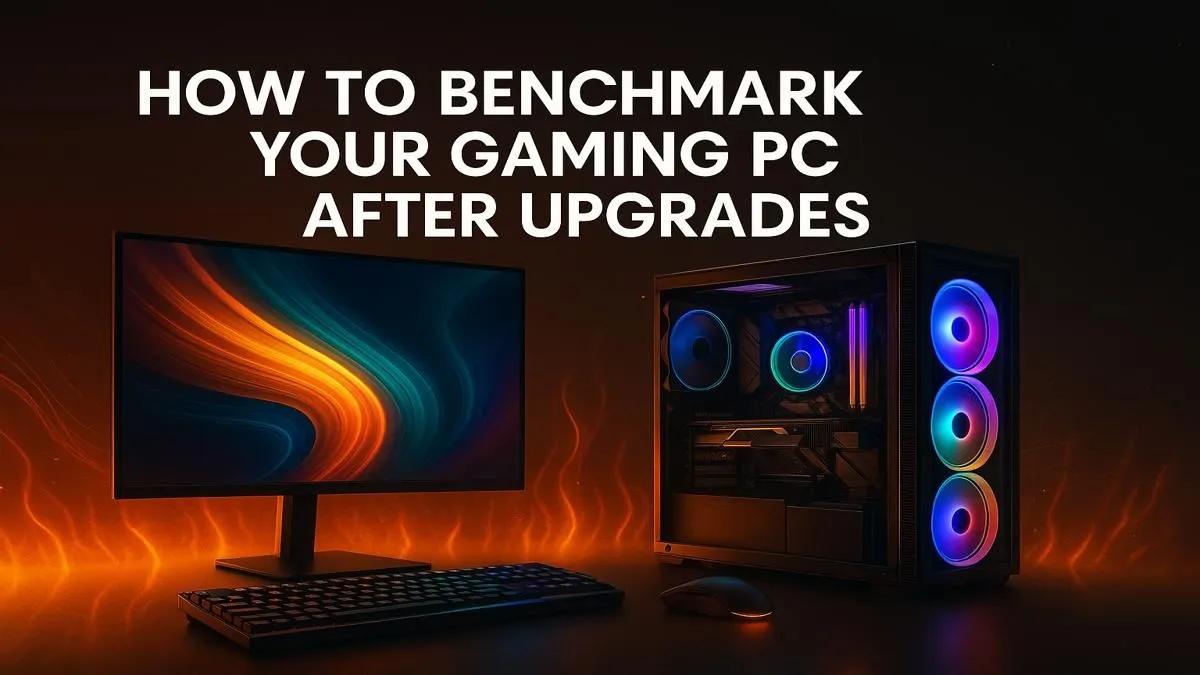
So, you’ve done it. You’ve unboxed that shiny new GPU, or maybe you’ve finally upgraded your CPU. The excitement is electric. But after the initial thrill, a crucial question pops up for every savvy South African gamer: is my rig actually performing as it should? This is where you need to benchmark your gaming PC. It’s not just for overclocking pros; it’s the best way to confirm your hard-earned cash was well spent. Let's dive in.
Why You Must Benchmark Your Gaming PC
Think of benchmarking as a health check-up for your rig. After installing new hardware, running a proper gaming PC benchmark is essential for a few key reasons:
- Stability Testing: Is your system stable under load? The last thing you want is a blue screen in the middle of a tense Warzone match. Benchmarking pushes your components to their limits, revealing any instability before it ruins your game.
- Performance Validation: You paid for a certain level of performance... are you getting it? Benchmarking gives you concrete numbers—like frames per second (FPS)—to confirm your upgrade delivered the promised boost.
- Identifying Bottlenecks: Sometimes, a new component can highlight a weakness elsewhere in your system. A benchmark can help you see if your older CPU processor is holding back your brand-new graphics card, ensuring your whole setup works in harmony.
The Pre-Flight Checklist: Before You Start
To get accurate and reliable results, you need to set the stage correctly. Don’t just jump in and run a test. A little prep work goes a long way.
- Update Your Drivers: Make sure you have the latest graphics drivers from NVIDIA or AMD, as well as updated motherboard chipset drivers.
- Close Everything: Shut down all non-essential background applications. That includes your browser, Discord, Spotify... anything that could steal precious system resources and skew your results.
- Let It Settle: Give your PC a fresh restart and let it sit idle for a few minutes before you begin. This ensures everything is running smoothly.
Your Step-by-Step Benchmarking Guide 🔧
Ready to see what your machine can do? We’ll break this down into two parts: synthetic tests for raw numbers and real-world tests for gaming reality.
Synthetic Benchmarks (The Numbers Game)
Synthetic benchmarks are programs designed to push specific parts of your PC to their absolute limit and assign a score. This is great for comparing your results to others online.
- For your CPU: Cinebench is the go-to. It renders a complex scene and scores your CPU's single-core and multi-core performance.
- For your GPU: 3DMark's Time Spy and Port Royal tests are industry standards for measuring gaming and ray-tracing performance.
Running these tests will give you a solid baseline and help you understand the raw power of your core components, which are the heart of any solid build, like the ones found in quality Intel barebone kits.
Quick Monitoring Tip ⚡
Use a tool like MSI Afterburner with the RivaTuner Statistics Server (it comes bundled). It provides an on-screen display (OSD) showing your GPU CPU temperatures, usage, and FPS in real-time while you game. It's the perfect way to see exactly how your hardware is performing moment-to-moment.
Real-World Gaming Benchmarks (The Fun Part) ✨
This is what it's all about: how does your PC actually run games? Many modern titles like Cyberpunk 2077, Forza Horizon 5, and Shadow of the Tomb Raider have excellent built-in benchmark tools.
Simply run the benchmark from the game’s graphics settings menu. It will play a pre-determined scene and give you an average FPS score at the end. This is the most practical way to benchmark a gaming PC because it reflects the exact performance you’ll experience. For a truly balanced system that excels here, starting with something like a powerful AMD barebone kit can provide a fantastic foundation.
Understanding Your Benchmark Results
So you have the numbers... what now?
Compare your scores to online reviews of the same hardware. If your results are significantly lower, it might be time to investigate. Check your component temperatures during the test—if they're too high (e.g., CPU over 90°C), thermal throttling could be robbing you of performance.
Ultimately, running a benchmark after an upgrade gives you peace of mind and the data you need to ensure you’re getting every drop of performance you paid for. 🚀
Ready to Build a Beast That Tops the Charts?
Benchmarking is the final step, but it all starts with the right parts. Whether you're upgrading a single component or building from scratch, Evetech has the gear to get you leaderboard-ready. Explore our massive range of PC components and build the rig you've always dreamed of.