Best Fan Curve Settings for PWM 800–1600 RPM: keep your PC cool and quiet 🔧
South African gamers know the truth… under load, your PC either stays comfortable or it sounds like a jet landing. With GPU spikes, summer heat, and dust in every corner, a good fan curve can mean smoother frames and a calmer desk.
If you run PWM fans around 800–1600 RPM, this guide gives you practical, tested starting points. We’ll cover airflow, noise, and how to avoid the annoying “ramp up, ramp down” loop. 🚀
Understanding PWM fan curves (and why 800–1600 RPM matters) ⚡
PWM case fans respond to a control signal, usually based on CPU temperature or a motherboard “system” sensor. For most gaming builds, you’ll see PWM fans hover between 800–1600 RPM during mixed loads like gaming, Discord, and downloads.
The goal is simple:
- Low RPM at idle to keep noise down.
- Gradual ramp under load to prevent temperature swings.
- A predictable ceiling so the system never surprises you.
Real-world note: many boards use “CPU Package” or “Motherboard” temperature for fan control. If your CPU sensor is hot but the case stays cool, your fans may overreact. That’s why the next section matters.
Recommended curves for 800–1600 RPM (with safe starting points) ✨
Use these as starting points on your motherboard fan software (BIOS or Windows). Adjust in small steps after a gaming session.
Curve A: Balanced (quiet idle, stable gaming)
- 30°C: 25% (approx. 800–900 RPM)
- 40°C: 35%
- 55°C: 55%
- 65°C: 70%
- 75°C: 85%
- 80°C: 100%
Why this works: at typical gaming temperatures, you avoid the “panic ramp” and keep airflow consistent.
Curve B: Performance-leaning (for hot rooms or heavy benchmarks)
- 30°C: 30%
- 45°C: 45%
- 60°C: 65%
- 70°C: 80%
- 80°C: 100%
If you live somewhere with frequent load-shedding summers… crank the curve slightly earlier.
Curve C: Quiet-leaning (focus on noise)
- 30°C: 20%
- 40°C: 30%
- 55°C: 45%
- 65°C: 60%
- 75°C: 80%
- 80°C: 100%
Only use this if your temps stay under control. If your CPU keeps climbing past your target, move back toward Curve A.
Pick the right fans first: 120mm vs 140mm, RGB or not
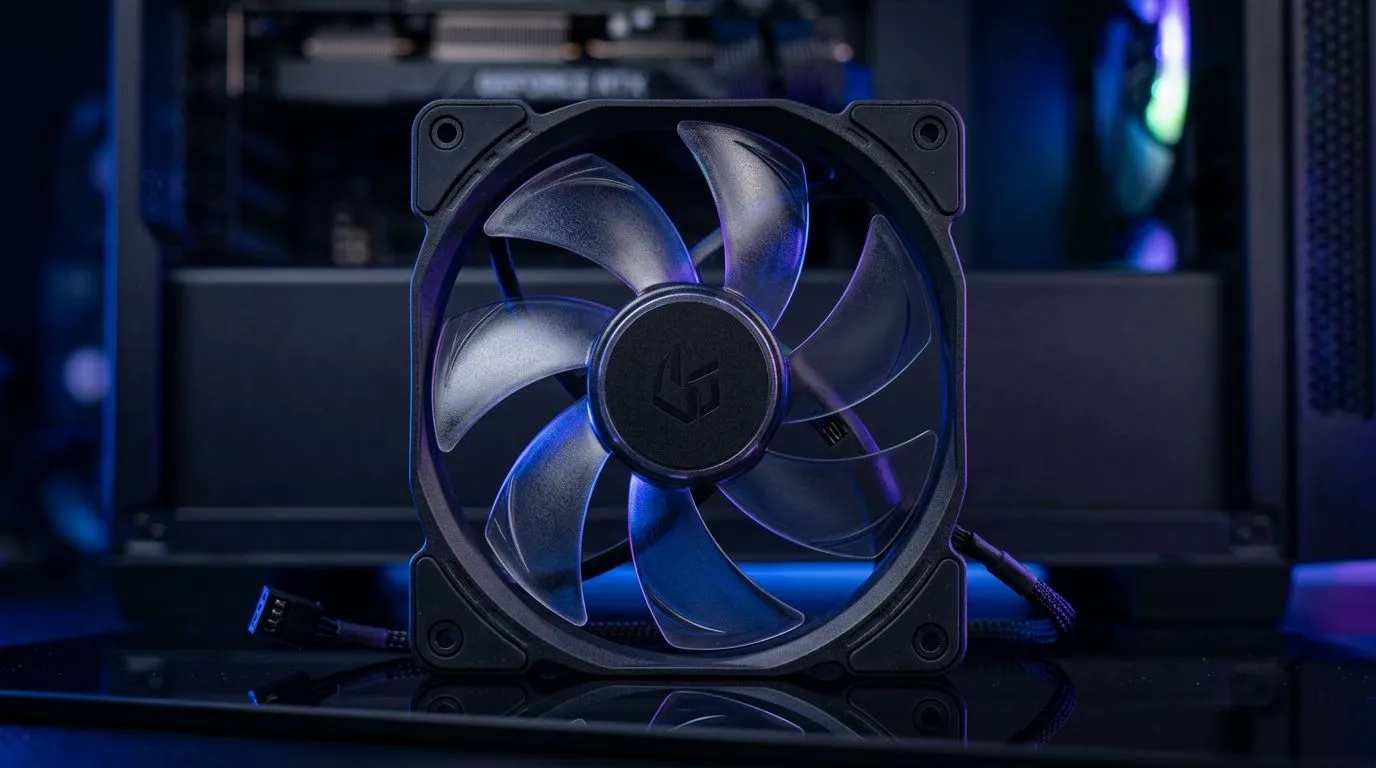
Your curve matters, but your hardware matters more. Larger fans often move more air at lower RPM, which helps you stay inside the 800–1600 RPM comfort zone.
For 120mm options, browse Evetech’s 120mm case fans here:
For 140mm options:
Want a full selection without overthinking model numbers?
If you’re specifically shopping for Corsair:
DeepCool fans for value and variety:
And yes… lighting choices can be part of your airflow workflow.
- If you want RGB-only filtering: https://www.evetech.co.za/PC-Components/case-fans-97.aspx?attributes-lightingeffects=RGB
- If you prefer clean builds with no lighting distractions: https://www.evetech.co.za/PC-Components/case-fans-97.aspx?attributes-lightingeffects=None
Micro-tuning your motherboard settings (so the curve actually behaves) 🔧
Set a realistic temperature target
Aim for “comfortable stable.” For most gaming PCs, keeping CPU temperatures in a safe range is more important than chasing a perfect number.
Avoid fan oscillation
If your curve has abrupt jumps, fans may cycle every few minutes. Smooth it by:
- widening temperature intervals (for example, 10°C steps)
- reducing the % jump between points
Productivity Pro Tip ⚡
On Windows, use your motherboard’s fan control software (or the manufacturer utility) to log CPU temperature and fan RPM during a 15–20 minute gaming run. Then adjust one curve point at a time, instead of rewriting the whole curve. Small changes prevent you from chasing noise, and you’ll quickly learn whether your case or CPU sensor is driving the behaviour.
Validate in two scenarios
- Desktop browsing + YouTube
- A real game with GPU and CPU load
If fans get loud during scenario #1, your idle point is too high. If temps spike during #2, your mid-load ramp starts too late.
Ready to dial in the Best Fan Curve Settings for PWM 800–1600 RPM?
Once you find a stable curve, you’ll notice it immediately: fewer spikes, less “whine”, and a cooler-feeling PC during long sessions. That’s the real win. 🚀
Ready to Find Your Perfect Match? Dialled-in cooling is easier when you choose fans that match your case size and airflow goals. Explore our massive range of case fans and build your quiet, fast setup with confidence at Evetech. Shop case fans on Evetech and get everything sorted for your next gaming weekend.