Quick Answer
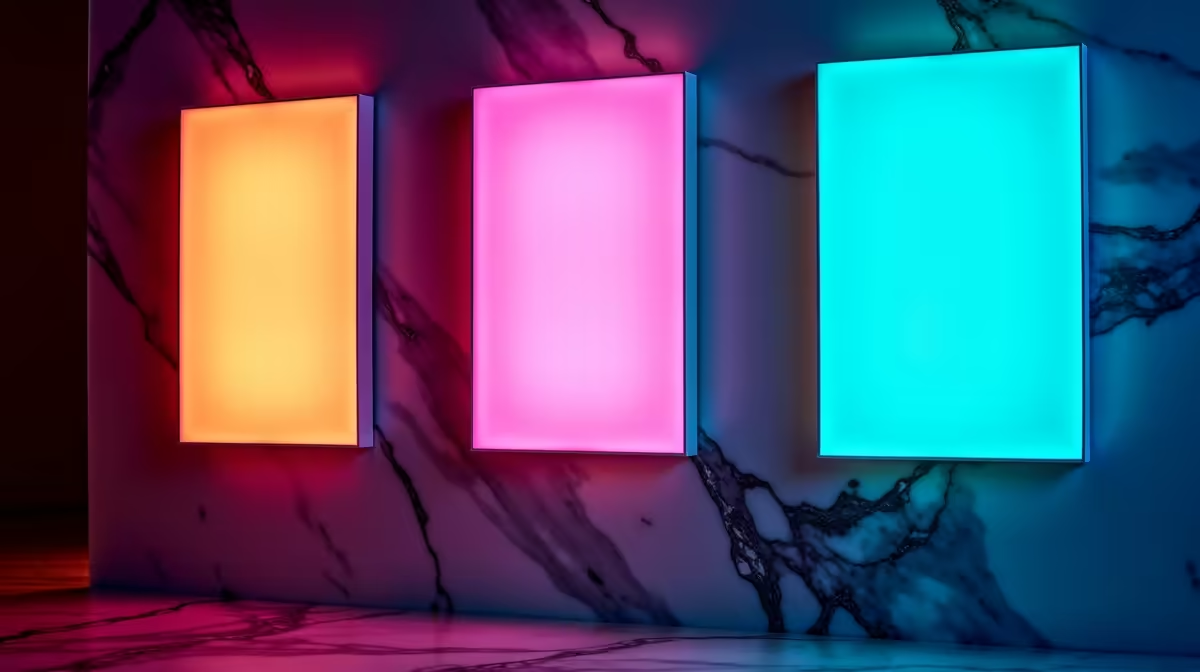
For SA gamers building an RGB-lit battlestation in 2026, Govee offers the best price-to-feature ratio with hexagon and triangle panels starting around R1,800, Nanoleaf brings premium build quality and the slickest app at a R3,500 plus premium, and Cololight sits between them with strong modular design but limited local stock. Govee wins for most rand-conscious buyers, while Nanoleaf is worth the splurge for streamers and content creators chasing a polished frame.
Cololight: Modular Design With Limited SA Footprint
Cololight made its name with hexagonal Mix and Plus panels that snap together magnetically, giving you genuinely tactile control over the layout. The colour saturation is solid and the per-pixel addressing on the Plus range produces gorgeous flowing patterns that look great on Twitch. Where it falls short for South African buyers is local distribution. Stock comes through grey-channel imports, which means warranty claims get murky and replacement panels can take six weeks to source from Asia.
If you already own Cololight gear, expanding the system works fine and the app is straightforward enough. For a fresh build in Pretoria or Durban in 2026, you're better off picking a brand with established local support unless you're after that specific modular hex aesthetic. Pricing for a starter Cololight kit lands around R2,500 when stock is available, comparable to Govee, but the after-sales picture in SA is the deal-breaker for most rand-conscious buyers.
Govee: The Value King for Battlestation Lighting
Govee has flooded the SA market with hexagon panels, light bars, RGBIC strips and the wildly popular Glide series. Pricing typically lands 30 to 40 percent below Nanoleaf for comparable form factors, and the Govee Home app supports music-react, scene scheduling and Razer Chroma integration. For a R6,000 RGB build, you can outfit a desk with a hex cluster, monitor backlight strip and floor lamp without breaking the budget. Local SA delivery on Govee gear from major retailers is one to three working days to main centres.
Brightness and colour gamut are slightly behind Nanoleaf at the top end, but the gap only shows in side-by-side comparisons. For Twitch streamers chasing a colourful frame on a budget, Govee delivers more visible RGB per rand than anything else on shelves. Build quality is fine but not premium, plastic clips can feel thin, and the wall adhesive sometimes needs replacing in humid coastal homes after a year.
Nanoleaf: Premium Build and Best-in-Class App
Nanoleaf Shapes, Lines and the newer 4D screen mirror kits sit at the top of the segment for a reason. The panels feel solid, the diffusion is even with no LED hotspots, and the app handles complex scenes with effects you can layer and schedule. Screen mirror through the 4D camera kit pulls colour data from your monitor in real time, which beats both Govee and Cololight for immersion in single-player titles like Cyberpunk 2077 and God of War.
The catch is price. A starter Shapes kit lands above R3,500 and a fully kitted desk easily hits R12,000. An unexpected outage is also worth thinking about here, since Nanoleaf controllers re-sync over Wi-Fi after power cuts and you might lose custom scenes if your router reboots before the controller does. A small UPS keeping the router and controller alive through stage 4 cuts solves it neatly. Build quality and app polish genuinely justify the premium for content creators who appear on camera.
Frequently Asked Questions
Which RGB panel system has the best South African warranty support?
Govee leads on local warranty support thanks to formal SA distribution, with Nanoleaf a close second through authorised retailers like Evetech. Cololight is the riskiest of the three because of inconsistent import channels and grey-market warranty handling.
Can I mix Govee and Nanoleaf panels in one room?
You can run them side by side, but each brand needs its own app and controller, so syncing them perfectly takes third-party tools like Home Assistant. For a clean single-app setup, pick one ecosystem and stick with it.
Which Everyday Reliability Factors Matter Most?
All three lose state during power cuts and reconnect when Wi-Fi is back, usually within a minute. None draw enough current to matter for UPS planning, so a basic 650VA UPS keeps your router and panels running through stage 4 dips and your custom scenes survive.
Ready to Find Your Perfect Match? Build a battlestation worth showing off with a gaming PC bundle priced for SA gamers. Explore Gaming PC Deals