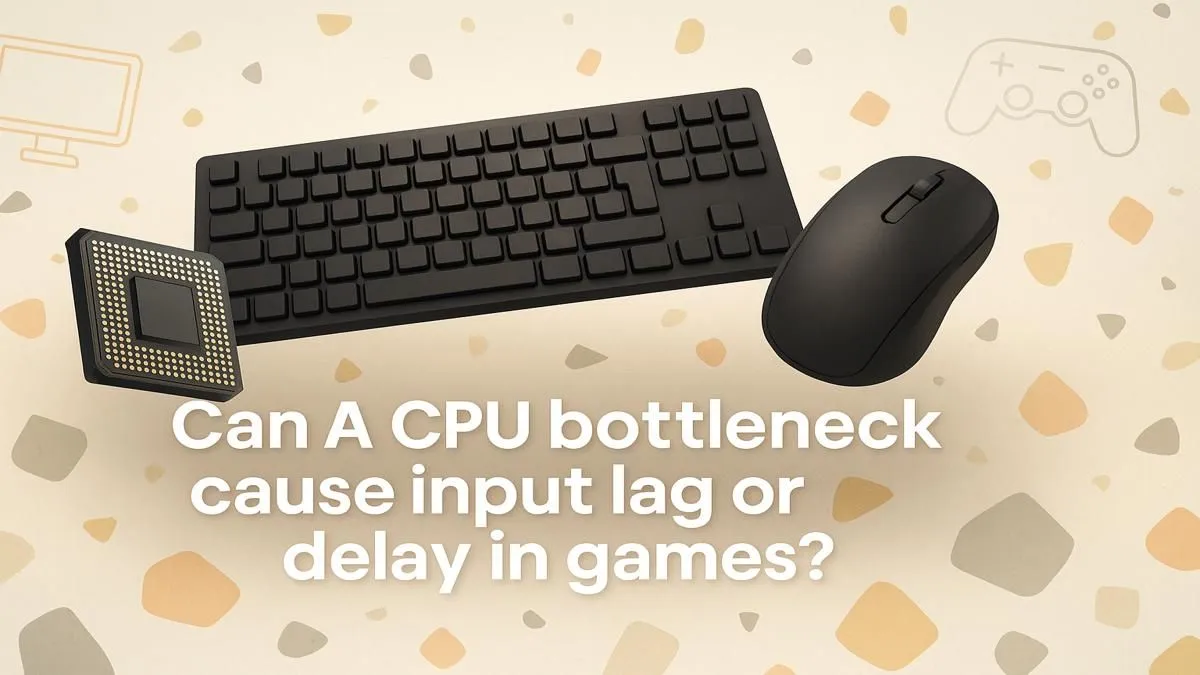
You’ve lined up the perfect shot, you click… and there’s a delay. A tiny, frustrating hiccup between your action and the game’s reaction. We often blame our internet or GPU, but the real culprit could be hiding in plain sight: CPU bottleneck input lag. It’s a silent performance killer that feels like you’re playing through mud. In South Africa’s competitive gaming scene, that split-second delay is the difference between victory and a rage quit.
Understanding CPU Bottleneck Input Lag
So, what’s actually happening inside your rig? Think of your CPU (Central Processing Unit) as the game's brain and your GPU (Graphics Processing Unit) as its eyes. The CPU handles game logic, physics, and crucially, your commands. The GPU then renders the pretty pictures. A CPU bottleneck occurs when your processor can't prepare frames fast enough for your powerful GPU to render.
This creates a queue. Your mouse click or key press gets stuck in that traffic jam, waiting for the CPU to catch up. The result? A noticeable delay between your physical action and the on-screen response. This is the essence of CPU bottleneck input lag, and it can make even the most high-end graphics card feel sluggish. 🐌
How to Spot a CPU Bottleneck on Your PC
Not sure if your processor is holding you back? It's easier to diagnose than you think. The most obvious sign is in CPU-heavy games—think massive strategy titles like Civilization VI or sprawling open worlds like Cyberpunk 2077 where the CPU is tracking countless objects and NPCs.
If your frame rate plummets in these scenarios, especially in crowded areas, while your GPU isn't maxed out, you likely have a bottleneck. This performance gap highlights that the heart of your gaming PC is struggling to keep pace. The input delay is a direct symptom of this struggle.
Check Your Vitals 🩺
Use a free tool like MSI Afterburner with the RivaTuner Statistics Server overlay. Fire up your favourite game and watch your CPU and GPU usage percentages. If your CPU usage is consistently hitting 90-100% while your GPU usage is much lower (e.g., 60-70%), you've found your bottleneck. This is concrete proof that your CPU is causing performance issues, including input lag.
The Real-World Impact on Your Gameplay
A slight delay might not sound like a big deal, but in competitive shooters like Valorant or Warzone, it’s everything. CPU-caused input delay manifests as:
- "Heavy" or "floaty" aim: Your crosshair seems to lag just behind your mouse movement.
- Delayed actions: Abilities, jumps, or shots happen a fraction of a second after you press the key.
- Inconsistent performance: The game feels smooth one moment and stutters the next, making it impossible to build muscle memory.
Ultimately, it erodes confidence in your gear and your own skills. You start second-guessing your shots because you can't trust your PC to respond instantly.
How to Fix Processor-Caused Input Delay
You have a few options to combat this performance-sapping problem.
Software Tweaks (The Free Fixes)
Before spending your hard-earned Randelas, try optimising your system. Close unnecessary background applications (especially web browsers like Chrome), lower CPU-intensive in-game settings like shadow quality or physics detail, and ensure your drivers and Windows are fully updated. These steps can free up precious CPU resources.
The Hardware Solution (The Real Fix 🚀)
While tweaks help, the only definitive solution to a severe CPU bottleneck is an upgrade. Moving to a processor with more cores, higher clock speeds, and a more modern architecture will allow your PC to process game data and your inputs in perfect sync with your GPU.
For gamers looking for pure performance, the latest Intel Core processors offer incredible single-core speeds, which are vital for many games. On the other hand, a lineup of powerful AMD Ryzen CPUs often provides excellent multi-core value, making them fantastic for both gaming and streaming. Choosing the right one will finally let your graphics card stretch its legs.
Ready to Crush the Competition?
Don't let CPU bottleneck input lag hold you back. Upgrading your processor is the surest way to get instant, responsive control and buttery-smooth frames. Whether you're Team Red or Team Blue, we've got the perfect CPU to unleash your PC's true power. Browse our massive range of CPUs and get back in the game.