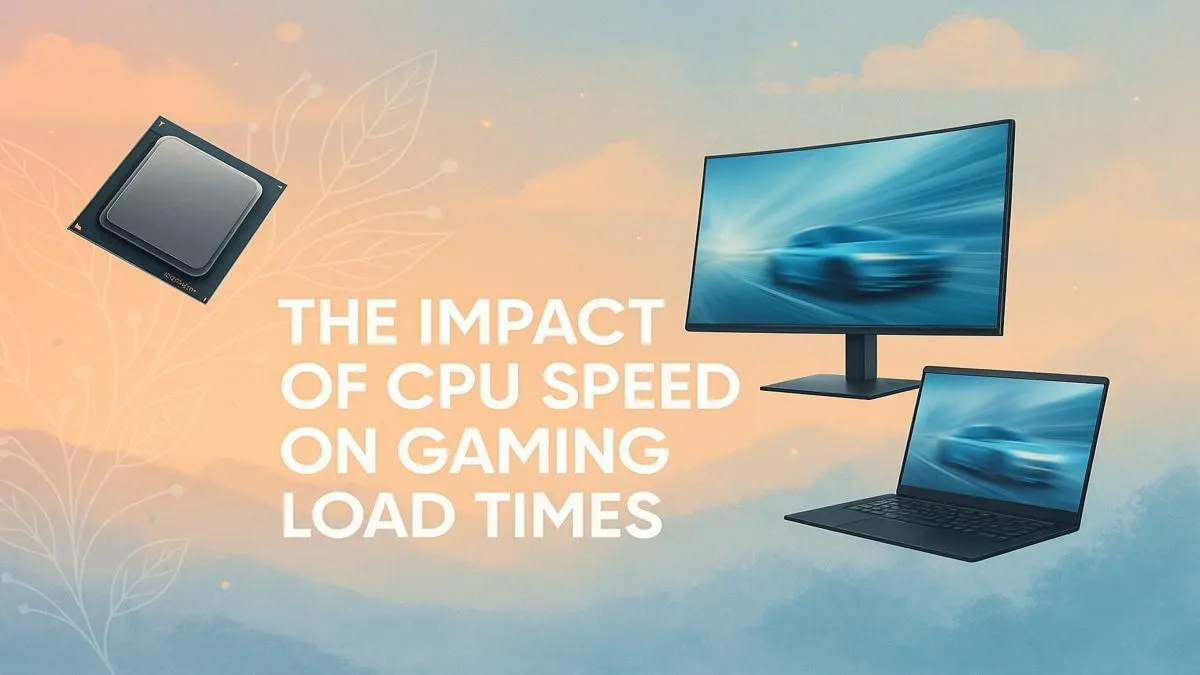
Staring at another loading screen, watching that little bar crawl across your monitor? We've all been there. You've got a fast SSD, so what gives? In South Africa, where every second of gaming counts, that frustrating wait can make you wonder... is your processor the real culprit behind slow gaming load times? While your GPU gets all the glory for frame rates, your CPU plays a critical, often overlooked role. Let's break it down. 🚀
How CPU Speed Influences Gaming Load Times
Think of your PC's storage (the SSD or HDD) as a massive warehouse packed with game files. Your CPU is the super-efficient manager that has to find, unpack, and organise all those assets before the game can start. An NVMe SSD can deliver data incredibly quickly, but if your CPU can't process that data fast enough, you create a bottleneck. It’s like a fire hose connected to a garden tap.
This is where your processor's speed, especially its single-core performance, becomes crucial. Many game loading processes rely heavily on a single, powerful core to decompress files and prepare the game world. A slow CPU will struggle to keep up, extending those load times even with the fastest storage. That’s why choosing from the right CPU processors is about building a balanced team for your rig.
Beyond Load Times: Where Your CPU Really Shines
While a decent CPU helps with load times, its biggest impact is on your actual in-game experience. Your processor is responsible for everything that isn't purely graphics: artificial intelligence (AI), physics calculations, managing hundreds of on-screen characters in a strategy game, and tracking your every move in a vast open world.
In CPU-intensive games like Cyberpunk 2077 with its bustling Night City, or a massive battle in Total War: Warhammer III, a weak processor will cause your frame rates to plummet, leading to stuttering and lag. This is where modern AMD CPUs, with their excellent multi-core performance, truly excel, handling complex tasks without breaking a sweat. Your CPU speed isn't just about waiting less; it's about playing better.
Finding the Sweet Spot: CPU, GPU, and SSD Balance ✨
A great gaming PC is all about balance. You wouldn't put a V8 engine in a go-kart, right? The same logic applies here. Pairing a top-tier graphics card with a budget CPU will hamstring your performance, as the processor won't be able to "feed" the GPU data fast enough. This is a classic bottleneck that wastes your hardware's potential.
Similarly, even the most powerful Intel CPUs designed for peak performance can't magically speed up a slow, old hard drive. The ideal setup for snappy gaming load times and smooth gameplay is a combination of:
- A fast NVMe M.2 SSD as your primary drive.
- A modern CPU that won't bottleneck your GPU.
- A capable GPU that meets the demands of your favourite games.
Spotting a CPU Bottleneck 🔧
Wondering if your CPU is holding back your GPU? While in a demanding game, press CTRL+SHIFT+ESC to open Task Manager. Click the 'Performance' tab. If your CPU usage is consistently hitting 95-100% while your GPU usage is much lower, you've likely found your performance bottleneck!
So, Does Your Processor Matter for Load Times?
The verdict is clear: Yes, it absolutely does. While a fast SSD is the single biggest factor for reducing gaming load times, your CPU's speed is the crucial partner that unlocks its full potential. A slow processor will leave you stuck on loading screens, no matter how fast your storage is.
Ultimately, investing in a capable CPU is about more than just shaving seconds off your wait. It’s about ensuring a smooth, responsive, and stutter-free gaming experience from the moment you launch the game to the final victory screen. ⚡
Ready to Obliterate Load Times?
A slow processor doesn't just mean long waits; it means a bottleneck for your entire gaming experience. From snappy load times to higher frame rates, the right CPU is the heart of a powerful rig. Explore our massive range of CPU deals and give your PC the upgrade it deserves.