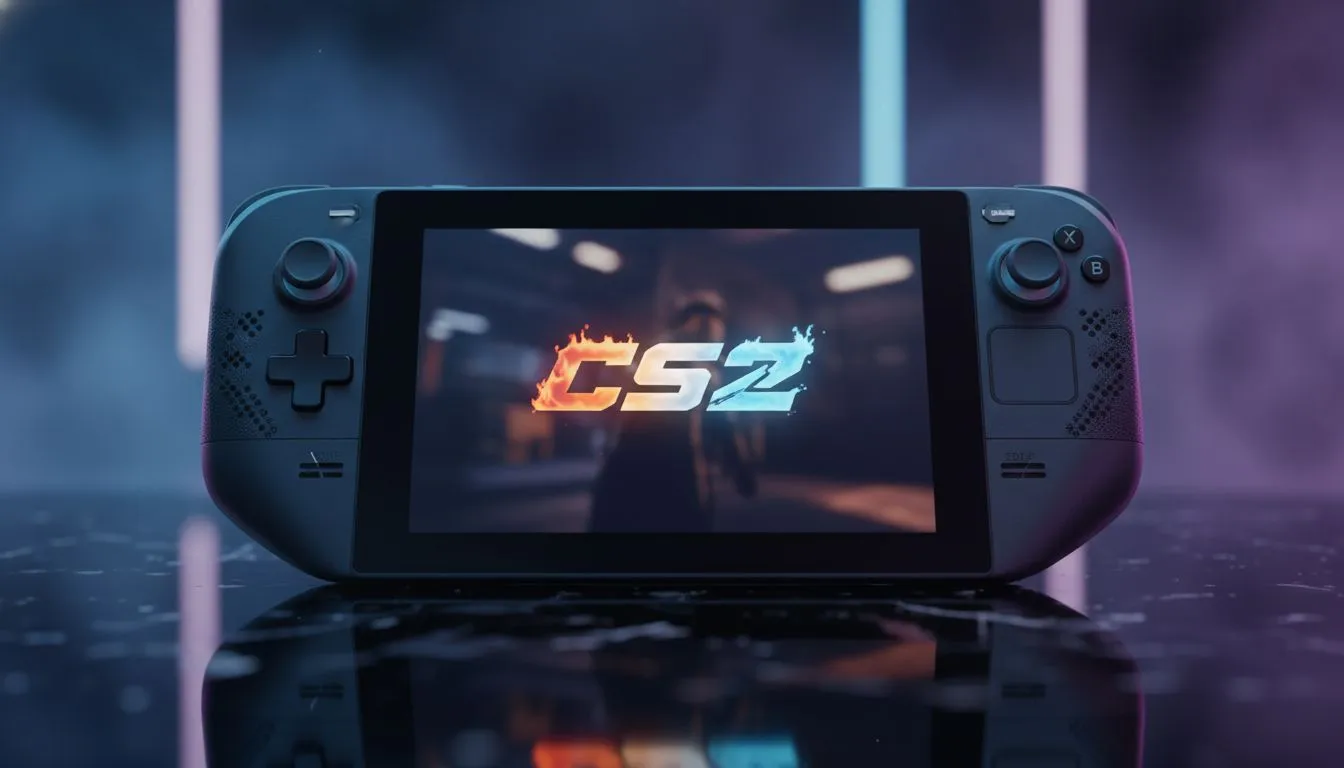
The launch of Counter-Strike 2 shifted the tectonic plates of the FPS world, bringing Source 2 visuals and sub-tick updates to our favourite tactical shooter. But with power interruptions and the need for mobility in South Africa, many gamers are asking a crucial question... can you actually grind Premier Mode on a handheld? Let's dive into whether playing CS2 on Steam Deck is a viable competitive strategy in 2025.
The Performance Reality: Frames Win Games ⚡
Valve’s Steam Deck is an engineering marvel, but CS2 is significantly more demanding than CS:GO ever was. In 2025, optimization updates have stabilised performance, but you are still looking at a mixed bag.
On the native SteamOS deck, you can expect frame rates hovering between 60 and 90 FPS on low settings. While playable for casual Deathmatch, serious competitive play usually demands 144 FPS or higher to ensure your reaction times aren't bottlenecked by input lag. The 60Hz or 90Hz screens on the LCD and OLED models respectively are beautiful, but they don't offer the buttery smoothness of a 240Hz desktop monitor.
Controls: Gyro vs. Mouse and Keyboard
Here lies the biggest controversy. Can a controller compete with a mouse? In a game where "clicking heads" requires pixel-perfect precision, analog sticks usually fall short. However, the Steam Deck's trackpads and Gyro aiming bridge the gap significantly.
With enough practice, Gyro aiming allows for fine-tune adjustments that mimic mouse movement. Yet, against a Global Elite player using a lightweight mouse and a 360Hz monitor, you will be at a distinct disadvantage.
CS2 Handheld Optimisation 🔧
To squeeze the most frames out of your handheld for CS2, set your Global Shadow Quality to 'High' (to see enemy shadows) but drop everything else to Low. Enable FSR (FidelityFX Super Resolution) to 'Quality' mode to boost FPS without turning the game into a blurry mess.
The Windows Handheld Contenders
While the Steam Deck started the revolution, the landscape of handheld gaming consoles has evolved rapidly in South Africa. Windows-based competitors often provide the raw horsepower needed to push CS2 closer to that competitive standard.
For instance, devices from ASUS often feature 120Hz VRR (Variable Refresh Rate) screens. This is a massive advantage for CS2, making tracking moving targets significantly smoother than on the Deck's native panel.
Then you have the innovators. Lenovo introduced the Legion Go, which features a unique "FPS Mode." You can detach the right controller and use it as a vertical mouse on a desk... effectively solving the controller disadvantage instantly.
We also cannot ignore MSI, whose Claw devices utilise Intel Core Ultra architecture to leverage XeSS upscaling, offering a different path to performance stability in demanding titles like CS2.
The Verdict: Viable or Gimmick? 🚀
Is CS2 on Steam Deck viable for competitive play? If you are playing strictly handheld using analog sticks... probably not if you aim to climb past the lower ranks. The input disadvantage is simply too high against keyboard warriors.
However, if you treat these handhelds as portable PCs—docking them to a monitor and connecting a mouse and keyboard—they are incredibly capable machines. For the South African gamer who needs to move their setup between rooms or houses easily, these devices offer a compelling alternative to a bulky tower, often costing significantly less than a full ZAR 25,000 rig build.
Ready to Dominate on the Go? Whether you need the versatility of the Legion Go or the raw power of the ROG Ally, portable gaming has never been this potent. Explore our massive range of handheld consoles and find the perfect machine to conquer your world.