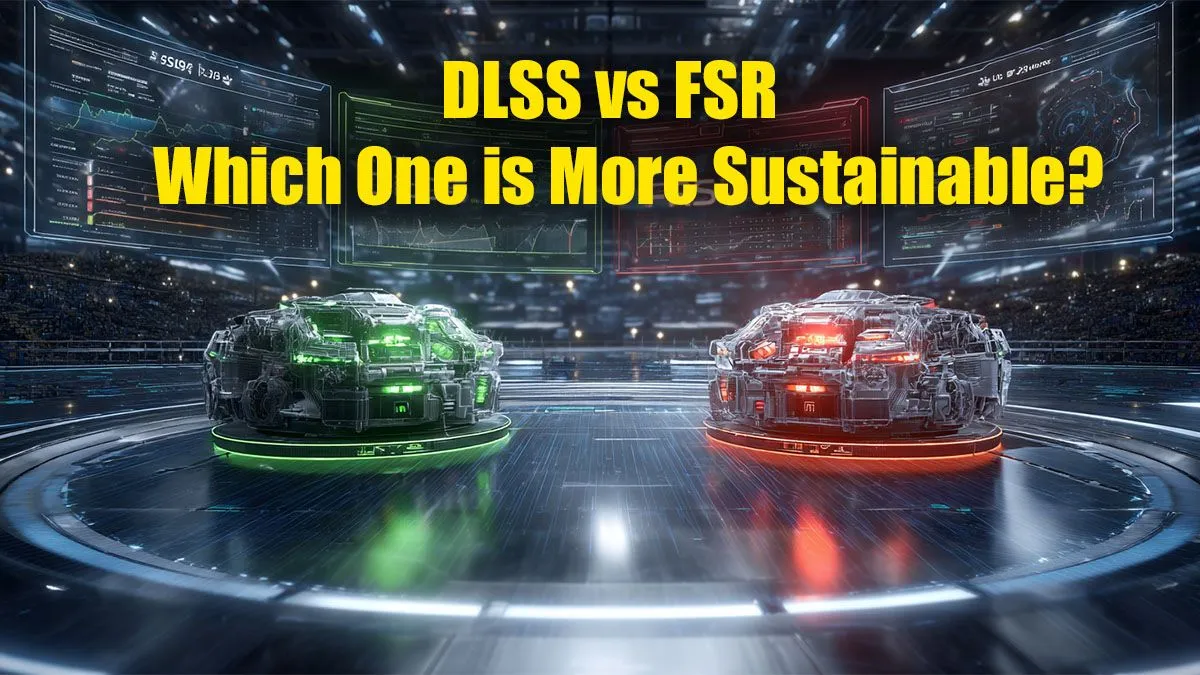
Staring at your high electricity bill after a marathon gaming session? With power interruptions and rising costs in South Africa, every watt counts. We often think of GPU upscalers like NVIDIA's DLSS and AMD's FSR as free performance boosters. But what if they were also efficiency tools? Let's settle the DLSS vs FSR efficiency debate and see which technology is more sustainable for your rig and your wallet. 🇿🇦
Understanding Upscaling: More Than Just Free Frames
Before we dive into the efficiency showdown, let's quickly recap what these technologies do. Both DLSS (Deep Learning Super Sampling) and FSR (FidelityFX Super Resolution) are clever techniques that render your game at a lower internal resolution and then use advanced algorithms to upscale the image to your monitor's native resolution.
The result? You get a massive frame rate boost, making games feel smoother and more responsive without needing a top-of-the-line graphics card. It’s like getting a performance upgrade through software… but does it come at a power cost?
DLSS vs FSR Efficiency: A Head-to-Head Comparison
This is where the real battle begins. While both aim for the same goal, their methods and hardware requirements create a fascinating discussion around power consumption and long-term sustainability.
NVIDIA's DLSS: The AI-Powered Specialist ⚡
NVIDIA's DLSS leverages Artificial Intelligence and dedicated Tensor Core hardware found only on their RTX cards. This specialised approach is its greatest strength and its main limitation. By offloading the heavy lifting of upscaling to these dedicated cores, the main shader cores are free to focus on rendering the game.
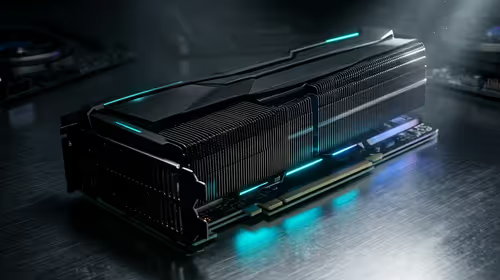
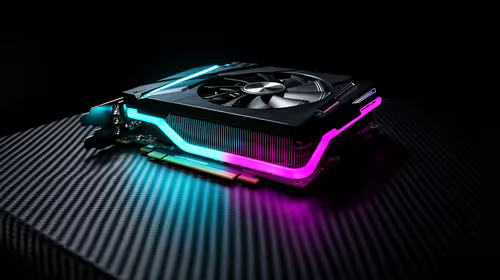
This often leads to superior image quality and remarkable performance gains. From an efficiency standpoint, the performance-per-watt can be outstanding. You're using highly specialised, efficient hardware for the task. If you're building a new rig and want the best possible image quality, exploring the range of powerful NVIDIA GeForce GPUs is a fantastic starting point.
AMD's FSR: The Open-Source Champion 🚀
AMD took a different path with FSR. It’s an open-source spatial upscaler, meaning it doesn't require any specialised hardware. It runs on a huge variety of GPUs, including AMD's own cards, older NVIDIA cards, and even Intel's integrated graphics. This incredible flexibility is its killer feature.
Because it runs on the standard shader cores, FSR's efficiency comes from its lightweight algorithm. It provides a significant FPS boost for a very minimal increase in GPU load and power draw. For gamers looking to extend the life of their current hardware, FSR is a true hero, making it a key feature on many versatile AMD Radeon graphics cards.
Check Your Own Power Draw 💡
Want to see the real-world impact? Download a free tool like MSI Afterburner or HWMonitor. Run a game with and without your preferred upscaler enabled and watch the 'GPU Power' metric. You'll see exactly how many watts you're saving (or spending) for that extra performance, helping you make a truly informed decision.
Which Upscaler is More Sustainable for Your Rig?
So, which technology wins the DLSS vs FSR efficiency contest? The answer depends on how you define "sustainable."
- For Power Efficiency (Performance-per-Watt): DLSS often has a slight edge on supported RTX cards. The dedicated Tensor Cores are purpose-built for the job, making the process incredibly efficient.
- For Hardware Sustainability (Longevity): FSR is the clear winner. Its ability to run on older, less powerful hardware gives millions of GPUs a new lease on life, reducing e-waste and saving you money. You can get playable frame rates on a card that might otherwise be destined for replacement.
Ultimately, the biggest sustainability win comes from being able to achieve your desired performance with a less power-hungry GPU. By using either DLSS or FSR, you can often opt for a more modest card, which saves you money upfront and reduces your electricity consumption in the long run. Finding the best graphics card deals that support these technologies is the smartest way to build an efficient gaming PC in South Africa today.
The choice isn't about one being definitively better, but which one aligns with your hardware, budget, and priorities. Both are fantastic innovations that make high-performance gaming more accessible and sustainable for everyone.
Ready to Boost Your FPS and Save Power?
Whether you're Team Green or Team Red, the DLSS vs FSR efficiency debate shows that smart tech can deliver amazing performance. Explore South Africa's best graphics card deals and find the perfect GPU to power up your rig sustainably.