The Visual Feast of the Forbidden Lands
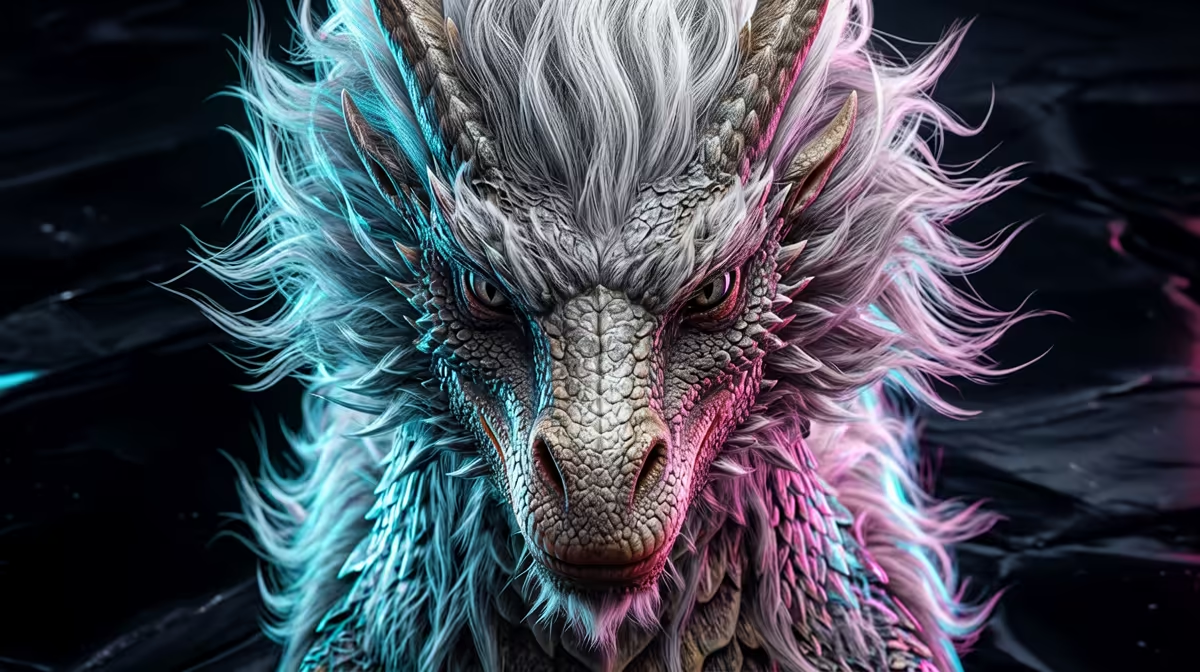
Monster Hunter Wilds is finally here, and it is a beast of a game to run... literally. Between the wind-swept plains and the intricate textures of a Doshaguma’s coat, your GPU is working overtime. Many South African hunters are asking: should you stick to native resolution or let AI take the wheel? Let's dive into the DLSS vs Native MH Wilds: Preserving Fur & Scale Detail debate to see which looks best. ✨
DLSS vs Native: The Battle for Sharpness
Native resolution has always been the gold standard for clarity. In a game where every scale and whisker matters, rendering at a true 1440p or 4K ensures no detail is lost. However, the performance cost is massive. If you want to maintain high frame rates without sacrificing the look of your prey, modern nvidia graphics cards offer a compelling alternative.
DLSS (Deep Learning Super Sampling) uses AI to reconstruct frames. In previous titles, this sometimes caused "shimmering" on fine details like fur. In Monster Hunter Wilds, the latest DLSS iterations have improved significantly. While native rendering keeps edges crisp... DLSS often provides better anti-aliasing. This reduces the jagged lines on thin monster parts.
Optimisation Pro Tip ⚡
If you find the image too soft when using DLSS, navigate to the in-game display settings and increase the 'Sharpening' slider to roughly 40%. This helps recover the fine texture detail on monster scales without introducing artificial noise or halos around your character model.
Choosing the Right Hardware for the Hunt
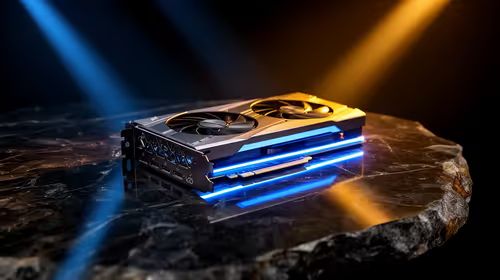
Not everyone is rocking the latest flagship. If you are looking for a balance between price and performance, AMD Radeon graphics cards provide excellent raw rasterisation power. This is perfect for purists who prefer native rendering. On the other hand, many local gamers trust MSI gaming GPUs for their robust cooling... which is essential during those long summer hunts in the Karoo. 🔧
For those on a strict budget, Intel Arc graphics cards are becoming a viable entry point. They use XeSS technology, which functions similarly to DLSS. Even if you are using specialised workstation graphics cards for 3D modelling by day, you might find the driver optimisations for Wilds surprisingly capable. 🚀
Performance Tuning for Every Hunter
When you are facing a massive monster, a frame drop can mean a trip back to camp. If you are spending R10,000 or R30,000 on an upgrade, you want every pixel to count. Native resolution will always be "cleaner" in a still screenshot... but in motion, DLSS Frame Generation makes the hunt feel much smoother. ⚡
Ultimately, the choice depends on your monitor. At 1080p, native resolution is usually better to avoid blur. At 4K, DLSS is almost indistinguishable from native while doubling your performance.
Ready to Find Your Perfect Match? The DLSS vs Native debate is complex, but for maximum power, choice, and value in South Africa, a dedicated GPU is hard to beat. Explore our massive range of graphics card specials and find the perfect machine to conquer the Forbidden Lands.