We’ve all seen it: the slow, rhythmic pulse of our monitor’s standby light in a dark room. With Eskom's ever-present shadow and electricity bills that make you wince, you have to wonder… does that little blinking light actually mean you’re saving power? Is monitor power saving mode a real money-saver or just a gimmick? Let's break it down, because in South Africa, every Rand and every watt counts. ⚡
Understanding Monitor Power Saving Mode
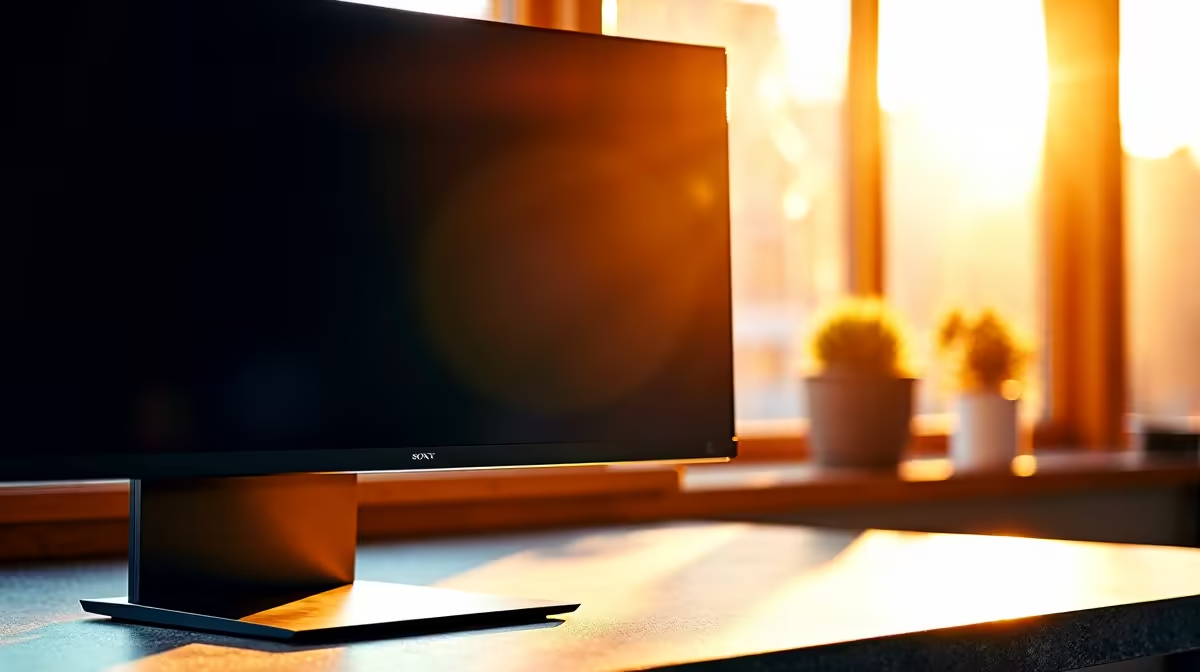
So, what happens when your screen goes black after a few minutes of inactivity? It's not just turning off the display. Your monitor is entering a low-power state, often called standby or sleep mode. While the screen is off, the internal circuitry remains partially powered, allowing it to wake up almost instantly when you move your mouse or press a key.
This is a built-in feature of virtually all modern PC monitors and is designed to reduce energy consumption without the hassle of completely shutting down the device. Think of it as your monitor taking a quick nap instead of going to bed for the night.
The Real Energy Savings: Does It Add Up?
This is the big question. Does this standby mode actually save a meaningful amount of energy? The answer is a resounding yes.
Let's look at some typical numbers:
- Active Use: A standard 27-inch LED monitor might consume between 25 to 45 watts while you're gaming, working, or watching videos.
- Power Saving Mode: In standby, that same monitor's energy consumption plummets to just 0.5 to 1 watt.
That’s a reduction of over 95%! While saving 30 watts might not sound like much, it accumulates. If your PC is idle for 8 hours overnight and a few hours during the day, you could be saving over 100 kWh per year. With current electricity tariffs, that can easily translate to a few hundred Rands back in your pocket annually. For power-hungry displays like high-end 5K and 4K monitors, the savings are even more significant.
Optimise Your Settings 💡
On Windows 11, you can easily customise your power settings. Go to Settings > System > Power & battery. Under "Screen and sleep," you can set separate timers for when to turn off the screen and when to put the device to sleep. For most users, setting the screen to turn off after 10-15 minutes of inactivity is a great starting point.
Does Sleep Mode Affect Your Monitor's Lifespan?
A common worry is that constantly cycling a monitor on and off could cause wear and tear. While this was a concern with much older CRT technology, it's a non-issue for modern LCD and OLED panels.
In fact, using monitor power saving mode can arguably extend your monitor's lifespan. The two biggest enemies of electronic components are heat and usage time. By entering a low-power state, the monitor generates significantly less heat and reduces the operational hours of its backlights and internal components. So, you're not only saving money but also potentially getting more years out of your gear, which is crucial for the high-performance panels found in all gaming monitors.
Smart Power Saving for Different Setups
How you use this feature can depend on your specific setup. The benefits of monitor sleep mode energy consumption are clear, but the application can vary.
For a Desktop Gaming Rig
For a powerful desktop with a large, immersive curved monitor, letting it enter sleep mode during dinner or overnight is a no-brainer. The energy savings on these larger displays are substantial.
For a Mobile Workstation
If you're using one of the incredibly versatile portable monitors with your laptop, aggressive power saving is key to maximising your battery life when you're away from a plug point. Every minute the screen is off is extra time you can work or play. 🖥️
The Verdict: A Small Tweak with Big Benefits
So, is monitor power saving mode worth it? Absolutely. It’s an effortless, automated way to reduce your electricity bill, lower your carbon footprint, and potentially even prolong the life of your display.
While you're optimising your power settings, remember that the biggest savings come from having an efficient monitor in the first place. If your old screen is an energy hog, it might be time for an upgrade. Check out the latest best PC monitor deals to find a model that delivers stunning visuals without draining your wallet. And don't forget the right monitor accessories to perfect your setup.
In the ongoing battle against high electricity costs in South Africa, every little bit helps. Enabling power saving mode on your monitor is one of the simplest and most effective changes you can make.
Ready to Upgrade Your View and Save?
The debate over refresh rates and resolutions is endless, but one thing is clear: a modern, energy-efficient monitor is a smart investment. Explore our massive range of PC monitor deals and find the perfect screen to conquer your world.