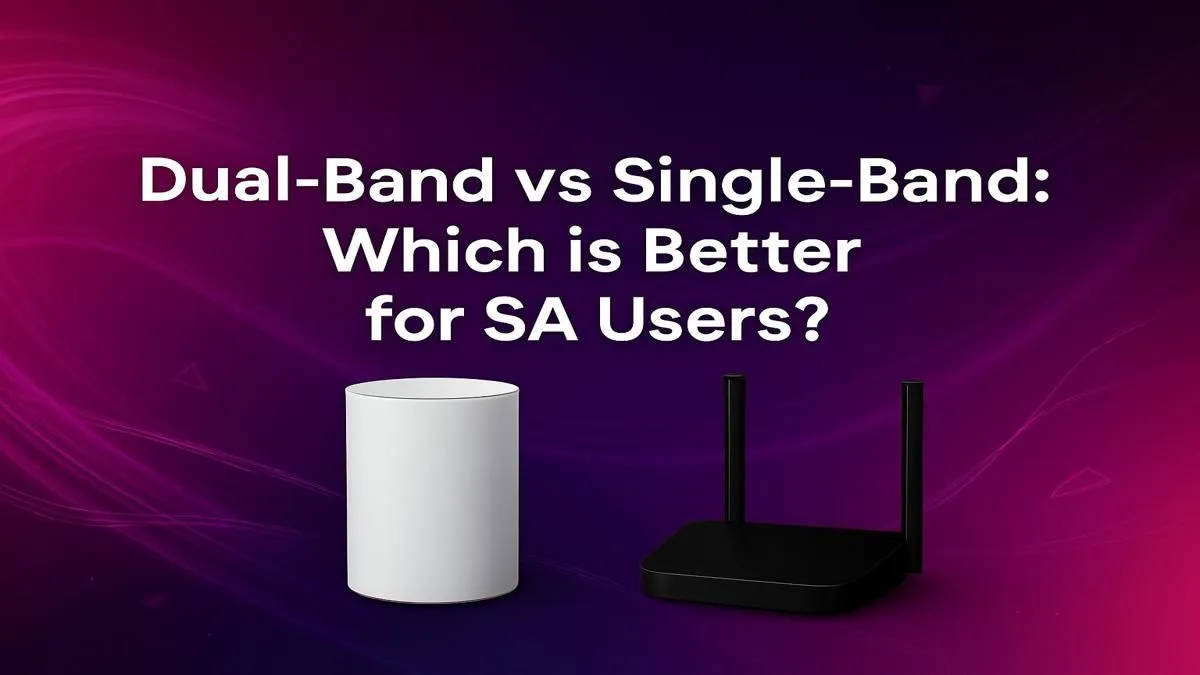
You’re in the final circle, squad wiped, it's just you and one other. You line up the perfect shot… and your screen freezes. Lag strikes again. In South Africa, where fast fibre is finally common, your WiFi is often the weakest link. The debate over dual band vs single band WiFi isn't just tech talk; it's about unlocking the internet speed you actually pay for. So, what’s the best choice for a lag-free life?
Understanding Single-Band WiFi: The Old Faithful
Think of single-band WiFi as the trusty old N1 highway. It gets everyone where they need to go, but it can get congested. It operates exclusively on the 2.4GHz frequency band.
The Pros and Cons of 2.4GHz
The biggest advantage of 2.4GHz is its range. These longer radio waves are better at penetrating solid objects like walls, floors, and furniture, making it a decent option for larger homes with tricky layouts.
However, that's where the good news ends. The 2.4GHz band is incredibly crowded. It’s not just your devices using it; it's your neighbour's WiFi, your Bluetooth speakers, baby monitors, and even your microwave oven. This "traffic jam" causes interference, leading to dropped connections and slower speeds… exactly when you don’t need it. ⚡
Enter Dual-Band WiFi: The High-Speed Lane
Dual-band WiFi is the modern solution. It offers access to both the 2.4GHz band and a second, much faster 5GHz band. This is like having access to the N1 and a private, high-speed Gautrain track all in one. You get the best of both worlds.
The 5GHz Advantage
The 5GHz band is the star of the show. It offers significantly faster data transfer speeds and, because it's a wider band with more channels, it suffers from far less interference. This makes it the perfect choice for bandwidth-hungry activities:
- Competitive online gaming (lower latency)
- Streaming 4K movies on Netflix or Showmax
- Large file downloads
- Video conferencing for work-from-home setups
The only trade-off is that 5GHz has a shorter range than 2.4GHz. But for most modern apartments and homes, this isn't an issue, especially with the right hardware. Upgrading is simple with the fantastic selection of modern wireless routers available today.
Dual Band vs Single Band WiFi: The Showdown for SA Gamers
So, when it comes down to it, what is the best choice for South Africa? For anyone with a decent fibre or LTE connection, the answer is overwhelmingly dual-band.
Here’s a quick breakdown:
- Speed: Dual-band wins, hands down. The 5GHz channel is essential to get the full benefit of a 50Mbps or faster internet plan.
- Interference: If you live in a complex or a dense suburban area, the 5GHz band is a lifesaver, avoiding the digital noise from your neighbours.
- Future-Proofing: Almost every new smartphone, laptop, console, and smart TV is built to use 5GHz. A single-band router is already outdated technology.
If your desktop PC doesn't have built-in dual-band capabilities, don't stress. You can easily get up to speed by upgrading with new wireless adapters that support the latest WiFi standards.
Router Placement is Key 🎯
For the best signal, place your router in a central, elevated position in your home. Keep it away from thick brick walls, metal objects, and other electronics like microwaves. This simple trick can drastically improve both the speed and range of your 2.4GHz and 5GHz networks.
Making the Best Choice for Your Home Network
Choosing the right network gear depends on your needs. If you have a fast internet connection, the discussion of dual band vs single band WiFi is settled: you need dual-band to avoid bottlenecking your performance.
For larger, double-storey homes where the 5GHz signal might struggle to reach every corner, you don't have to sacrifice speed. Instead of settling for a single-band network, you can augment a powerful dual-band router with wireless range extenders to create a strong, seamless signal everywhere. 🚀
And as more South Africans get connected to high-speed internet, pairing your service with one of the latest fibre routers ensures your internal network can keep up with the speeds you're getting from your ISP.
Ultimately, your home network is the foundation of your digital life. Investing in dual-band technology is one of the most effective upgrades you can make, ensuring every device performs at its peak. It's time to equip your home with the best wireless networking hardware to match.
Ready to Banish Lag for Good? The dual band vs single band WiFi choice is clear for anyone serious about performance. Stop letting a weak network bottleneck your gaming and streaming. Explore our massive range of wireless networking gear and build the connection you deserve.