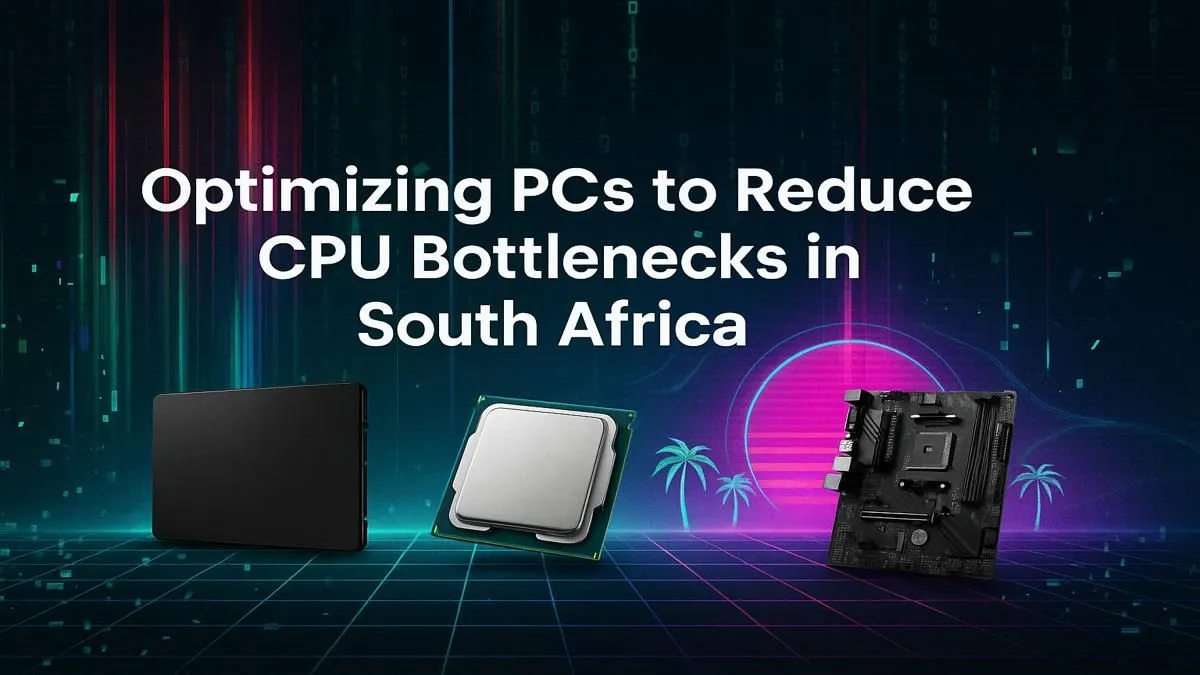
Stuttering frames in the middle of a tense Warzone firefight? It’s a uniquely South African frustration, especially after you’ve spent your hard-earned Rands on a powerful new graphics card. If your performance is still choppy and your GPU seems lazy, you’re likely facing a CPU bottleneck. This sneaky performance thief is holding your rig back. But don’t worry… we’re here to show you exactly how to fix that CPU bottleneck in South Africa.
Understanding the CPU Bottleneck
So, what is a CPU bottleneck? Think of it like a production line. Your Graphics Card (GPU) is a super-fast worker, ready to render beautiful frames at lightning speed. Your Central Processing Unit (CPU), however, is the manager telling it what to do. If the manager (CPU) can't give instructions fast enough, the worker (GPU) is left waiting around, not performing at its full potential. 🚀
This results in symptoms every gamer dreads:
- Inconsistent or low frame rates (FPS), especially in CPU-heavy games like Civilization VI or large-scale shooters.
- Noticeable stuttering and lag, even when your FPS counter looks decent.
- Your GPU usage is surprisingly low (e.g., under 90%) while your CPU is maxed out at 100%.
Diagnosing Your System's Performance Gap
Before you start shopping, you need to confirm the problem. The easiest way is to use monitoring software like MSI Afterburner with RivaTuner Statistics Server.
Fire up your favourite game and keep an eye on the on-screen display. If you see your CPU usage consistently hitting 95-100% while your GPU usage sits much lower, you've found your culprit. This data is your proof. It shows that your processor simply can't keep up, creating a performance gap. Knowing this helps you browse the latest CPU processors available online with a clear goal in mind.
Quick Diagnostic Tip 🔧
Most modern games have a built-in benchmark tool. Run it at your target resolution (e.g., 1080p or 1440p) and watch your component usage stats. If the final report shows you are "CPU limited" or "CPU bound," it's a clear sign that a bottleneck is impacting your gaming experience.
How to Fix a CPU Bottleneck: Software Tweaks & Hardware Upgrades
You've confirmed the issue. Now, let's explore how to solve it, from free tweaks to the ultimate hardware fix.
First, Try These Software Fixes
Before opening your wallet, try these simple adjustments:
- Increase Resolution: This sounds strange, but it works. Bumping your game from 1080p to 1440p (if your monitor supports it) puts more stress on the GPU, forcing it to work harder. This can help balance the load and often results in a smoother, more consistent experience.
- Raise Graphics Settings: Turn up settings like texture quality, anti-aliasing, and shadows. Like increasing resolution, this shifts the workload towards your powerful GPU.
- Close Background Apps: That browser with 20 tabs, Discord, and other apps all consume precious CPU cycles. Close everything you don't need before launching a game.
The Ultimate Solution: An Upgrade ✨
While software tweaks can help, the most effective way to fix a serious CPU bottleneck is by upgrading your processor. A modern CPU will feed your GPU data at a much faster rate, unlocking the performance you paid for. The great news for South African builders is that competition is fierce, meaning more power for your Rand.
Whether you're looking at the incredible gaming performance of the latest Intel CPUs, which often lead in single-core speeds, or the fantastic multi-tasking value from a new AMD Ryzen processor, you'll find an option that transforms your PC. A new chip isn't just a component; it's the key to unlocking a balanced, high-performance gaming machine.
Ready to Unleash Your PC's True Power? A CPU bottleneck is frustrating, but the fix is within reach. Upgrading your processor is the surest way to get the smooth, high-frame-rate experience you deserve. Explore our massive range of CPU deals and find the perfect heart for your gaming rig today.