You are deep in the Oldest House, surrounded by the Hiss. You lunge for a melee strike, but the timing feels... off. For South African gamers chasing high refresh rates, AI-generated frames are a dream. But does frame gen input lag actually ruin the precision needed for Jesse Faden’s close-quarters combat? Let’s break down if that extra smoothness costs you the fight in Control. ⚡
Understanding Frame Gen Input Lag in Control
Frame generation technology is a marvel of modern engineering. It uses AI to interpolate frames, effectively doubling your perceived frame rate. However, this process requires a short buffer. This buffer is where frame gen input lag originates. When you are exploring the shifting corridors of the Oldest House, you want the highest visual fidelity possible.
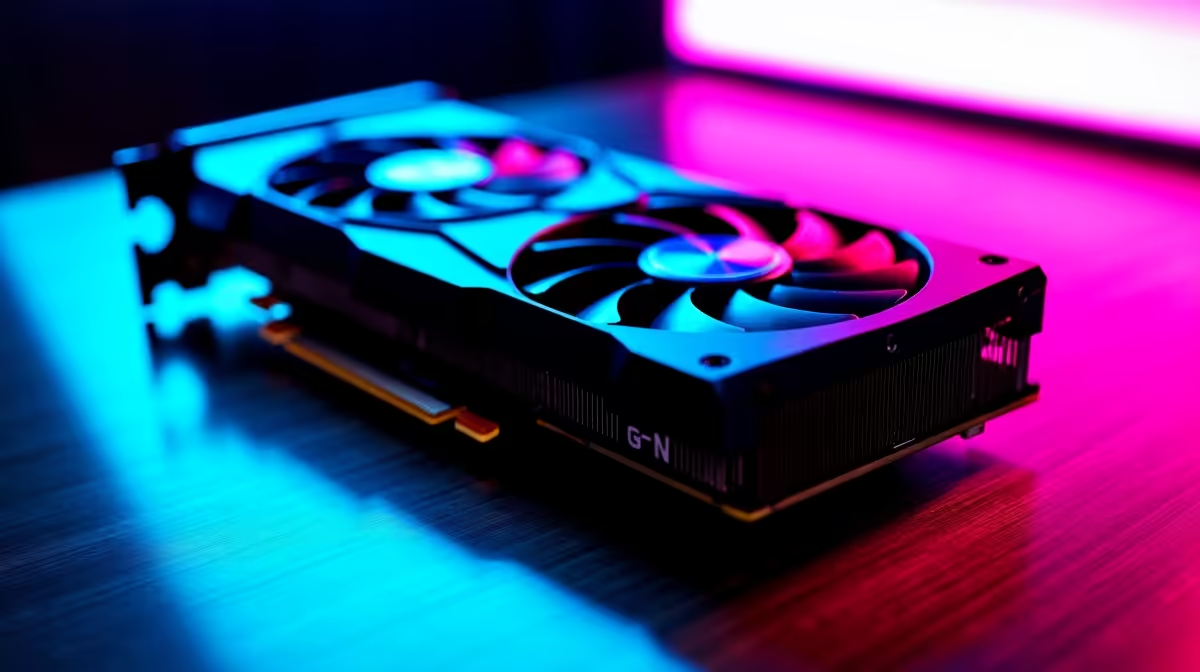
To achieve this, many players look at the latest NVIDIA and ATI graphics cards to push their monitors to the limit. While the motion looks incredibly fluid, the actual game engine is running at a lower internal frame rate. This means your mouse clicks or key presses might take a few extra milliseconds to register on screen. In a game as atmospheric as Control, visual smoothness is vital... but not at the cost of control.
The Impact on Melee Combat Timing
Melee in Control is not just a backup option. It is a core part of Jesse’s kit. A well-timed melee strike can stagger enemies or finish off a Hiss Resonator. If you are using MSI graphics cards with DLSS 3 enabled, you will see a massive jump in FPS. But does that jump help your timing?
In our testing, the added latency is often negligible for general exploration. However, during intense melee encounters, that tiny delay can be felt. It is the difference between a successful hit and swinging at empty air. If your base frame rate is already high... say above 60 FPS... the added latency from frame generation is hard to spot. If your base rate is low, the lag becomes much more apparent. 🔧
Reflex is Your Best Friend ⚡
When enabling DLSS Frame Generation in Control, always ensure NVIDIA Reflex is set to 'On + Boost'. This helps negate the added latency by optimising the GPU and CPU pipeline, keeping your telekinetic slams snappy even at 4K.
Optimising Your Setup for Low Latency
Not everyone is using the latest flagship hardware. Some users might be experimenting with Intel Arc graphics cards to see how they handle Remedy’s demanding Northlight engine. Regardless of your brand, the goal is to keep system latency as low as possible.
For those using professional rigs or high-end workstation graphics cards for rendering, gaming on the side requires a different set of tweaks. Turning off V-Sync and using a high polling rate mouse can help mask the effects of frame gen input lag. In Control, where the environment is constantly changing, you need every advantage you can get. 🚀
Choosing the Right GPU for Control
If you prefer the red team, AMD Radeon graphics cards offer FSR 3, which includes its own version of frame generation. Much like NVIDIA's solution, it works best when your base performance is already solid. The "feel" of melee combat remains the gold standard for whether your settings are correct. If Jesse feels heavy or unresponsive... it might be time to dial back the frame generation and focus on raw performance. ✨
In the end, frame gen input lag is a trade-off. You trade a small amount of responsiveness for a massive gain in visual fluidity. For most players in South Africa, the trade is worth it... provided you have the hardware to back it up.
Ready to Boost Your Frames? Finding the balance between beautiful visuals and lightning-fast response times is the key to mastering Control. Explore our massive range of graphics card specials and find the perfect GPU to keep your gameplay buttery smooth and responsive.