You’re lining up the perfect headshot in Valorant. You click… but the enemy zigs just as your screen stutters. K.O. We’ve all been there. That split-second tear or lag can be the difference between a glorious win and a frustrating loss. This is where adaptive sync tech like FreeSync and G-Sync comes in. But for competitive gamers in South Africa, one question matters most: which one wins the FreeSync vs G-Sync input lag battle? 🎯
Understanding Adaptive Sync: What Are FreeSync & G-Sync?
Before we dive into the input lag debate, let's quickly cover what these technologies actually do. At its core, adaptive sync matches your monitor's refresh rate to the frames per second (FPS) your graphics card is pushing out. This eliminates ugly screen tearing and stuttering, giving you a buttery-smooth visual experience.
- AMD FreeSync: An open-source technology, meaning any manufacturer can use it without paying licensing fees. This generally makes FreeSync PC monitors more affordable and widely available.
- NVIDIA G-Sync: NVIDIA's proprietary solution. It traditionally required a dedicated hardware module inside the monitor to manage the sync process, leading to stricter quality control but also a higher price tag.
The goal of both is the same: flawless, tear-free gaming. The real difference for competitive play often comes down to performance nuances.
The Big Question: FreeSync vs G-Sync Input Lag
Here’s the straight-up answer: in 2024, for most gamers, the difference in input lag between premium versions of FreeSync and G-Sync is practically zero.
Historically, G-Sync's dedicated hardware gave it a slight edge in responsiveness. However, with the introduction of FreeSync Premium and FreeSync Premium Pro tiers, AMD has seriously closed the gap. These higher tiers enforce stricter standards, including Low Framerate Compensation (LFC), which keeps gameplay smooth even when your FPS drops.
So, when you compare a top-tier G-Sync monitor to a FreeSync Premium Pro model, any difference in G-Sync vs FreeSync input lag is often less than a single millisecond... a delay that even pro players would struggle to notice. Your focus should shift from the brand name to the specific monitor's performance and features when browsing all gaming monitors.
Pro Gamer Tip ⚡
To get the lowest possible input lag with either technology, cap your in-game framerate to 3-5 FPS below your monitor's maximum refresh rate. For a 144Hz monitor, cap it at 141 FPS. This prevents the V-Sync latency ceiling from ever kicking in, keeping your controls feeling incredibly responsive.
Making the Right Choice for Your Rig in South Africa
Deciding between the two often comes down to your GPU and your budget. The FreeSync vs G-Sync input lag debate is less of a factor than compatibility and overall value.
For the NVIDIA Faithful
If you're running a GeForce RTX card, a G-Sync or "G-Sync Compatible" monitor is a fantastic choice. The "Compatible" badge means NVIDIA has tested and certified a FreeSync monitor to work seamlessly with its GPUs. This is especially true when pushing pixels on high-resolution 5K and 4K monitors, where every frame counts. The guaranteed performance can be worth the investment.
For Team Red & Budget-Conscious Gamers
Rocking an AMD Radeon card? FreeSync is your best mate. You get excellent adaptive sync performance without the "NVIDIA tax." This allows you to find some of the best PC monitor deals in SA, freeing up cash for other parts of your rig. Even if you're on a budget, you don't have to compromise on a smooth experience.
Beyond the Screen: Other Factors 🖥️
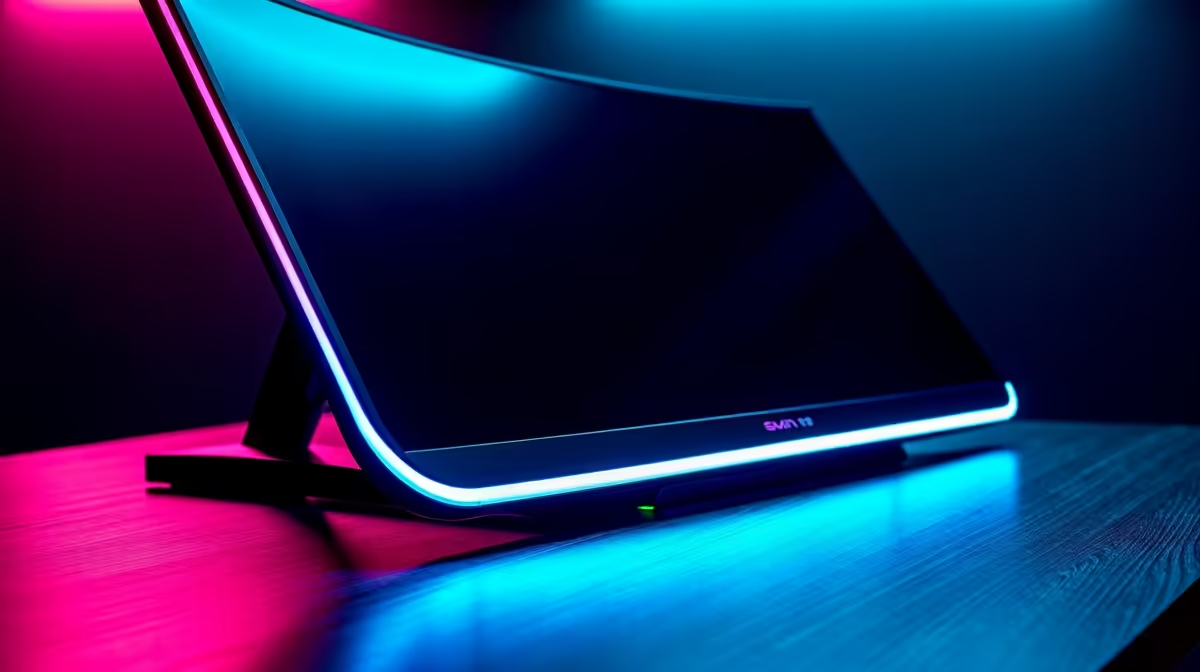
Don't forget the other features that make a great gaming setup! The immersion from curved monitors can pull you right into the game world. Some okes even use compact portable monitors for their Discord and stream chats. And no setup is complete without the right ergonomics; a good monitor arm or stand can make all the difference during long sessions, so check out some quality monitor accessories to finish your battle station.
Ready to Banish Lag for Good?
The FreeSync vs G-Sync debate is closer than ever, meaning the real winner is you. With more choice and better performance across the board, finding your perfect screen is easy. Explore our massive range of gaming monitors and find the perfect display to dominate the leaderboards.