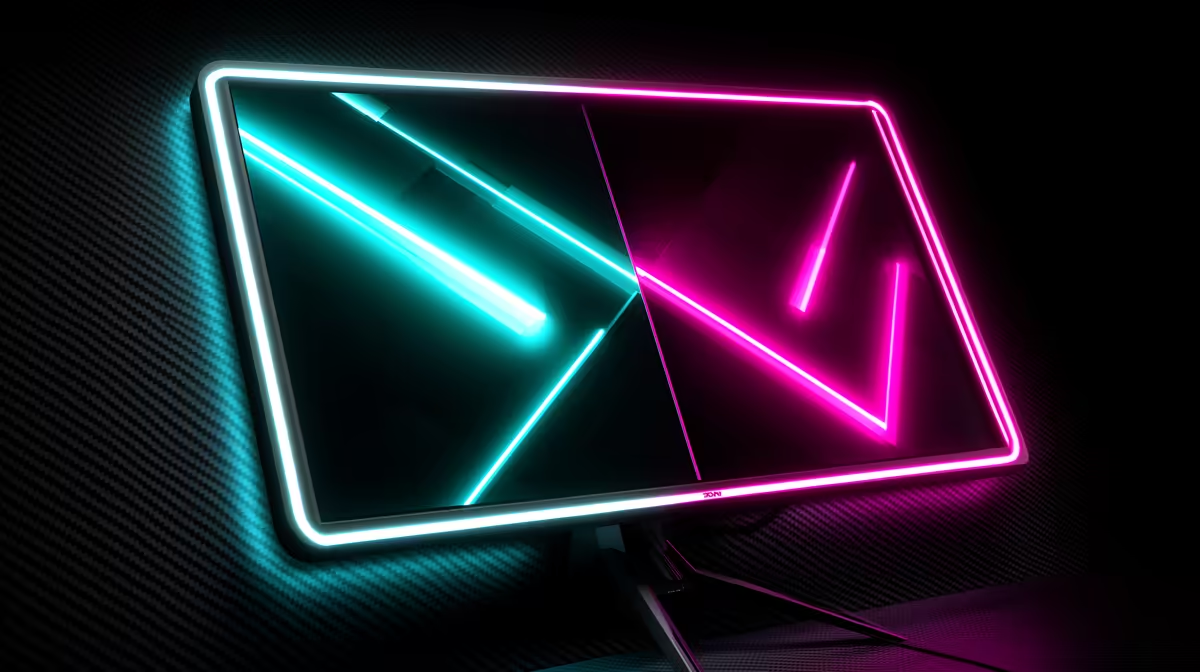
Staring down the final opponent in a tense Valorant match, you line up the perfect headshot... only for a jarring horizontal line to rip across your screen. That split-second distraction is all it takes. You miss, you're out. This is screen tearing, the ultimate immersion-breaker. For South African gamers, the battle to stop it comes down to two titans: FreeSync vs G-Sync. But which adaptive sync technology is right for your rig and your budget? Let's settle the debate.
What Causes Screen Tearing?
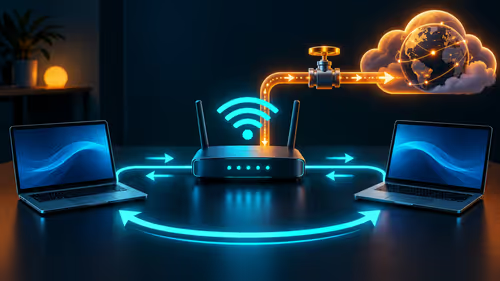
Before we dive into the FreeSync vs G-Sync performance test, let's quickly diagnose the problem. Screen tearing happens when your graphics card (GPU) sends out new frames at a different rate than your monitor can display them. Your monitor has a fixed refresh rate (like 60Hz, 144Hz, or 240Hz), but your GPU's frame rate fluctuates wildly depending on what's happening in-game.
When the two are out of sync, your monitor might try to display two different frames at once, creating that ugly "tear." Both FreeSync and G-Sync solve this by allowing the monitor's refresh rate to change dynamically, matching the GPU's output frame-for-frame. The result? Buttery-smooth gameplay, just as the developers intended. ✨
The Main Event: A Deep Dive into FreeSync vs G-Sync
While they both aim for the same goal, AMD's FreeSync and NVIDIA's G-Sync take different paths to get there. Understanding this difference is key to choosing from the wide range of PC monitors available.
AMD FreeSync: The People's Champion 🥊
FreeSync is an open-standard technology built into the DisplayPort standard. This means monitor manufacturers can implement it without paying licensing fees to AMD.
- Pros: Generally more affordable, leading to a wider variety of budget-friendly options. You can often find incredible value when you check out the best PC monitor deals in South Africa.
- Item
NVIDIA G-Sync: The Premium Powerhouse 🚀
G-Sync is NVIDIA's proprietary solution. For a long time, it required a special hardware module inside the monitor, which added to the cost but ensured a rigorously tested, consistent experience across all our gaming monitors.
- Pros: Historically offered superior performance, especially with Low Framerate Compensation. The certification process guarantees a high standard of quality.
- Cons: The dedicated hardware makes G-Sync monitors more expensive.
- The Plot Twist... G-Sync Compatible: In a brilliant move, NVIDIA now certifies top-tier FreeSync monitors as "G-Sync Compatible." This means you can get a tear-free experience with your NVIDIA GPU on a (usually cheaper) FreeSync screen, blurring the lines in the G-Sync vs FreeSync debate.
Don't Forget to Flip the Switch! 🔧
a FreeSync or G-Sync monitor isn't enough—you have to enable it! For NVIDIA, open the NVIDIA Control Panel, go to "Set up G-SYNC," and check the box. For AMD, open the Radeon Software, go to the "Gaming" tab, then "Display," and toggle AMD FreeSync to "On." Make sure you're using a quality DisplayPort cable, as some features require it. You can find them with other [quality monitor accessories](https: www.evetech.co.za PC-Components buy-monitor-accessories-368) to complete your setup.
The Ultimate Performance Test: Which is Right for You?
So, how do you choose? The decision in the FreeSync vs G-Sync showdown comes down to three key factors for most South African gamers.
- Your Graphics Card: This is the most important factor. If you have an AMD Radeon GPU, FreeSync is your native choice. If you have an NVIDIA GeForce GPU, you can use a G-Sync monitor or a certified G-Sync Compatible monitor.
- Your Budget: If keeping costs down is a priority, FreeSync is the clear winner. The lack of licensing fees means you can get a high-refresh-rate gaming monitor for a much lower price in ZAR.
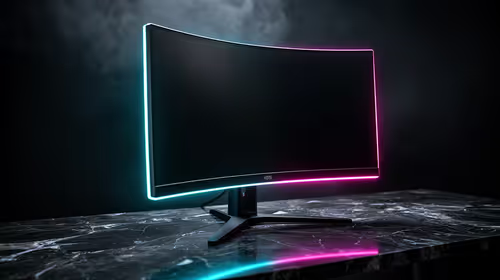
- Your Gaming Needs: Are you a competitive esports player needing every frame, or do you prefer sinking into visually stunning worlds? For pure immersion, nothing beats the vibrant colours of stunning 4K monitors or the wraparound view of immersive curved monitors. If you're always on the move or heading to a LAN, you might even consider one of the surprisingly capable versatile portable monitors now available.
Ultimately, the gap between the two technologies has shrunk dramatically. A modern FreeSync Premium Pro monitor offers an experience that is virtually indistinguishable from a native G-Sync monitor for most players. The choice is no longer about which is technically better, but which offers the best value for your specific setup.
Ready to Stop Tearing and Start Winning?
The FreeSync vs G-Sync debate is settled by your GPU and your budget. No matter which side you're on, a tear-free experience is waiting. Explore our massive range of gaming monitor deals and find the perfect screen to dominate your game.