Ever been eliminated by an opponent you swear you heard a second too late? That frustrating moment when the sound of footsteps arrives just after you’re staring at a respawn screen… that’s not just bad luck. It could be your gear. High gaming headset latency, the tiny delay between an in-game sound and you hearing it, can be the invisible barrier between clutching a round and being first out. Let's break it down.
What is Gaming Headset Latency?
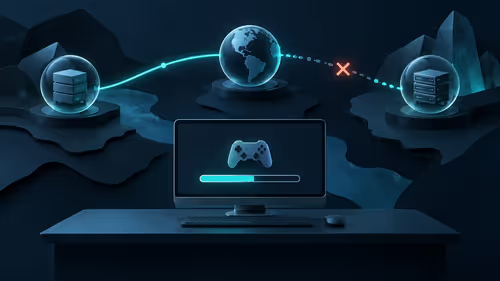
Think of latency as the travel time for sound. In gaming, it's the delay, measured in milliseconds (ms), from the moment your PC or console generates a sound to the moment it actually plays through your headset's speakers. While a few milliseconds might seem insignificant, in fast-paced games, it's the difference between reacting and getting wrecked.
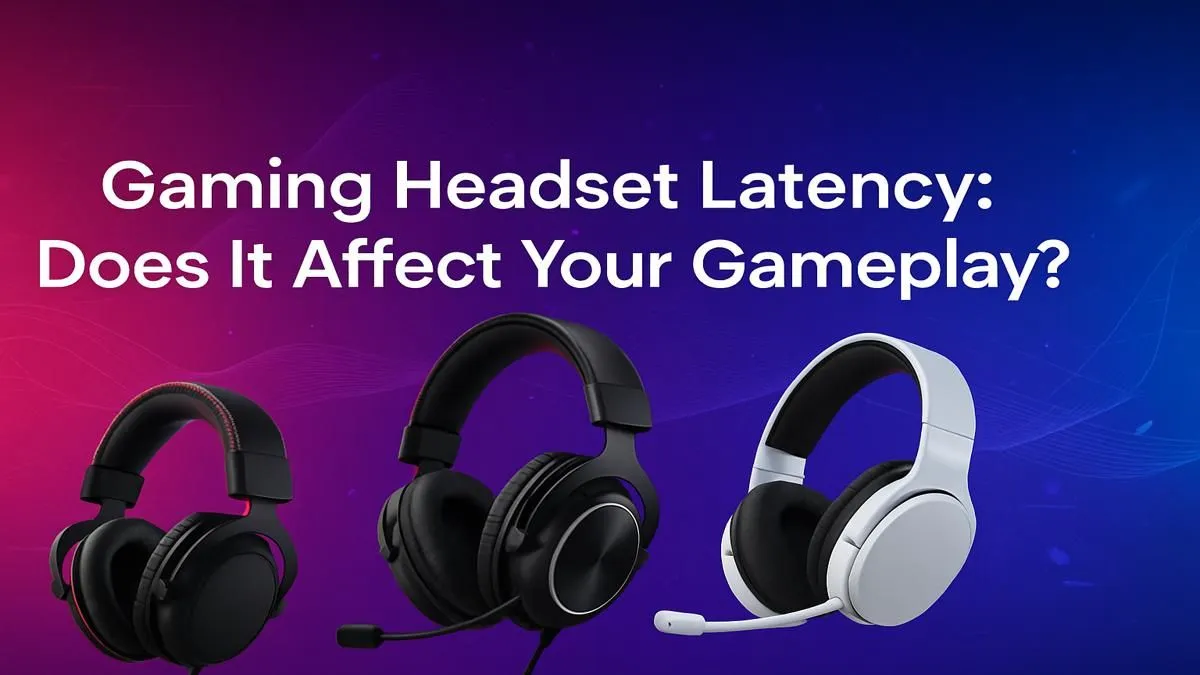
For context, a typical human reaction time is around 200-250ms. If your audio has a delay of 100ms, you're already giving your opponent a massive head start. This is why serious gamers obsess over minimising every possible delay. For the lowest possible audio delay, many pros still rely on the instant connection provided by premium wired headsets, which have near-zero latency.
How Latency Impacts Your Gameplay 🎯
High gaming headset latency isn't just a number on a spec sheet; it has a real, tangible effect on your performance, especially in competitive titles like Valorant, Apex Legends, or Warzone.
Imagine you're defending a site. An enemy peeks a corner. The game generates the sound of their footsteps instantly. With low latency, you hear it immediately, adjust your aim, and are ready for the fight. With high latency, that sound arrives a fraction of a second later. By the time you react, you're already in their crosshairs. This audio delay can affect:
- Reaction Time: Hearing cues like reloads, ability activations, or footsteps later than your opponent puts you at a disadvantage.
- Positional Awareness: Pinpointing an enemy's exact location relies on precise, real-time audio. Delay can make sounds feel disconnected from the on-screen action.
- Immersion: A noticeable lag between seeing an explosion and hearing the boom can pull you right out of the game.
Whether you're on PC or looking for the best PlayStation headsets, minimising this delay is key to a better experience.
Wired vs. Wireless: The Latency Showdown
The debate between wired and wireless is often a trade-off between freedom and speed. But thanks to modern tech, that gap is smaller than ever.
The Wired Advantage
A physical cable offers the most direct, stable, and fastest possible audio signal. There's no encoding, decoding, or wireless interference to worry about. For pure, unadulterated speed, wired is still the undisputed champion.
The Rise of Low-Latency Wireless ⚡
Not all wireless is created equal. Standard Bluetooth, while great for music on your phone, often has high latency (100ms+) that makes it unsuitable for serious gaming.
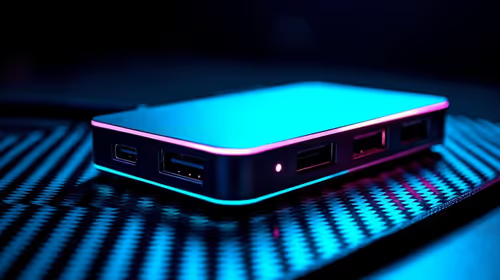
That's where 2.4GHz RF (Radio Frequency) technology comes in. High-performance wireless headsets use a dedicated USB dongle to create a direct, high-speed link to your PC or console, slashing latency to as low as 20-30ms—a delay that is virtually imperceptible to the human ear. This technology ensures console gamers aren't left behind either, with dedicated low-latency Xbox headsets providing a flawless audio experience.
Wireless Pro Tip 🎧
For the best 2.4GHz wireless performance, plug your USB dongle into a front-panel USB port on your PC or use a USB extension cable to place it on your desk. This ensures a clear line-of-sight to your headset, reducing the chance of signal interference from other devices or physical obstructions.
Ultimately, choosing the right headset means understanding your priorities. Do you value the absolute lowest latency for competitive play, or the freedom of movement that a high-quality wireless set provides? You can browse our full range of headphones and headsets to compare the latest models.
For South African gamers, getting the best performance doesn't have to mean breaking the bank. Keeping an eye out for the best gaming headset deals can land you a top-tier, low-latency headset for a great price. Because when the match is on the line, every millisecond counts.
Ready to Hear the Difference?
Understanding gaming headset latency is the first step. The next is finding the gear that gives you the edge. From ultra-responsive wired models to lag-free wireless freedom, we've got the perfect fit for your setup and budget. Explore our massive range of gaming peripherals and find the perfect audio solution today.